
Will you chip in to support our nonprofit newsroom with a donation today?
Yes, I want to support My MLTnews!
My Neighborhood News Group is publishing a series of stories on how local governments are funded and the financial challenges facing both elected officials and residents.
Part 1: Introduction
“Citizens don’t get to fleece someone else every time they’re short on cash – neither should any government.”– My Edmonds News comment section, Nov. 4, 2025
While this comment was related to the recent failed proposal to increase the property tax limit in Edmonds, it is a familiar refrain from many voters.
It is the thinking behind taxes and the push/pull between residents who want to spend more to get more and residents who simply can’t afford it. It also reflects the general frustration that everything is so expensive and the city is one more organization asking for more money.
It’s about affordability.
It’s no secret that Washington cities are in a financial bind. Not just some. More than half — 61% — report projected revenues for 2025 are falling short of expenses, according to the Association of Washington Cities (AWC).
AWC is a private, nonprofit, nonpartisan corporation that represents all 281 Washington cities and towns before the state Legislature and executive branch, and with regulatory agencies.
“While Washington’s cities and towns consistently innovate to do more with fewer resources, the math problem remains: the cost of providing services outpaces revenues needed to pay for them,” said Brian Parry, director of communications for the Association of Washington Cities.
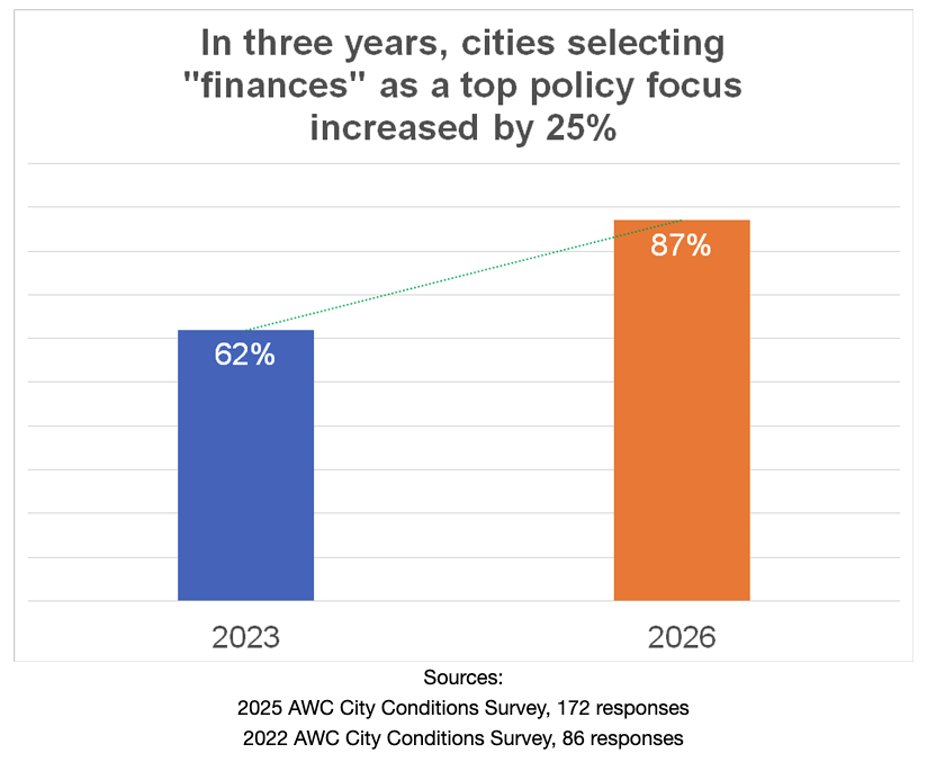
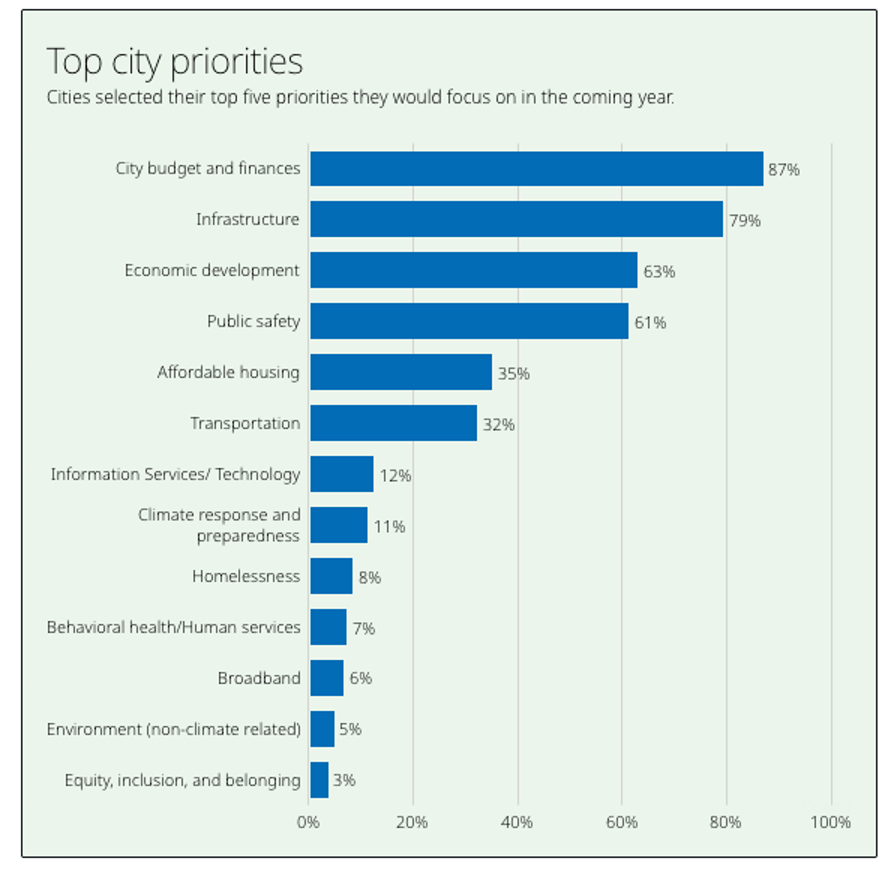
A 2025 AWC survey, released in October, showed that city finances moved to the top of the list of members’ concerns, coming in at 87%, up from 62% two years earlier.
“One city with a population of 5,000 is looking at a $45 million sewer problem,” Parry said. That is a financial impossibility.
Every city has a different financial structure
Revenue sources and expenditures align to a city’s unique balance of property, land, businesses and community priorities.
Lynnwood relies comparatively heavily on sales tax. Alderwood Mall and the hundreds of big box stores and small mom and pop businesses generate millions of dollars in retail sales tax, the sales tax lynchpin for Snohomish County.
Mountlake Terrace has virtually none of these. It’s a balance of property tax, sales tax and utility tax. “Gambling taxes have been a strong source of revenue for years, but the owner of the two largest gambling establishments filed for bankruptcy in 2025,” said Mountlake Terrace City Manager Jeff Niten. That translates into a $1 million loss for 2026 that must be addressed.
Edmonds made a choice and relies on a mix. The community prefers small local businesses to retain its the city’s charm, but losing out on big box stores comes with a cost.
Brier has less of everything – fewer people and also fewer services. Woodway is strictly residential, with no business footprint.
Nearby Mukilteo, Monroe and Marysville – along with unincorporated Snohomish County – have their own economic plan that may rely more or less on property taxes or sales taxes or something else.
Each city builds a custom financial/business plan that reflects the community’s assets and values.
The financial framework can change over time as those values and residents change. Every election cycle is another opportunity to bring those changes to the ballot box through council elections and new tax proposals.
During the November 2025 election cycle, many government entities put taxes on the ballot: Mukilteo (emergency medical services), Edmonds (property tax levy), Snohomish County (Fire Protection District 27), Bothell (roads), and Northshore (parks and recreation).
Measures passed in Mukilteo, Bothell and Northshore. Measures did not pass in Snohomish County’s Hat Island Fire District and Edmonds.
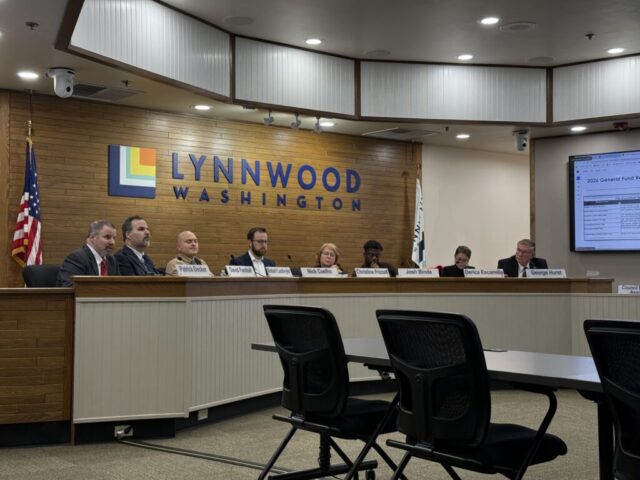
In 2026, the Edmonds City Council may put a levy on the ballot again. The Council may also increase business and occupation taxes or add a new tax onto its Transportation Benefit District. The Lynnwood City Council in November approved major tax and fee hikes aimed at narrowing the City’s $8 million general fund deficit. Councilmembers adopted a 23% property tax levy increase and a 4% utility tax increase — changes expected to bring in about $2.9 million for 2026.
Since 2020, every city – including the tiny Town of Woodway – has run ballot measures to raise taxes for emergency services, community priorities like public safety, or general government functions.
Each ballot measure, pass or fail, changes the community and certainly civic discourse.
Every ask for more taxes or cuts to a favorite program feels personal. Residents are frustrated and feel powerless. “It wasn’t this way before, so why is it this way now? It must be so-and-so’s fault.”
After talking to state, county and local government leaders – along with experts in public finance – and gathering statistics, it’s clear. We are now face-to-face with a problem 20 years in the making.
The tipping point actually came in 2017-2018, but the COVID cash infusion in 2020 pushed the budget cliff out five years.
In 2025, the fundamental problems returned:
- Washington State’s financial structure is broken.
- Infrastructure (such as roads, bridges, public buildings and sewers) is failing faster than governments can fix it.
- Government is about services. Government employees deliver services. Government employees and government services are more expensive.
This series of stories lays out the current financial situation in our local communities, how we got here and some new ideas to move forward.
Here are the facts: The population isn’t shrinking. Services and commodities aren’t getting cheaper. And our personal economies feel the same pinch, which is worse if you are much older, much younger or on a small fixed income.
We want what we want and are reluctant to compromise. But when we can no longer afford it, we have decisions to make. They aren’t quick and they aren’t easy.
Next up: Why don’t we have any money?


Real first and last names — as well as city of residence — are required for all commenters.
This is so we can verify your identity before approving your comment.
By commenting here you agree to abide by our Code of Conduct. Please read our code at the bottom of this page before commenting.