
Will you chip in to support our nonprofit newsroom with a donation today?
Yes, I want to support My MLTnews!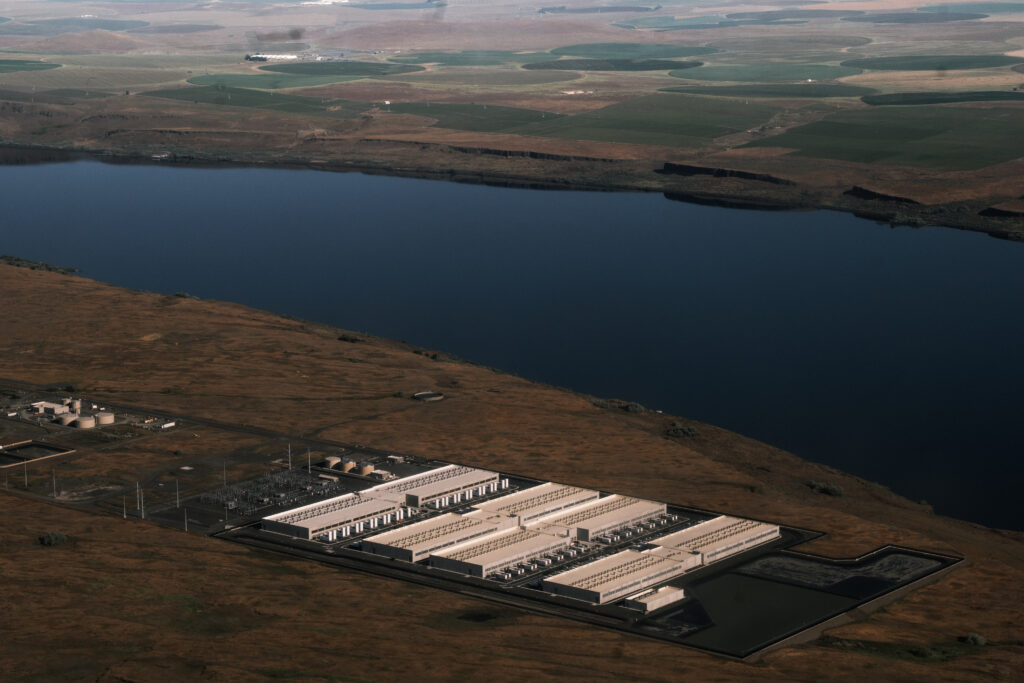
Key points
- Electric utilities in Oregon and Washington are increasingly leaning on the use of gas generators to help data centers meet their energy demands, as well as buying more gas-powered electricity from other states.
- Utilities’ growing use of gas to meet the new demand, and data center owners connecting facilities to on-site natural gas and diesel generators, means both states could miss 2050 targets for dramatically reducing greenhouse gas emissions that contribute to global warming.
- Reports show rather than adding more gas power to the grid, lawmakers in Oregon and Washington could instead pass laws like those in Texas that require data centers to power down when the region’s energy grid is stressed and overall demand is peaking.
Electric utilities in Washington and Oregon are turning to gas to meet rapid and growing energy demand from data centers, according to recent reports.
Two analyses from the Hood River-based conservation organization Columbia Riverkeeper and the Seattle-based think tank Sightline Institute show that a growing number of Northwest utility companies are spending on new gas-powered energy infrastructure or buying gas-powered energy from other states to power new demand from data centers.
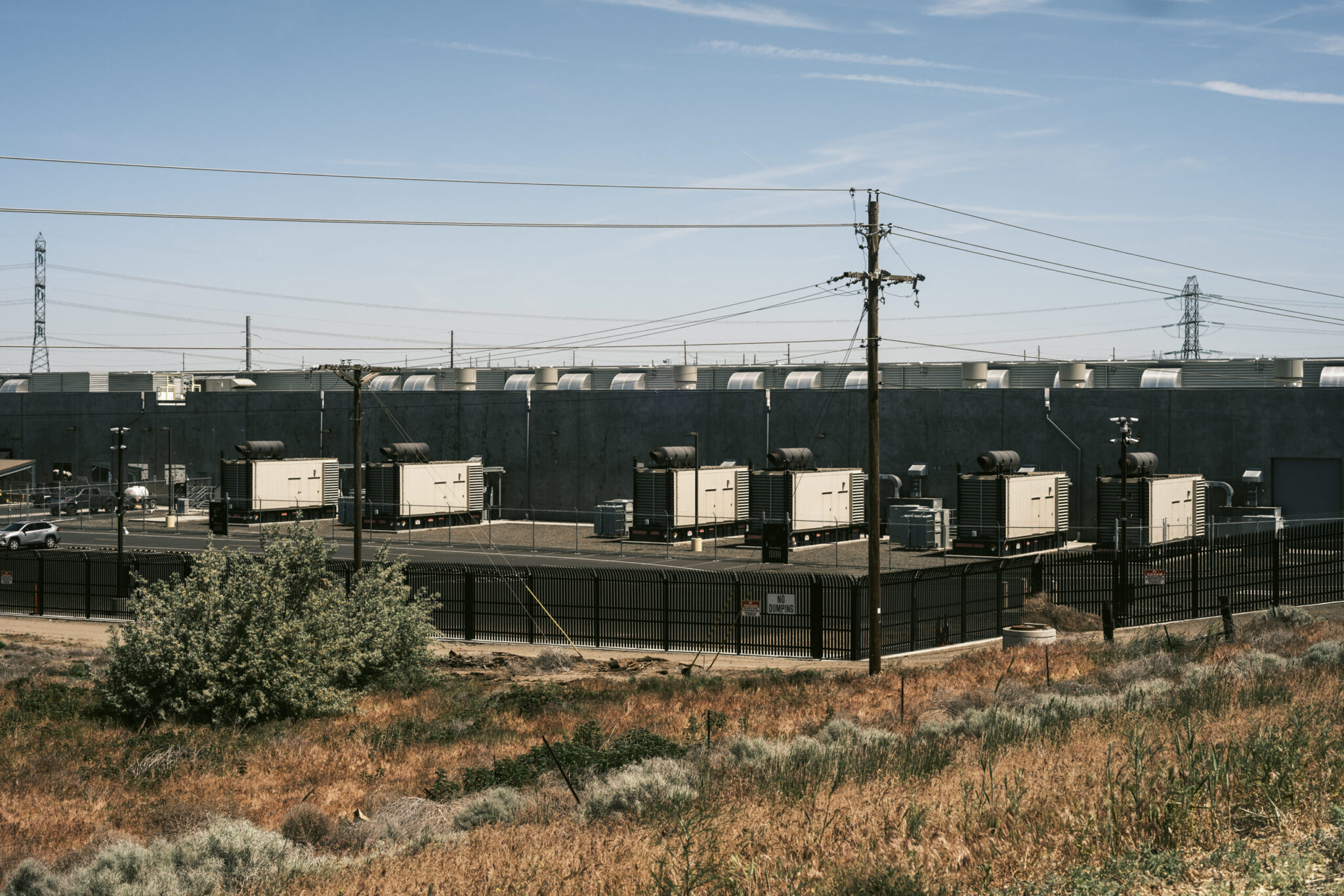
In some counties, public utility districts are permitting gas-powered generators to provide data centers with backup energy, rather than waiting for them to get more power from the grid, and some data center companies are hooking up their own on-site gas generators. For their part, data center companies said they are investing in communities when they show up and working with utilities to find the cleanest energy possible.
The effect is that both Oregon and Washington are at risk of missing established emission reduction targets meant to help curb the impacts of global warming, researchers found. And a growing number of utilities are using booming data center demand to justify skirting climate rules in both states that mostly ban the build-out of new gas infrastructure, citing the need for regional energy reliability.
“In the absence of enough renewable energy supply, we’re seeing utilities turn more to gas in this situation,” said Audrey Leonard, staff attorney at Columbia Riverkeeper and one of the authors of the group’s report. “That is new, because up until the last few years we were making progress towards our clean energy targets in Washington and Oregon. We were really diversifying our clean energy mix, and it was always going to be a challenge — we definitely had work to do — but the way I characterize this is that data centers are turning that challenge into a crisis.”
Representatives for some of the biggest data center owners in the region said they are doing their part to connect to existing clean energy sources and invest in new renewable projects in both states, and that their presence is a boon for communities, not a burden.
“Amazon is committed to being a responsible neighbor in Oregon, where we’ve invested more than $60 billion since 2010 through infrastructure and jobs,” said Margaret Callahan, an Amazon spokesperson. Callahan said the company’s data centers in the region are 10% more energy efficient than the industry average and that the company has invested in massive wind and solar projects across Oregon.
Morgan Babinec, a Microsoft spokesperson, emailed the Capital Chronicle a link to a company presentation espousing the company’s data center benefits in Washington. It notes that Microsoft has “committed to achieving 100% renewable energy coverage globally by 2025,” and that “our data centers in Washington are transitioning the backup generators to use a renewable biofuel that reduces net carbon emissions.”
Missing targets
Under a 2020 executive order from former Oregon Gov. Kate Brown, state leaders and agencies have passed laws and policies meant to reduce Oregon’s greenhouse gas emissions to 45% below 1990 levels by 2035 and 80% below 1990 levels by 2050.
Until recently, the state was on track to meet those targets, according to 2023 Oregon Department of Energy modeling. But in October, department officials reported that given the massive rise in energy demand for data centers, along with Trump administration rollbacks of federal clean energy policies and fuel economy standards for cars, the state wouldn’t hit its 2035 goals until 2037.
To meet both Oregon and Washington’s climate goals — which include electrifying almost the entire transportation sector in both states by 2050 — the states also need to replace at least 65 million megawatt hours of existing coal and gas power generation with power generated by renewable sources such as wind and solar, the Columbia Riverkeeper researchers wrote.
Instead, federal energy officials have used data centers as a justification for keeping Washington’s largest coal-burning power plant running late last year, despite state laws requiring it to be shut down. And Puget Sound Energy, Washington’s largest utility, has contracted for six new gas turbines to be built at a new gas power plant at an undisclosed site in Washington, according to Sightline Institute.
Natural gas is almost entirely methane, a potent greenhouse gas that, when burned, emits carbon dioxide. Carbon dioxide and methane are the main heat-trapping gases causing global warming.
Gas-powered workarounds to clean energy mandates
Of the more than 100 electric utilities in Oregon and Washington, two private investor-owned utilities — PacifiCorp and Portland General Electric — and four public utility districts and cooperatives have absorbed nearly all the region’s new data center loads in the past decade, according to a 2025 Sightline Institute analysis.
Five of those utilities rely today on buying far more “unspecified power” from wholesale electricity markets to meet customer demand than they did a decade ago. Unspecified power is almost always natural gas or coal, and the Washington State Department of Ecology estimates emissions from unspecified sources are roughly equal to natural gas emissions.
In Oregon, unspecified power purchases have driven up what were relatively low emissions from consumer-owned utilities since 2019, according to Oregon Department of Environmental Quality data. Most of the increase is from the Umatilla Electric Cooperative buying more unspecified power to meet demand from Amazon data centers in recent years, the department found.
Callahan, the Amazon representative, said the company recently made a deal with the Umatilla Cooperative to choose the energy supply used for its data centers rather than leaving it up to the utility to buy the cheapest option on the wholesale market.
Still, the company seeks more backup and reliable power when it urgently needs it, and the Oregon environmental quality department recently fined an Amazon data center in Hermiston for violating its air quality permit by running an emergency diesel generator for 50 hours more than allowed.
Although Oregon and Washington have mostly prohibited building new gas power plants or importing more gas-powered electricity, both offer some workarounds. In each state, utilities can seek exemptions if they claim overall reliability is in jeopardy or the costs are too high to procure clean energy. And in Oregon, the climate protection rules only apply to investor-owned utilities.
Utility commissioners in central Washington’s Grant County, where a public utility district provides power for at least 27 data centers, recently cited a lack of transmission capacity to approve plans for the company VoltaGrid to build a new 12-megawatt methane gas power plant to supply a hyperscale data center campus owned by the multinational tech company Vantage.
It will include 14 mobile gas engines that are enclosed in a semi-tractor trailer, according to the Columbia Riverkeeper report. To fuel the plant, VoltaGrid plans show the company would truck gas from the city of Moses Lake to Quincy, requiring 16 trips daily between the cities.
Grant County Public Utility District commissioners are also weighing new gas-fired power plants near Moses Lake or Quincy, and possibly investing in a natural gas plant in Idaho, a state without emission reduction targets, according to Columbia Riverkeeper’s account of a January 2026 commission workshop.
At that meeting, commissioners considered multiple proposals, including a new 40- to 120-megawatt gas-fired plant in the county, and 10 to 20 megawatts of natural gas fuel cell generators.
Another way
Sightline Institute researchers noted that much of the rush to build out gas infrastructure for data centers is to ensure enough energy to power peak demand, such as when residential heaters and air conditioners are running during extreme weather, on top of the overall base-load needed to serve customers consistently throughout the year.
Laura Feinstein, author of the Sightline report on new gas power being sought for data centers, recommended lawmakers in Oregon and Washington take a similar approach as officials in Texas, requiring that data centers power down when demand from most other customers is high and the grid is stressed.
A 2025 study from industry consultancy Energy and Environmental Economics, also known as E3, has been used in a growing number of cases to justify allowing more gas onto the grid in the Northwest for data centers, according to Feinstein, because the consultants said 9 gigawatts of energy would be needed by 2030. That would mean in the next four years roughly doubling the total amount of energy currently powering Oregon today.
But a separate study by Sylvan Energy Analytics, a firm founded by former E3 consultants, found that power would be unnecessary if Oregon and Washington required data centers to power down during demand spikes.
Leonard from Columbia Riverkeeper similarly cautioned against building out more fossil-fuel energy to meet data center demand, given unpredictability over how much energy the centers will actually use in the next few decades. She said the data center industry often inflates how much energy it will need.
“Because the energy demand of data centers is something that varies widely, data centers should not be used to justify new gas infrastructure,” she said.
This story was originally produced by Oregon Capital Chronicle, which is part of States Newsroom, a nonprofit news network which includes Washington State Standard, and is supported by grants and a coalition of donors as a 501c(3) public charity.
Washington State Standard is part of States Newsroom, a nonprofit news network supported by grants and a coalition of donors as a 501c(3) public charity. Washington State Standard maintains editorial independence. Contact Editor Bill Lucia for questions: [email protected].


Real first and last names — as well as city of residence — are required for all commenters.
This is so we can verify your identity before approving your comment.
By commenting here you agree to abide by our Code of Conduct. Please read our code at the bottom of this page before commenting.