
Will you chip in to support our nonprofit newsroom with a donation today?
Yes, I want to support My MLTnews!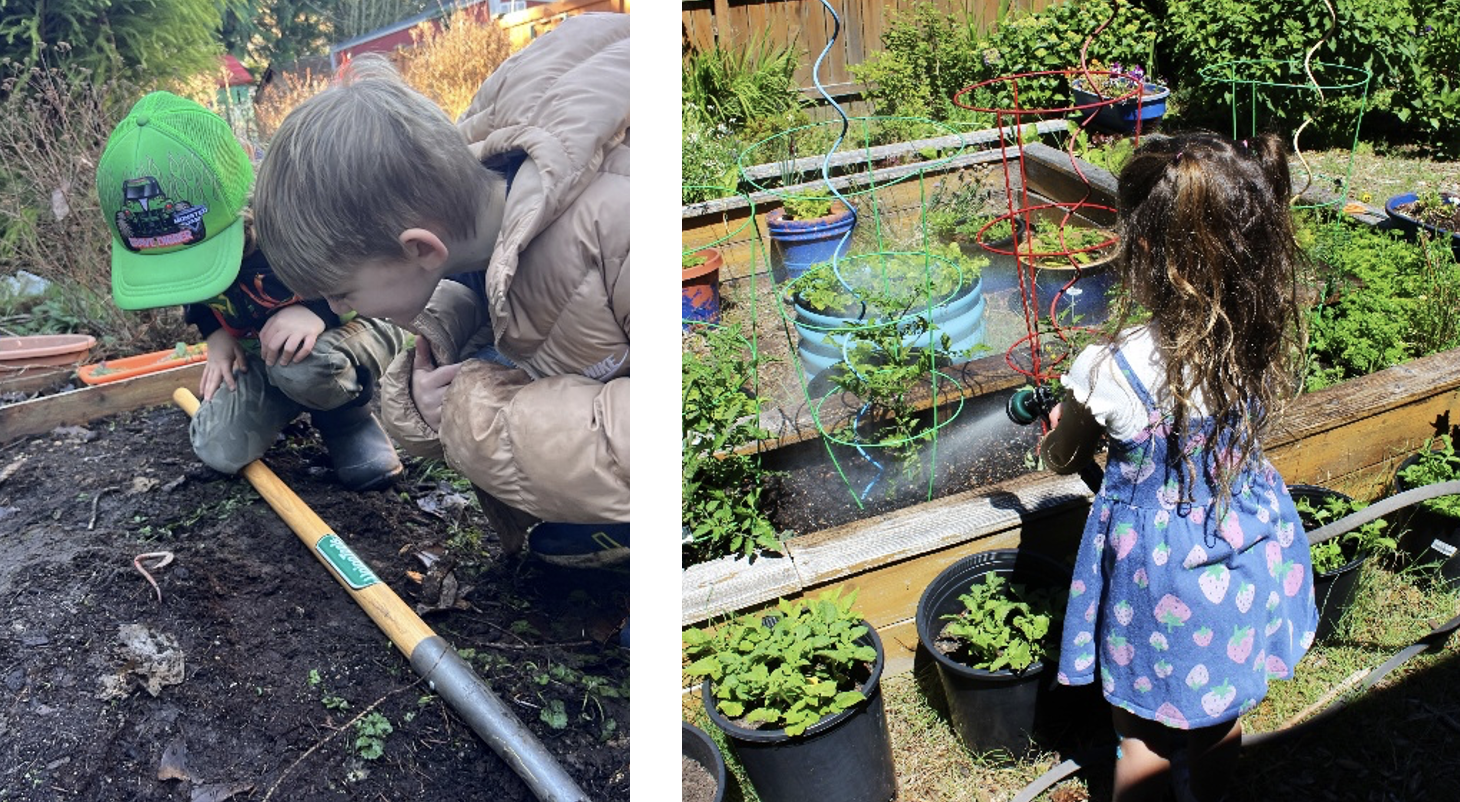
For gardeners, a mild winter is both a blessing and a curse, a blessing because you can garden all winter; a curse, because you can garden all winter. Gardeners hoping for a break during the cold, rainy Pacific Northwest winters were disappointed this year.
However, the kids at Bloom Early Education don’t even notice the cold. We gardened all winter! In June of 2024, I introduced you to this group of intrepid tiny gardeners.
Four years after we started the program, the kids still come marching down the street on their rope line, singing and chattering. As soon as they see me, they shout, “Hi, Miss Marty!” and we have hugs all around as though they had been away for months.
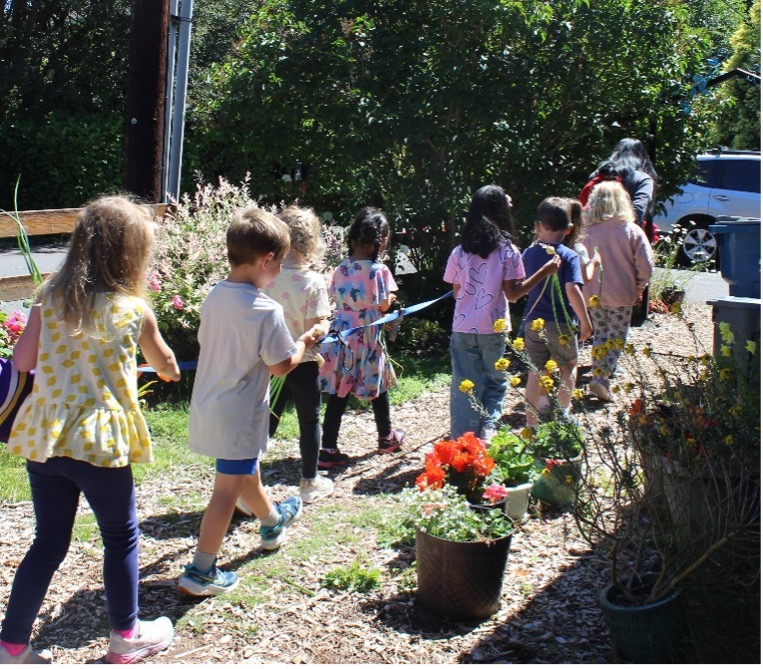
We added another class this year. It’s now 40 kids in three classes and six teachers. They come once a week.
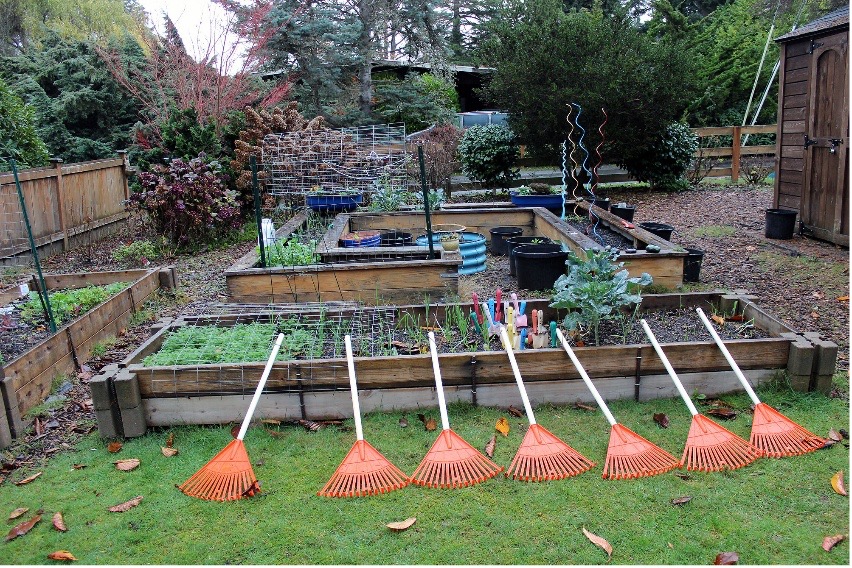
Gardening is a long-term project
The kids stayed busy over this past winter, even when not much could grow. They are learning that gardening is more than just planting and picking produce. It involves weeding, raking leaves, mulching, preparing soil and pulling out some plants but leaving others for the birds and bugs.
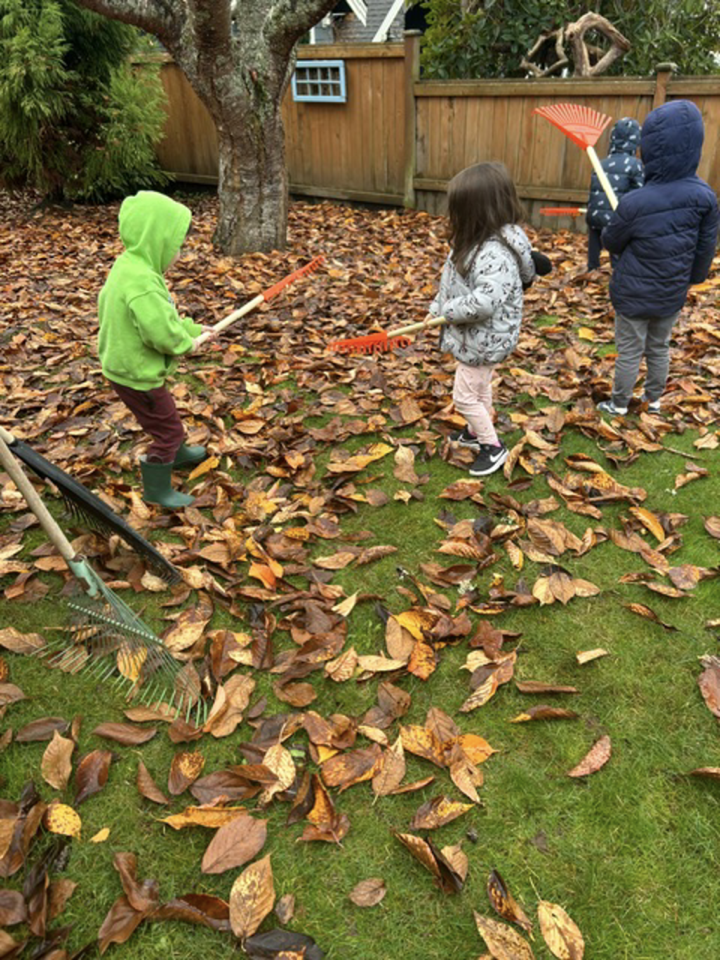 Over the winter, they dug a new flower bed, which meant digging up sod, pounding the soil out of the clumps and rehoming worms. Every single kid, every single day had to comment on the rolly pollies.
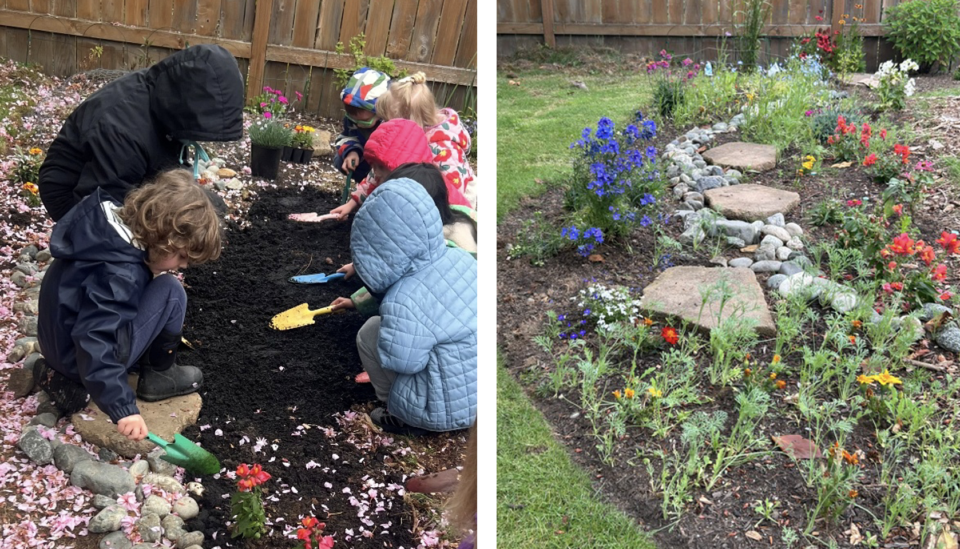
They carried rocks one-by-one to make a “river” running through the new bed. One little boy informed me soberly that we needed to add water for it to be a river. Planting the actual flowers had to wait for warmer weather, so we recently got that done.
I made the mistake of laying down pavers in the middle so we could access the flowers without stepping on them, but it turns out pavers are an invitation for them to chase each other by jumping through the flower bed.
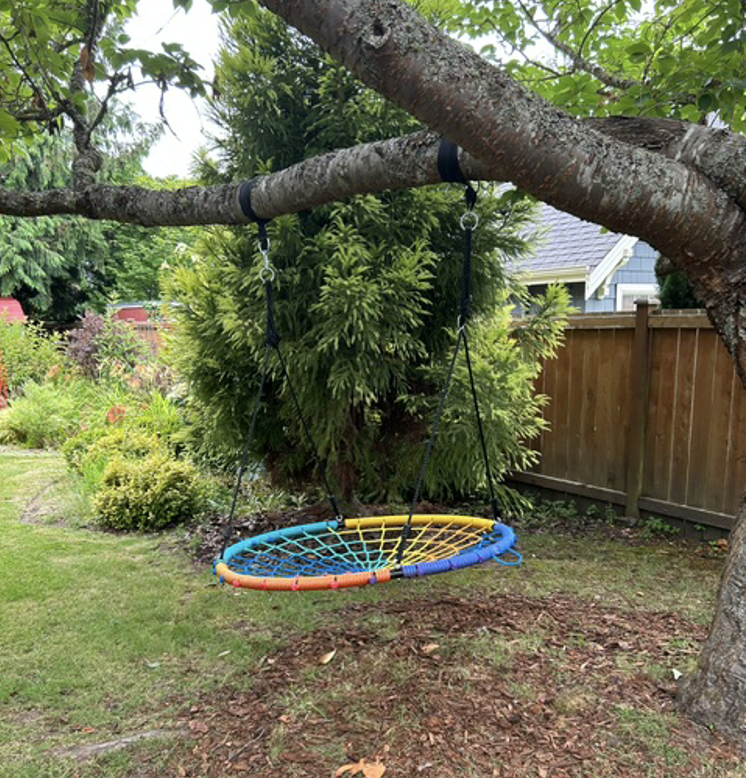
The new swing is an additional enticement. They love to pile on and try to tip it.
I don’t know if the kids are learning anything, but I’m learning a lot about how not to manage preschoolers.
One of my adult garden helpers, Rick Holst, heard me yelling “That is not a weapon!” as two boys were sword-fighting with their shovels.
Rick also suggested the diabolical April Fools trick I played on the kids: A week after we planted carrots, I went to the store and bought large carrots with the tops still on and “planted them.” When the kids pulled them up, they were amazed (and confused) at how fast their seeds had grown.
We were able to plant a few things during the winter. We grew two kinds of peas and planted 250 onions, and we now have 20 buckets of potatoes growing. We did have a mass of carrots that seemed to be all tops and no bottoms, so we pulled them all up and started over. Each kid took home a bouquet of carrots.
More garden, less grass
Meanwhile, in the backyard the kids created a whole new garden area by covering up 400 square feet of grass with cardboard and schlepping hundreds of buckets of wood chips from the driveway — seven buckets, 40 kids, two kids to a bucket, week after week.
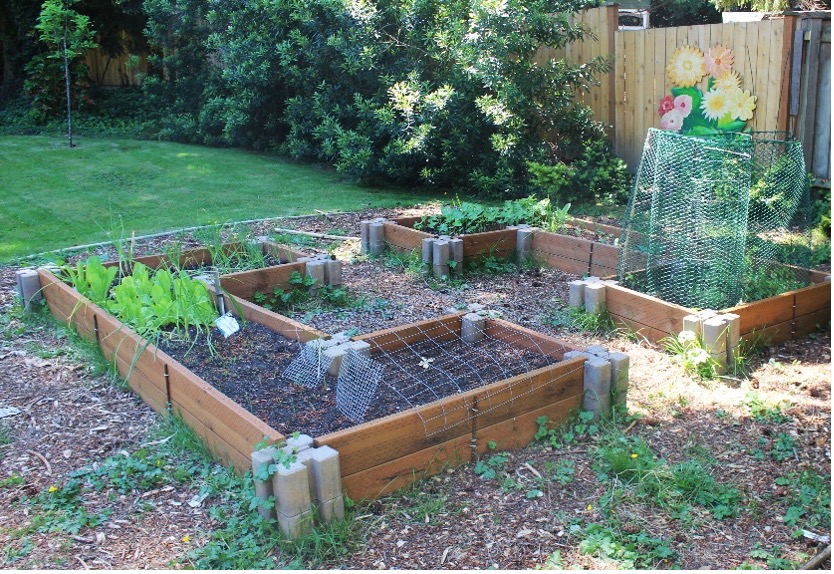
Rick Holst and my invaluable garden helper, Chris Walton, built new raised beds (we now have eight), and the kids filled them with sticks and leaves before adding soil.
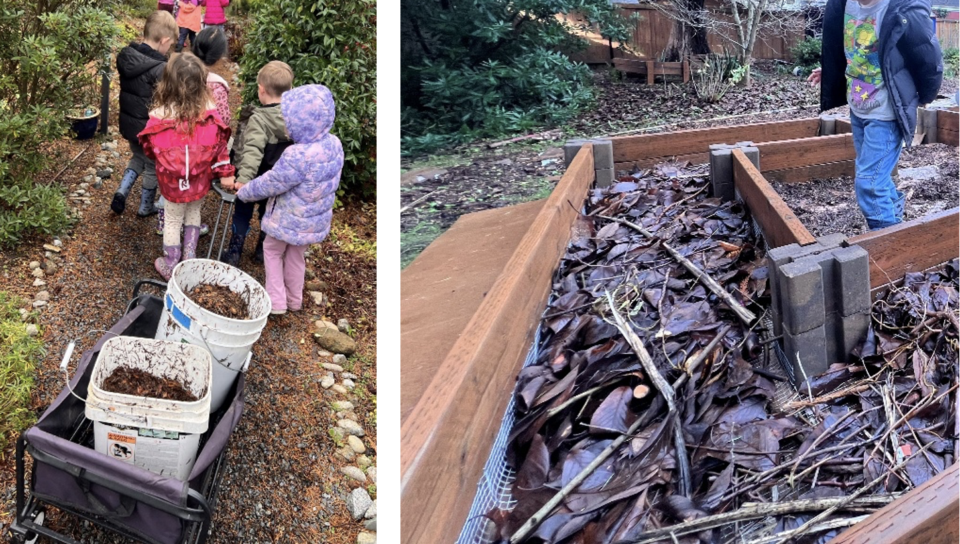
Was it exploiting child labor?? I’m not sure. The kids like showing off how strong they are and love dumping the chips and stomping on them. They think everything is fun.
We’ve planted the new beds with lettuce, onions, leeks, cauliflower, carrots, beans and peas. Rabbits ate the peas as soon as the little shoots popped up, so we had to rig netting and plant more peas.
Next to the new raised beds, we cleared out dumb old flowers to make room for strawberries. I showed the kids a pictograph of how to plant bare-root strawberries: roots down and green part up, with the soil just up to the crown of the plant.
One earnest little girl showed me proudly how she had planted hers upside down with the fluffy roots on top of the soil like a curly hairdo.
The strawberries are now ripening, but the critters got the first berry, darn it. We had to net the bed after a rabbit sat calmly among the plants eating the fruit.
Speaking of rabbits, we wanted to try planting corn, so I dug a new bed and put one little boy in charge of planting it. He has a great future as a manager; he organized the kids and got them to plant the corn evenly spaced in neat rows.
All the corn germinated, then the rabbits came and mowed down every plant. We didn’t give up; we replanted and netted the bed. The rabbits struck again, so we finally gave up on corn and planted pumpkins in that bed.
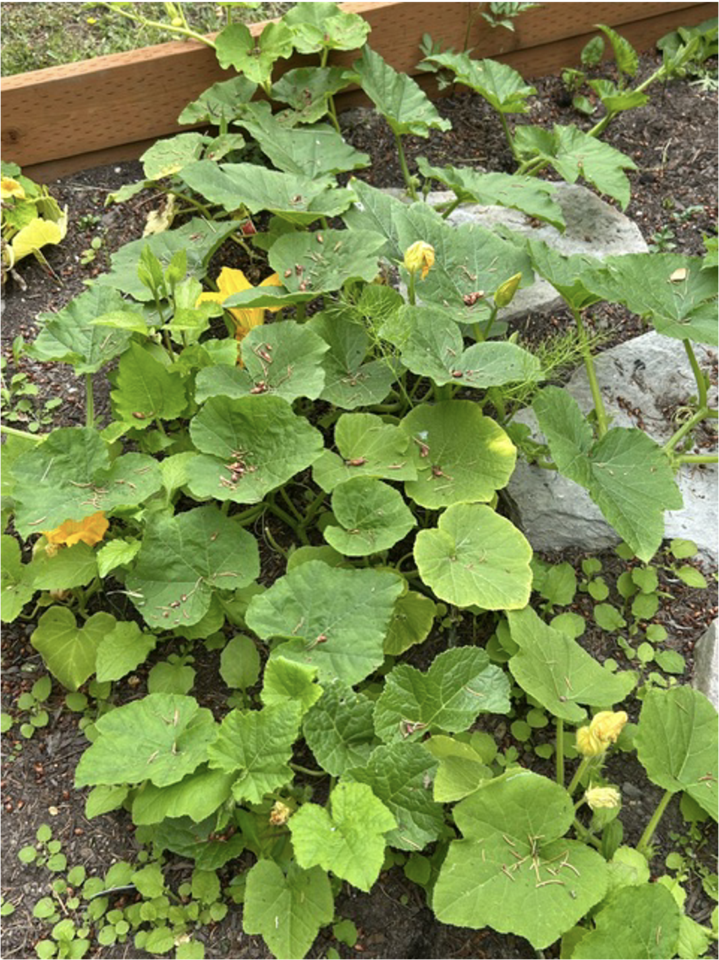
Rabbits are our nemesis. We decided the best way to keep rabbits out of the garden was to eat them, so on the last day of the semester we ate bunny crackers and watermelon.
As we were picking and eating raspberries, one little girl who is moving on to kindergarten said, “Miss Marty, you can drive to my house over the summer and bring me raspberries and blueberries!”
Our enchanted forest
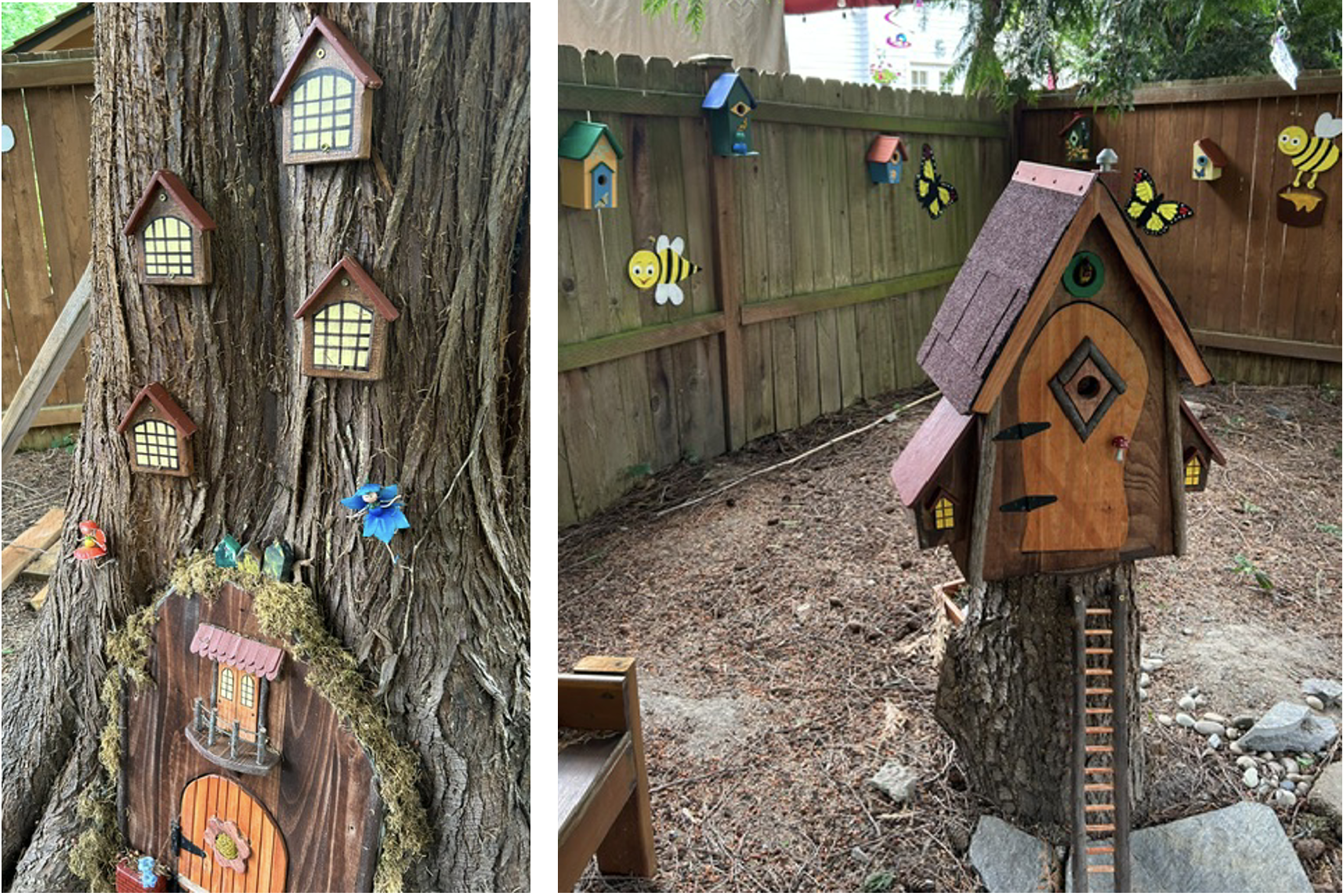
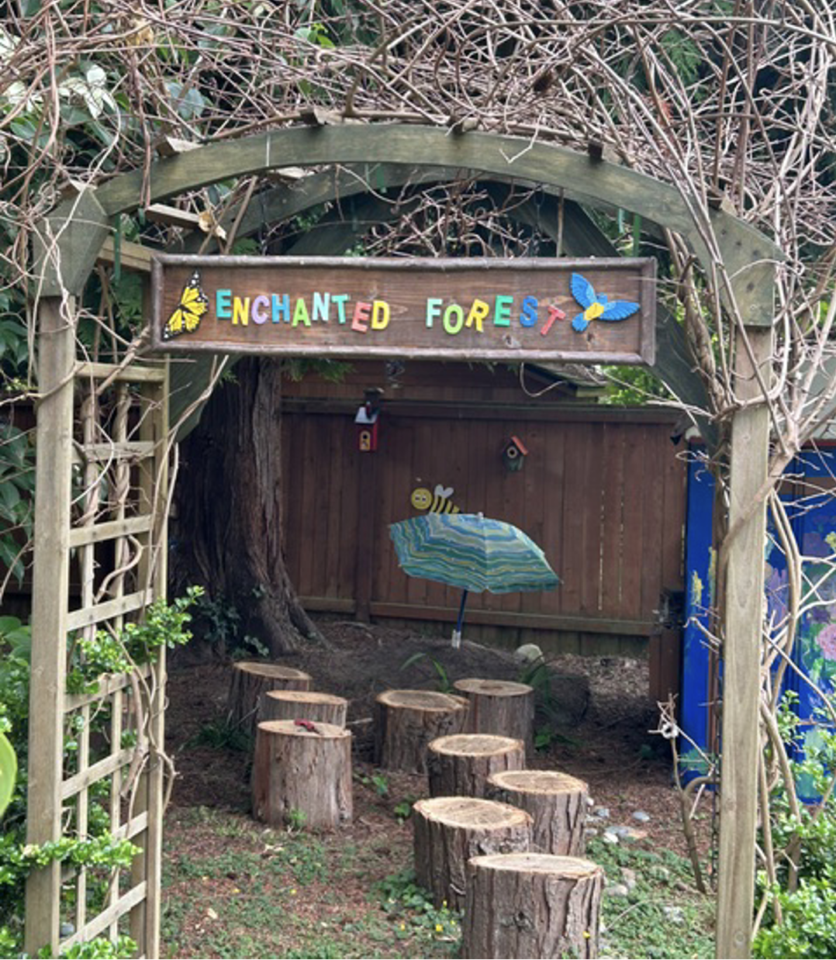
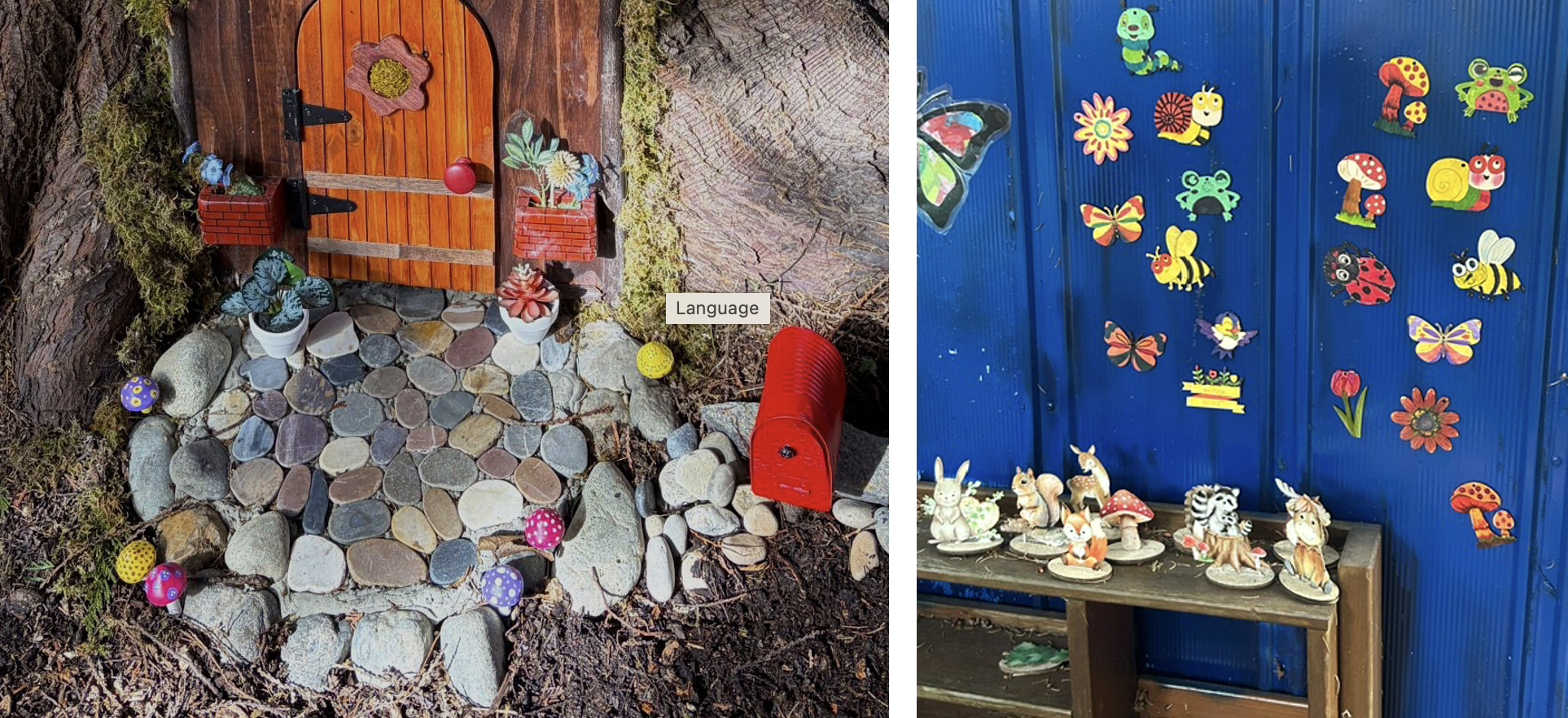
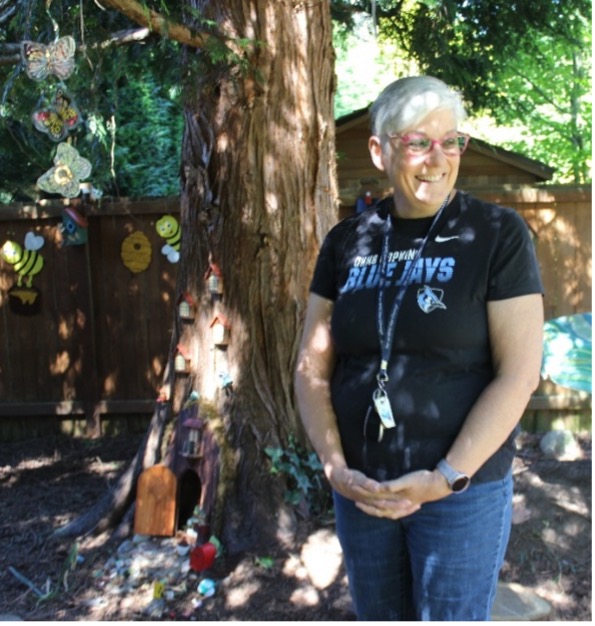
Imagination plays a huge role in preschool. We created a fairy garden over this past winter, including some extraordinary structures built by Chris Walton. A fairy door in the hollow of the big cedar tree opens up to a rotating collection of small critters.
Chris also built an amazing fairy house with a treasure chest inside to hold the kids’ natural treasures: rocks, feathers, pinecones, shells, flowers and other finds. He then decorated the fence with 10 handmade birdhouses and large bees and butterflies.
 Arborist Scott Neuert at Custom Tree Service brought us 10 cedar stumps for the kids to sit on, but preschool kids don’t sit! They jump from stump-to-stump, play follow-the-leader, roll the stumps over and push each other off; they do everything BUT sit.
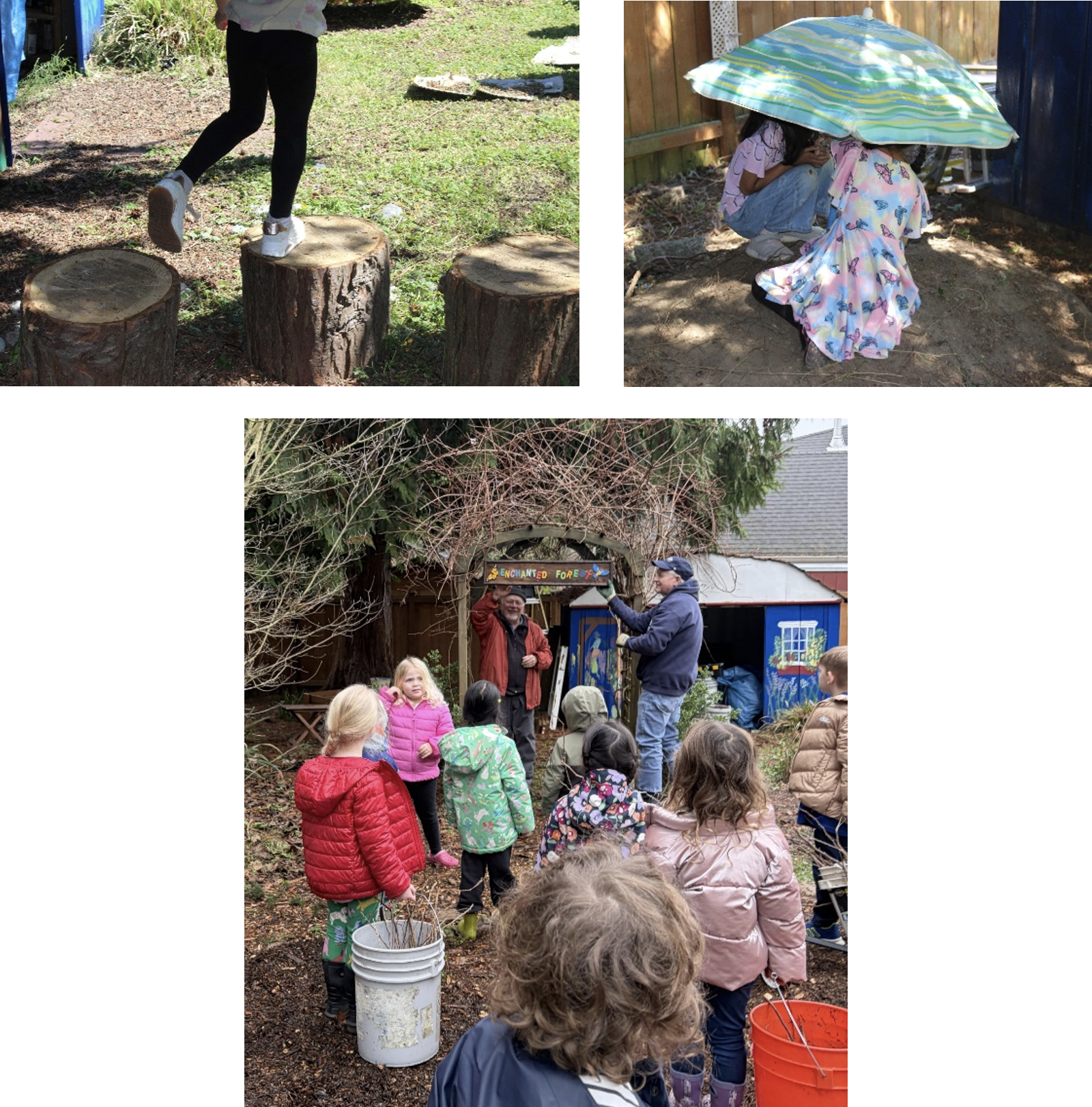
The kids have fun creating new tableaus in front of the fairy door. On the metal shed, magnetic creatures become the characters in their made-up stories.
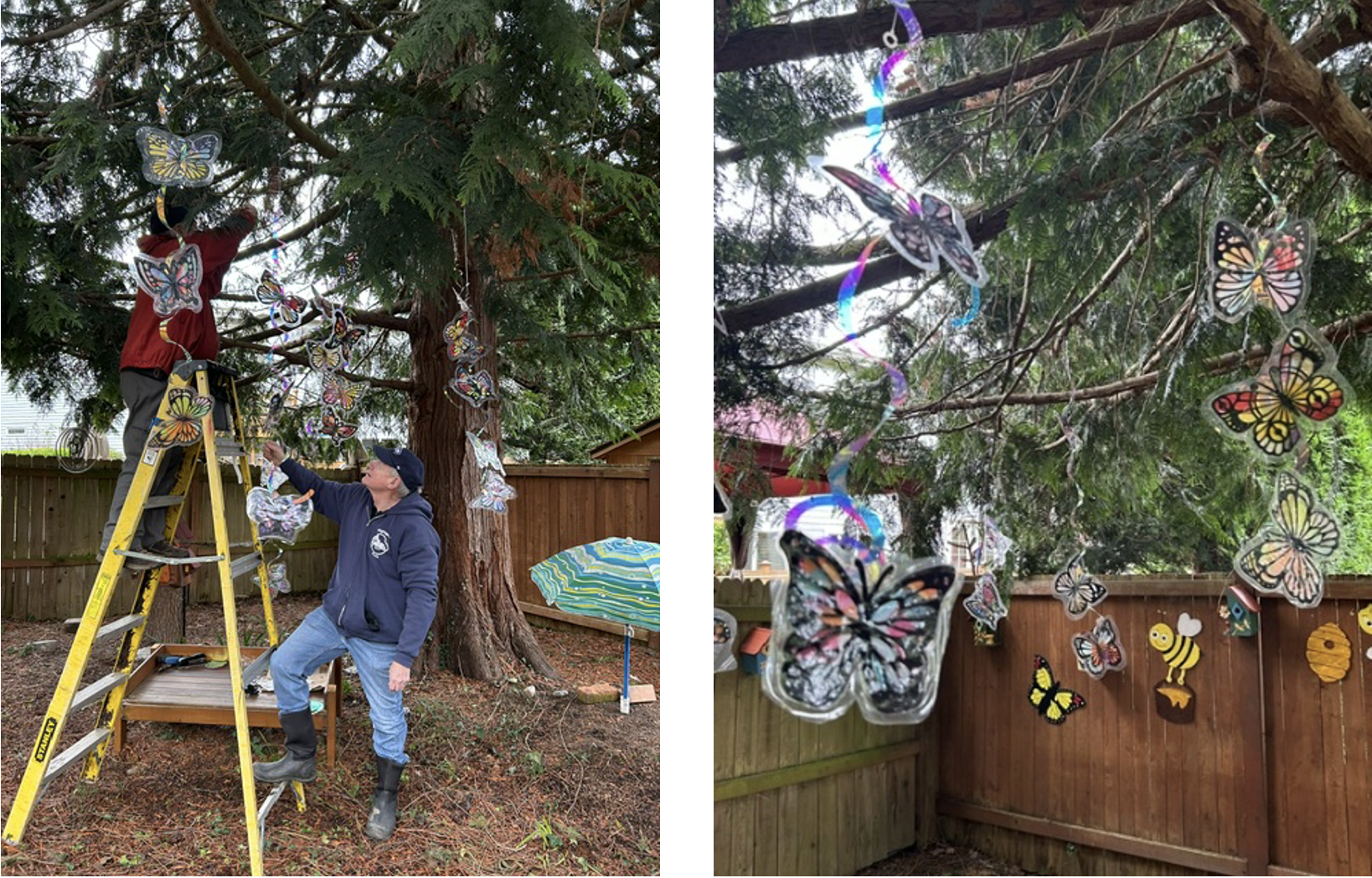
The students made the 30 butterflies that are fluttering in the tree. Below, Chris and Rick hang them.
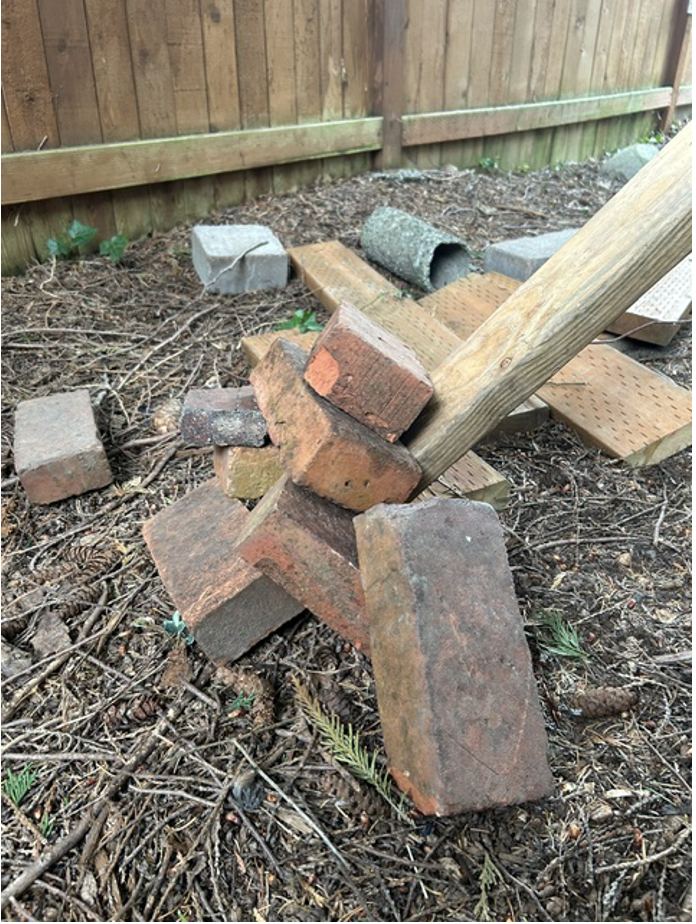
 In the corner, we collected all the bricks that we found in the yard, added some leftover boards and made a construction site. The little girl who built this structure might not have a career in architecture.
From the garden to the Edmonds Food Bank
Nearly all the produce we grow goes to the Edmonds Food Bank. When there was just one class, the kids delivered the produce themselves, but as Food Bank Director Casey Davis said, “When the kids showed up, everything stopped!” All the workers wanted to see the students.
Now that the program has grown, we invited Casey to come to the garden instead. She loved her visit: “It truly made my day. I love to imagine that they will create gardens and support their communities in the future because of the impact you have had!”
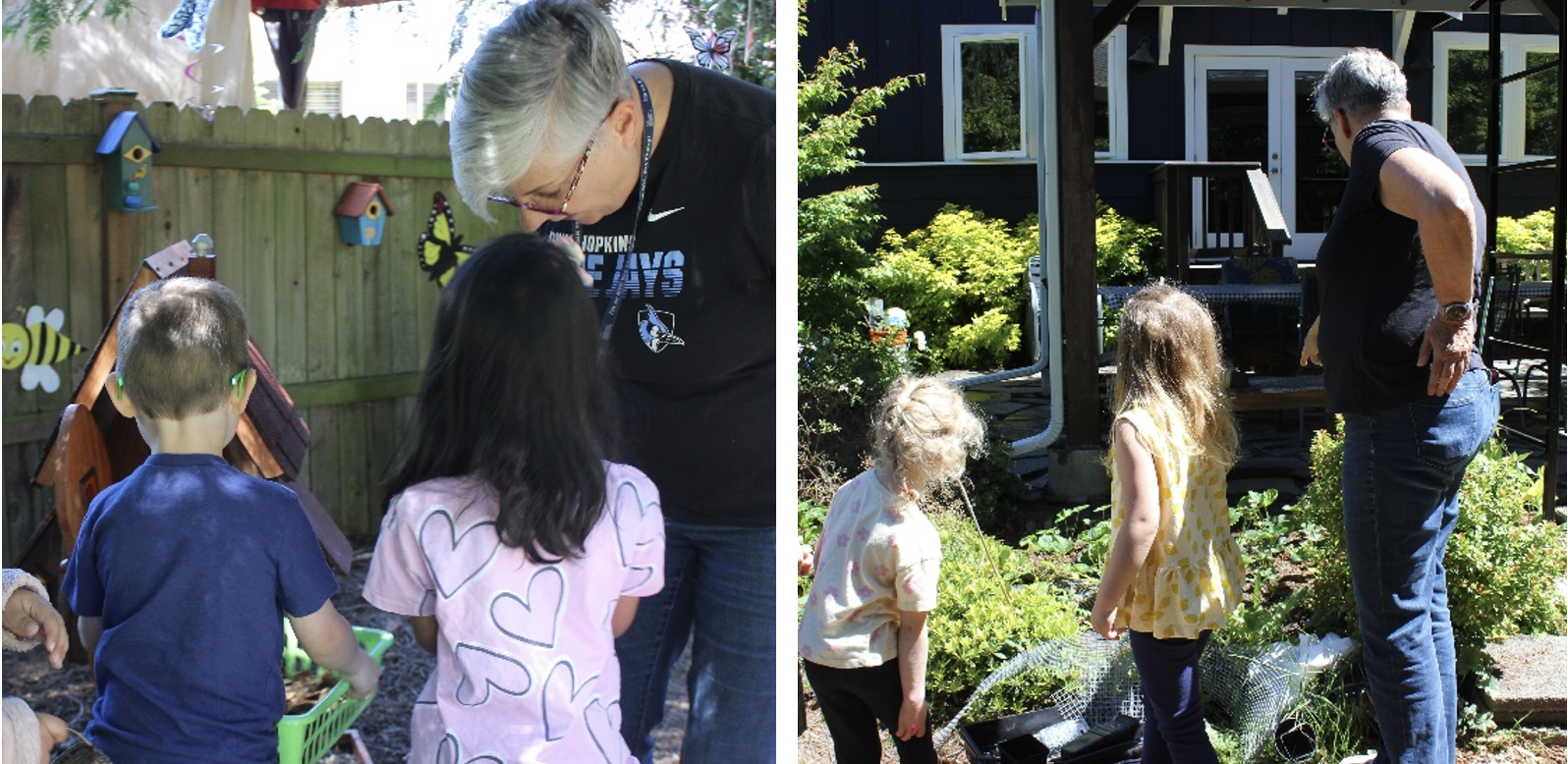
We take lettuce, spinach, Swiss chard, arugula, onions, leeks, beans, zucchini, yellow squash, celery, snow peas, sugar snap peas, Chinese chives, parsley, cilantro, dill, oregano, thyme, sage, rosemary, potatoes and tomatoes to the food bank, all grown by 3-, 4- and 5-year-olds. The kids get to eat the carrots themselves.
These students are amazing. They recently planted large bushes — bigger than they are — of Pacific wax myrtle and kiwi berries. They are willing to try anything, and there is nothing they can’t do. I am excited to meet them again when they’re grown up.
For Gardeners is a monthly column by and for local gardeners.


Real first and last names — as well as city of residence — are required for all commenters.
This is so we can verify your identity before approving your comment.
By commenting here you agree to abide by our Code of Conduct. Please read our code at the bottom of this page before commenting.