
Will you chip in to support our nonprofit newsroom with a donation today?
Yes, I want to support My MLTnews!
Traffic stops can be anxiety-inducing encounters, especially for people with autism.
To address this, Washington is establishing a program to improve communication between neurodivergent people and police during stops.
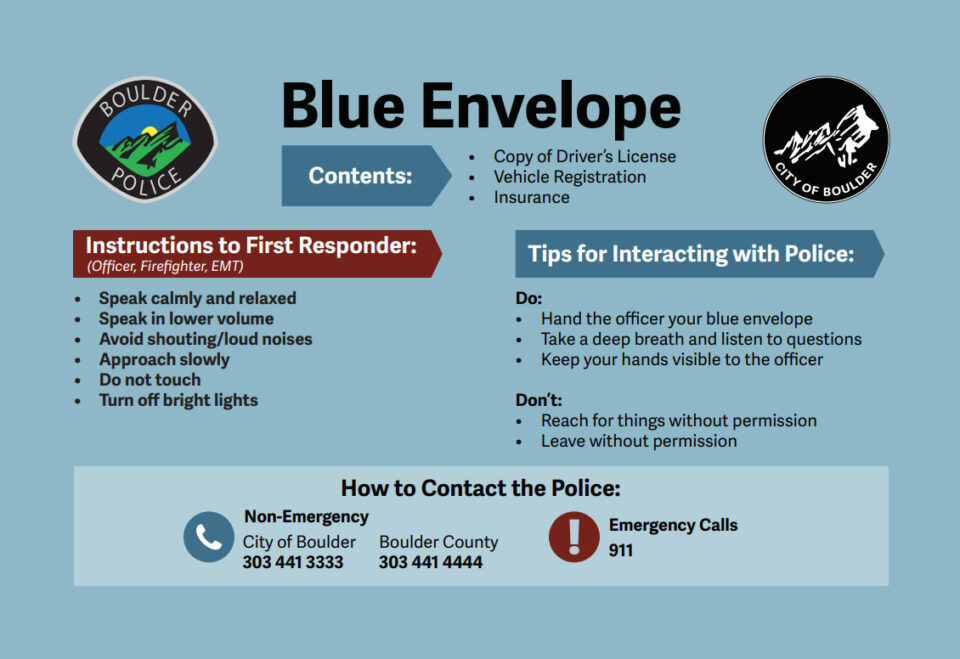
Under a new law Gov. Bob Ferguson signed last week, the state Department of Licensing needs to establish the “Blue Envelope” program.
On the envelope must be printed tips for both the officer and the driver for such interactions. Also included will be guidance on what documents should go inside the envelope, like vehicle registration and proof of insurance. Instructions could include avoiding loud noises, touching and bright lights, speaking calmly and asking simple questions.
Sensory triggers could make it harder for people with autism to respond to questions quickly, or they could respond in ways that officers could misinterpret. Beyond autism, conditions that meet the definition of neurodivergence in the bill include attention deficit hyperactivity disorder, bipolar disorder, dyslexia, obsessive-compulsive disorder and Tourette syndrome, among others.
The bill’s sponsor, Rep. Carolyn Eslick, R-Sultan, said the envelopes are “about protecting people in a moment when a simple misunderstanding can have serious consequences.”
“For someone who processes the world differently, a traffic stop can be overwhelming and frightening,” she said in a statement.
By age 21, one in five people with autism experience being pulled over by police, and one in 20 get arrested, according to a 2017 study.
The blue envelopes will be available to drivers at no cost through licensing offices across the state. The program is voluntary and doesn’t require any medical documentation.
The state Department of Licensing anticipates it could issue 18,000 of the envelopes per year.
As he signed the bill Wednesday, Ferguson called it a “simple tool to improve communication, prevent misunderstanding and reduce stress on all parties involved.”
“It also helps ensure as smooth a process as possible during traffic stops, keeping our drivers and law enforcement safe,” Ferguson continued.
House Bill 2323 passed the House and Senate with only one dissenting vote.
Roughly a dozen states have a version of such a program for people who have a mental illness, disability or are neurodiverse, according to the National Conference of State Legislatures. Some just add a decal to driver’s licenses. Connecticut was the first adopter in 2020. Arkansas, meanwhile, provides a green envelope for drivers with a mental illness. Local governments have also implemented similar programs.
Washington’s law takes effect in mid-June.
Washington State Standard is part of States Newsroom, a nonprofit news network supported by grants and a coalition of donors as a 501c(3) public charity. Washington State Standard maintains editorial independence. Contact Editor Bill Lucia for questions: info@washingtonstatestandard.com.


Real first and last names — as well as city of residence — are required for all commenters.
This is so we can verify your identity before approving your comment.
By commenting here you agree to abide by our Code of Conduct. Please read our code at the bottom of this page before commenting.