
Will you chip in to support our nonprofit newsroom with a donation today?
Yes, I want to support My MLTnews!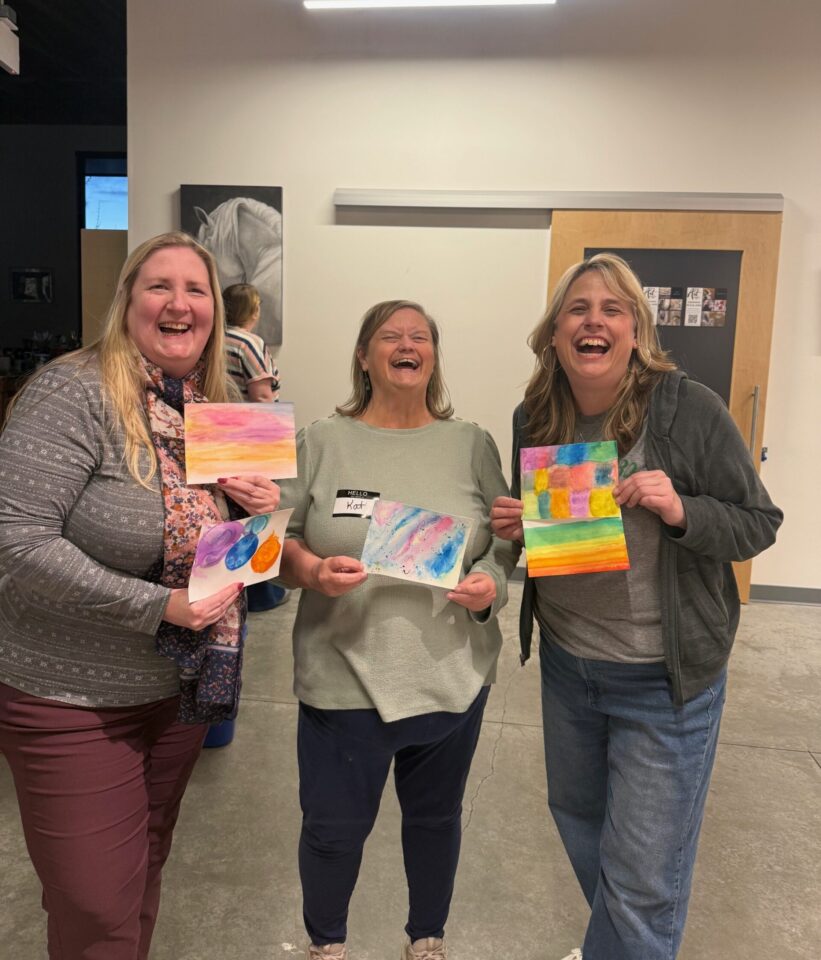
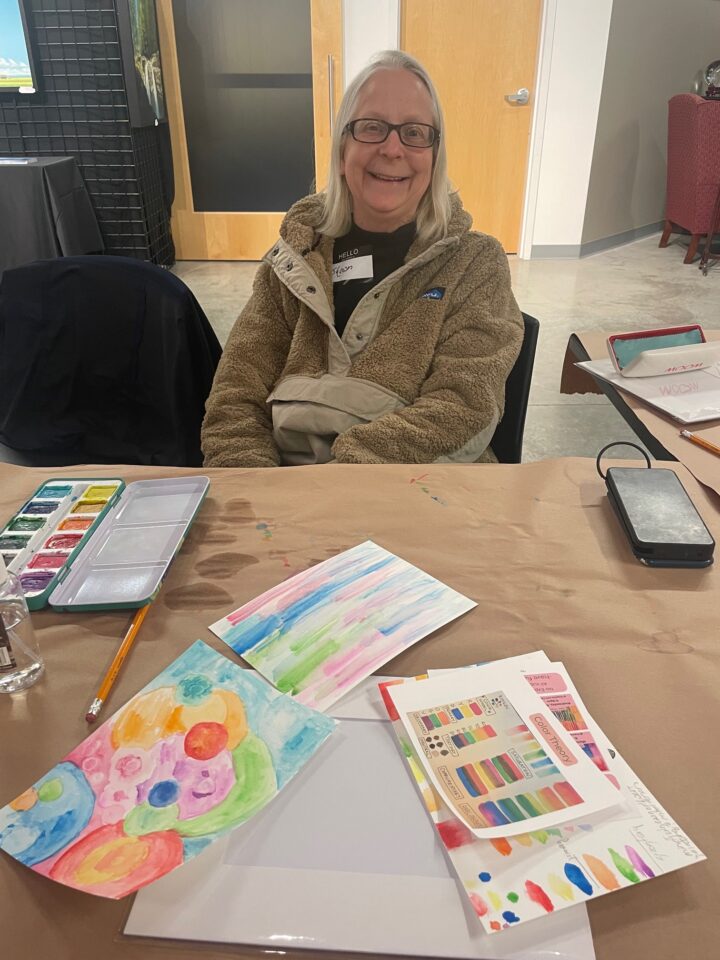
My Neighborhood News Group attended Missy Hancock’s Watercolor for Relaxation class at the Graphite Arts Center last week, drawn by a simple premise: Watercolor painting, when combined with mindfulness, can be restorative as well as expressive.
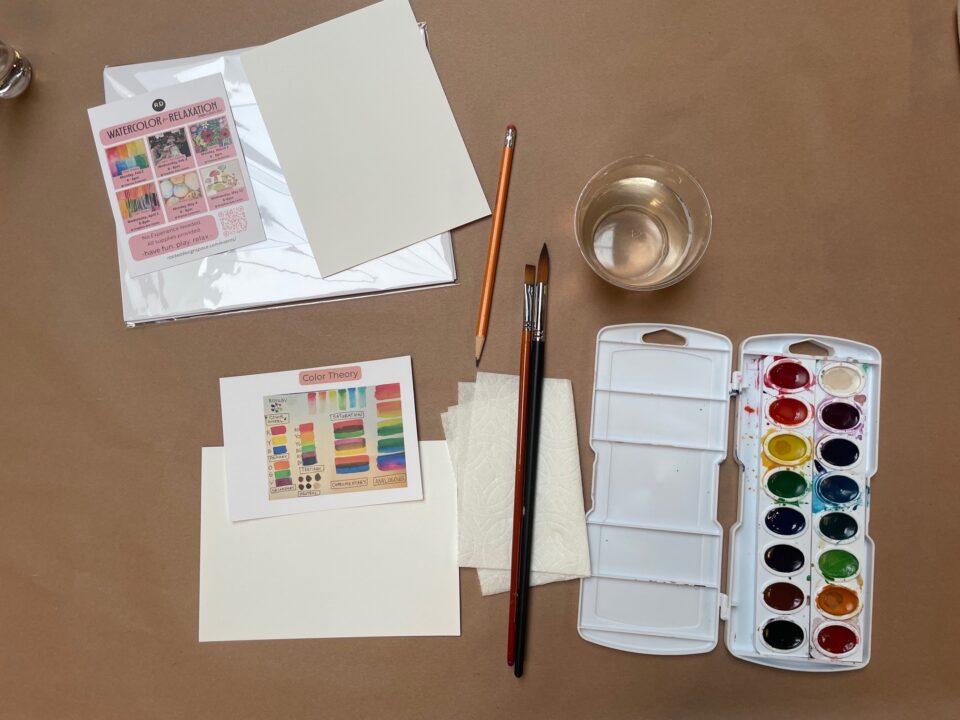
Before class begins, Hancock greets each arrival with an ease that suggests both habit and care. Relaxing music plays in the background. Tables are set with everything needed: A watercolor set, two brushes placed parallel (one round, one flat), a cup of water, a small spray bottle, a paper towel, two sheets of watercolor paper, a pencil, a white window mat, and a couple of Hancock’s postcards. Everything feels intentional.
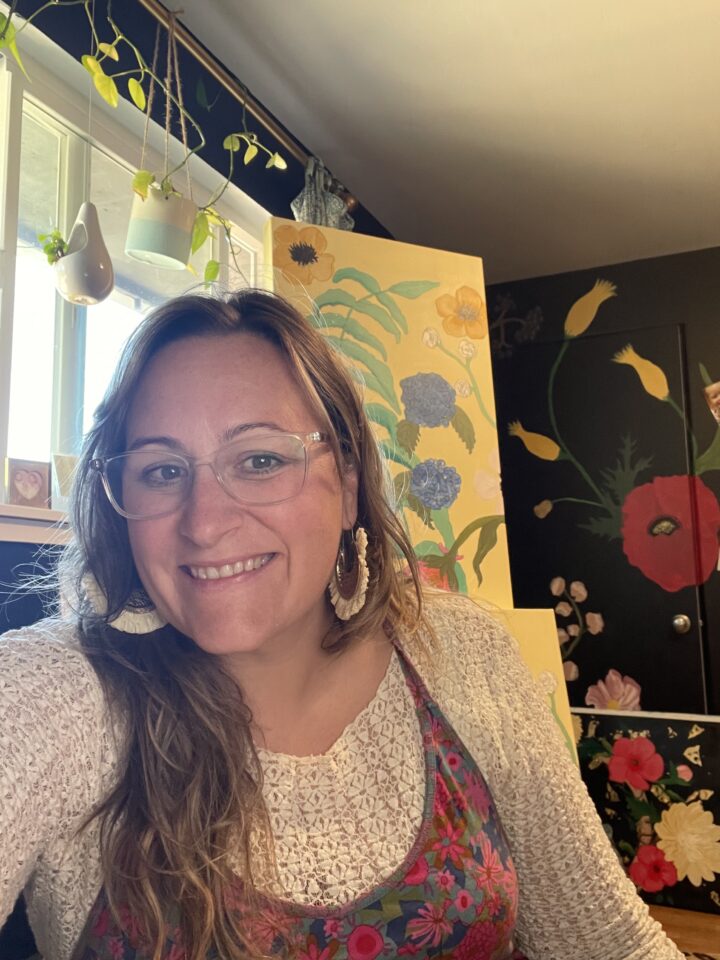
Hancock is a former high school painting and drawing teacher with a master’s in teaching from Seattle University and more than 20 years of experience in education, mural painting and art instruction. She has been teaching the Watercolor for Relaxation classes at Graphite and at the Frances Anderson Center for over two years.
The group seems to be a mix of first-timers, sitting in their seats with quiet anticipation – like myself – and returning students, engaging in friendly chatter and exchanging smiling hellos.
Before Hancock begins, she sets the tone, emphasizing that the goal is not mastery but a suspension of judgment, much like the simple joy a kindergartner experiences when creating art.
“I like to think of this class as sort of a yoga class with art,” Hancock said “It’s something that you can come back to over and over again, and you’ll learn something new each time.”
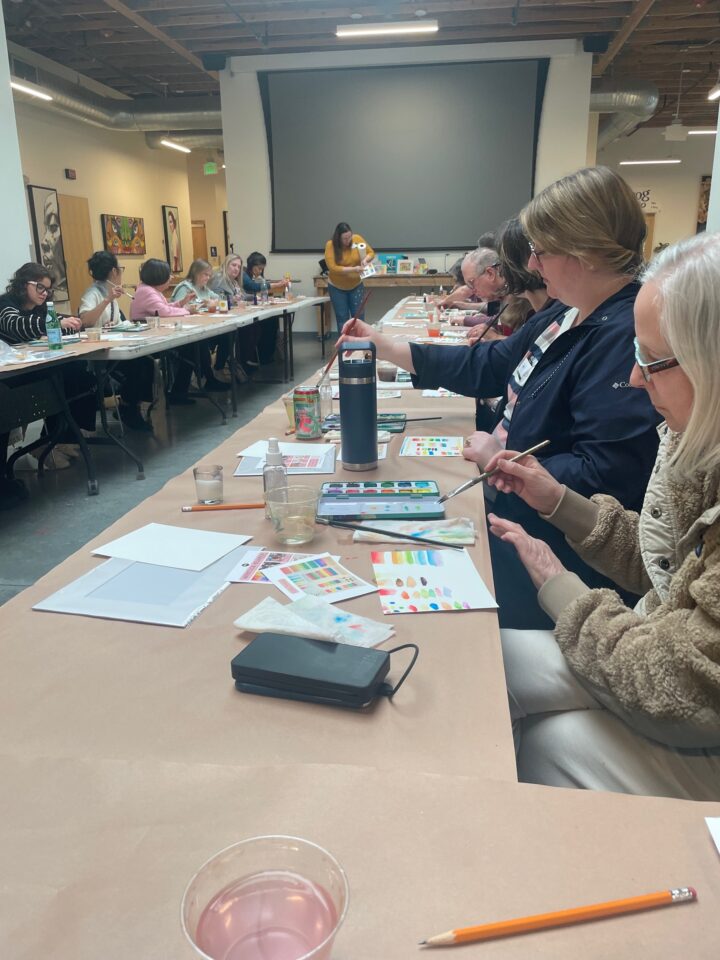
Each class is themed; the next Watercolor for Relaxation class will be Northwest Stones on June 24. Other themes include landscapes, trees, monochrome, feathers, and Paint Your Partner. This class I’m taking is focused on color theory.
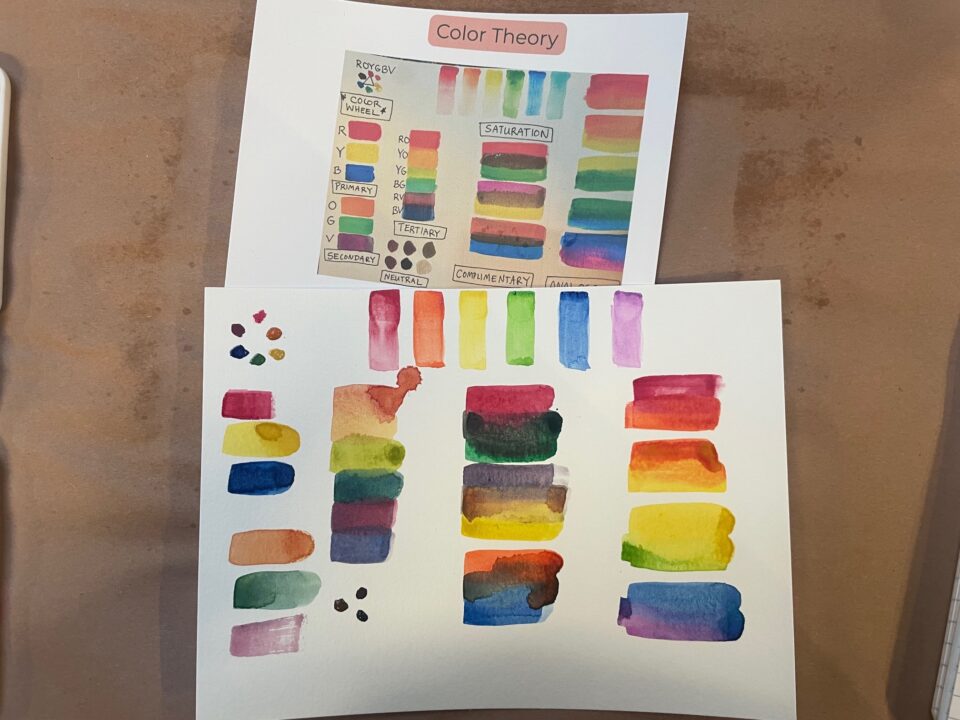
When the overhead video falters, Hancock improvises. Luckily, one of the postcards she provided to everyone was a sample of the color theory chart the class would be using.
She led us through the color chart quickly, and I felt momentarily behind. But when I looked around, everyone seemed focused, not flustered and keeping up. I eventually did, too.
I especially enjoyed creating secondary and tertiary colors that differed from those already in the set. Colors drifted into one another on the palette’s surface. There was something hypnotic about blending the pigments on the smooth palette. It was perhaps the part I wanted to linger on most: Mixing until I got the right color.
When I look up, an hour has passed unnoticed. I appreciated that Hancock had taken the lead, guiding us through the technique so we could move on to the mindfulness meditation and open painting portion of the class.
The class is a sort of hybrid approach: Technique, which requires more cognitive function, and mindfulness, which requires one to let go of control and be more present.
“I think there are a lot of access points in this class,” Hancock said. “If you’re interested in either one of those things, there’s something for everyone.”
Hancock explained that her interest in mindfulness began during the COVID-19 pandemic when she took online mindfulness and yoga classes through Mindfulness Northwest.
I asked about her inspiration behind this class and she said, “I think the short answer is when I paint, I find it very meditative for myself.”
“I have this personal philosophy: the space around you is a reflection of the space inside you. When you spend time making something beautiful, you’re making yourself more beautiful, and that’s how art makes the world a better place.”
Hancock added, “I love doing meditation, and I noticed that teaching this class holds me to my own practice.”
“So that’s kind of where the inspiration came from.”
The Yoga Nidra meditation she leads is one she has written herself, tailored to the evening’s theme. It was perfectly curated because this session’s meditation followed the chakras, matching the same colors in our color theory chart. With each themed class, the guided meditation is written specifically for that session.
For several minutes, no one paints. Brushes rest idle. It’s an unusual prelude to what might otherwise be a purely technical lesson in washes and gradients. But this is not that kind of class.
Music continued to play during the 10-minute meditation. We were guided through slower, belly-centered breathing, noticing sounds near and far and then focused attention on each part of the body before moving through the colors of the chakras: Violet, indigo, blue-green, green, yellow, orange and red.
When I opened my eyes, I felt a personal shift, and looking around, I could sense the energy in the room had shifted as well – as if we had all just landed.
Following the meditation, we moved to open painting, working on the second sheet of watercolor paper. Hancock said she hoped the meditation would help tap into the right side of the brain – a concept popularized by Betty Edwards in her 1979 book Drawing on the Right Side of the Brain.
Hancock said she recalled noticing a shift in her students when using soft music during watercolor painting projects. “It was always a time to chill out,” she said, noting that experience helped her see the connection between watercolor painting and meditation. “I’d tell students, ‘We want to tap into the right side of your brain. We want to let go of judgments and logical thinking.’”
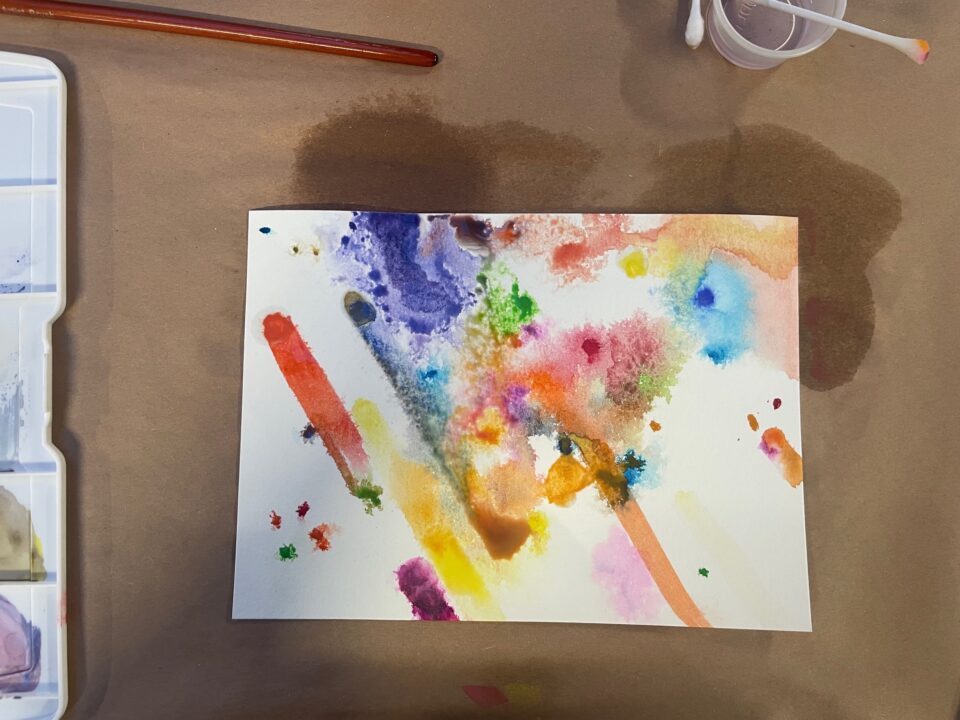
I begin spraying my paints and dampening the paper, and pigments start to bloom outward. Colors begin to move and travel, branching outward in delicate, unpredictable umbels of pigment. Dipping the brush in water also adds to the sense of relaxation.
Looking around the room, I notice that each of us is working on something completely different. Some came with a clear idea of what they wanted to paint. Another, inspired by lotuses glimpsed during the meditation, is creating a multitude of them. Others begin by following Hancock’s samples, experimenting with a rainbow of colors. And another paints organic shapes that resemble an underwater scene.
Guidance is offered lightly, adapted individually. No one is corrected. Some participants stand to use the dryer, and the steady buzzing adds to the focused atmosphere. Hancock comes over to me, noticing the blooms I’m attempting, and suggests trying rubbing alcohol, which pushes the pigment away. She brings some over, and others, intrigued, ask for some as well.
She adds, “I think in my next class, Northwest Stones, we’ll play with materials and mix them with watercolor, including rubbing alcohol and salt.”
At the end of the class, attendees leave chatting, giddy and smiling. I left feeling contented and grateful to have participated, having always wanted to take a watercolor class. A sense of joy lingered in the space.
M.C. Richards, author of Centering: In Pottery, Poetry, and the Person (1964), wrote: “Responses are values, and the responses we foster are the values we teach. There ain’t no hidin’ place down here; we color the atmosphere by our presence in it.”
In Corita Kent’s and Jan Stewards’s book, Learning by Heart: Teachings to Free the Creative Spirit, Kent wrote, “Art does not come from thinking but from responding.”
Decades later, art museums and art centers have increasingly been integrating art therapy, self-discovery and wellness practices into their programming. Hancock’s classes fit within this blossoming landscape.
Watercolor for Relaxation exists in a fluid space between instruction and mindfulness, beyond concern for a perfect, finished product. Like analogous colors, formed by merging and flowing into one another, it’s about response, presence and the act of noticing.


Real first and last names — as well as city of residence — are required for all commenters.
This is so we can verify your identity before approving your comment.
By commenting here you agree to abide by our Code of Conduct. Please read our code at the bottom of this page before commenting.