
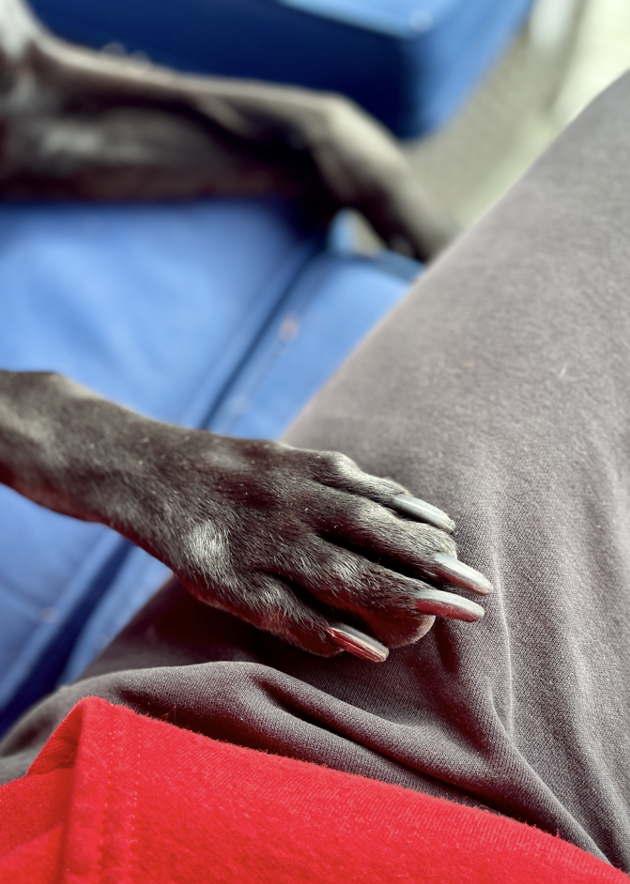
My name is Kristin Schwartz. I am a licensed animal massage therapist with Standing Strong Animal Massage, serving South Snohomish and North King counties. Six months ago I introduced myself in this space and asked you to consider that your pet might be carrying discomfort they have no way to put into words. Since then I’ve covered a lot of ground: fascia, conformation, aging, the nervous system, trauma. If you’ve been reading along, I hope something has shifted in the way you see your animal. That was always the goal, to build awareness and understanding.
This is the last article in the series, and I want to use it to tie some threads together — and introduce one I haven’t talked about yet.
What the Series Has Really Been About
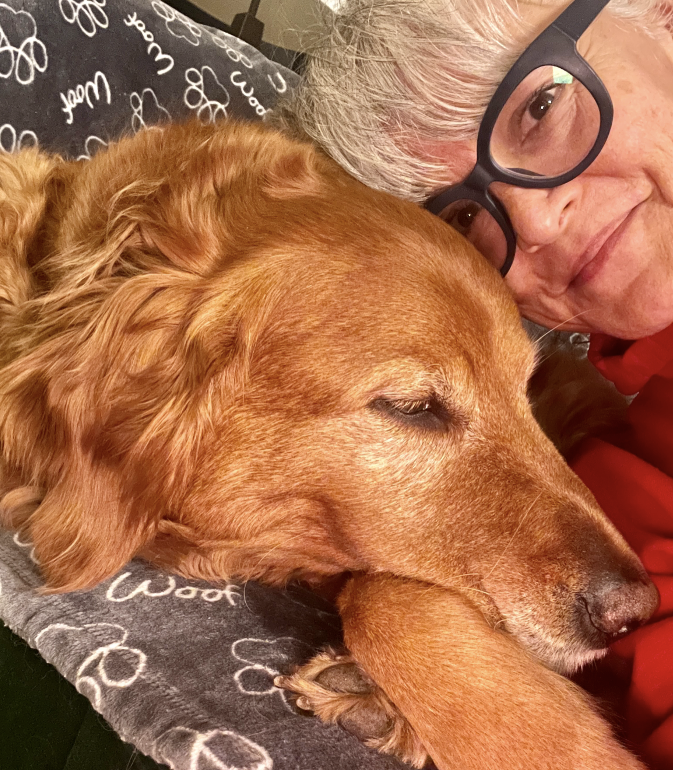
I started with fascia. The remarkable web of connective tissue that holds everything together and, when restricted, quietly limits how freely a body can move. I talked about how the body a dog is born with shapes their physical experience from day one, and how aging layers onto that foundation over time. I talked about the nervous system and the single question it never stops asking: Am I safe right now? Last month, through Esme’s story, I shared what it looks like when a body finally feels safe enough to release what it has been holding for years.
The thread running through all of it is the same: The body and the mind are not separate. What an animal feels emotionally lives in their tissue. What their tissue holds shapes how they move, how they rest, how they relate to the world. You cannot work on one without touching the other. That understanding is the foundation of everything I do.
What I Haven’t Talked About
Here is something I didn’t cover in any of the previous articles, and I think it might be the most important thing I’ve learned: your nervous system is in the room too.
Animals are extraordinary readers of the humans around them. They have been doing it their entire lives, scanning us and picking up the signals we don’t even know we’re sending. The tension in our shoulders. The quality of our breath. Whether we are truly present or somewhere else entirely. They feel all of it, and their nervous systems respond accordingly.
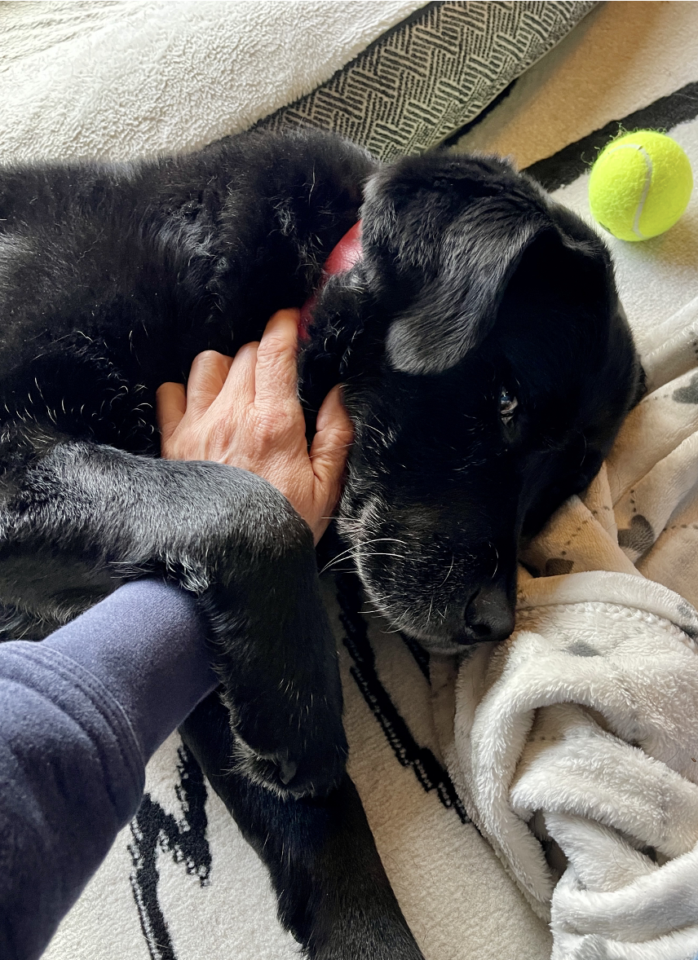
I learned this firsthand, and not just professionally. My own path to this work was a journey of learning to inhabit my own body again — to regulate, to ground, to be present in a way I had never been present before. What I discovered is that when I walk into a session grounded and calm, the animals I work with feel it immediately. Not because of anything I do with my hands in those first moments, but because of what I’m bringing into the room before I ever touch them. The inverse is also true. I learned very early that on days when I was scattered or distracted or carrying my own unresolved stress, animals notice. I made adjustments quickly and implemented a whole routine before every single session. It includes quiet, music with specific frequencies, focusing on the animal and setting intentions (not to be confused with an agenda) and it continues right up until I’m sitting with the animal.
What This Means for You at Home
If our dog is anxious, reactive, or slow to settle, it’s worth asking honestly what our own nervous system is doing in those moments. Not as self-criticism, but as curiosity. Are we braced? Are we holding our breath or clenching our jaw? Are we anticipating their reactions on a walk?
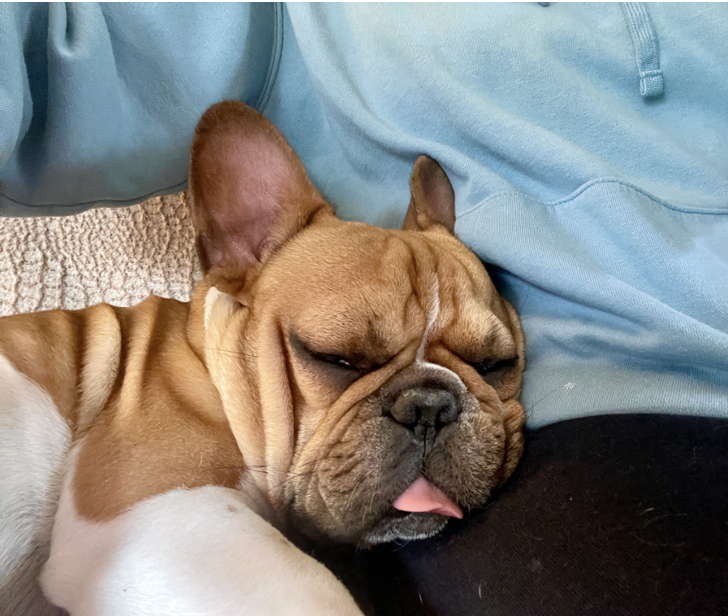
This isn’t about blame. Anxious pets can absolutely dysregulate their humans too. That cycle is very real and hard to interrupt. Change is most available in ourselves. Remember when I said coregulation is real? It happens with slower breath, dropping shoulders and feeling our feet on the floor. Presence for a beat, before we reach to touch our animals.
These things are small. They are also not small at all.
Why I Love This Work
Part of what got me into this work was understanding from the inside what it feels like when a body is holding more than it can manage, and what it feels like when something finally releases. I wanted to offer that to animals who have no other way to ask for help.
What I didn’t fully anticipate was how much the animals would give back. Every session teaches me something. About patience. About listening without an agenda. About the kind of presence that actually helps versus the kind that gets in the way. Esme barking once and walking away taught me more about listening than years of trying to teach myself and thinking I was learning.
Animals are not broken things to be fixed. They are whole beings. Their body, nervous system, history, heart and soul doing the best they can with what they have. My job is to create enough safety that their body remembers how to heal. That’s it. Everything else follows.
Thank You for Reading
 If you’ve followed this series, thank you. Whether you’ve been reading out of curiosity, because something resonated, or because you’ve been thinking about your own animal — I’m glad you are here. Awareness is where everything begins. If you’re curious about the other 5 articles, you can find them here.
If your pet is carrying something (physically, emotionally, or both) I’d love to be part of their story. Feel free to call, text or email. I am a mobile massage therapist. I work in your home, in their space, on their terms.
Learn more at StandingStrongMassage.com, call/text 425-561-9156 or email [email protected].


Real first and last names — as well as city of residence — are required for all commenters.
This is so we can verify your identity before approving your comment.
By commenting here you agree to abide by our Code of Conduct. Please read our code at the bottom of this page before commenting.