
Will you chip in to support our nonprofit newsroom with a donation today?
Yes, I want to support My MLTnews!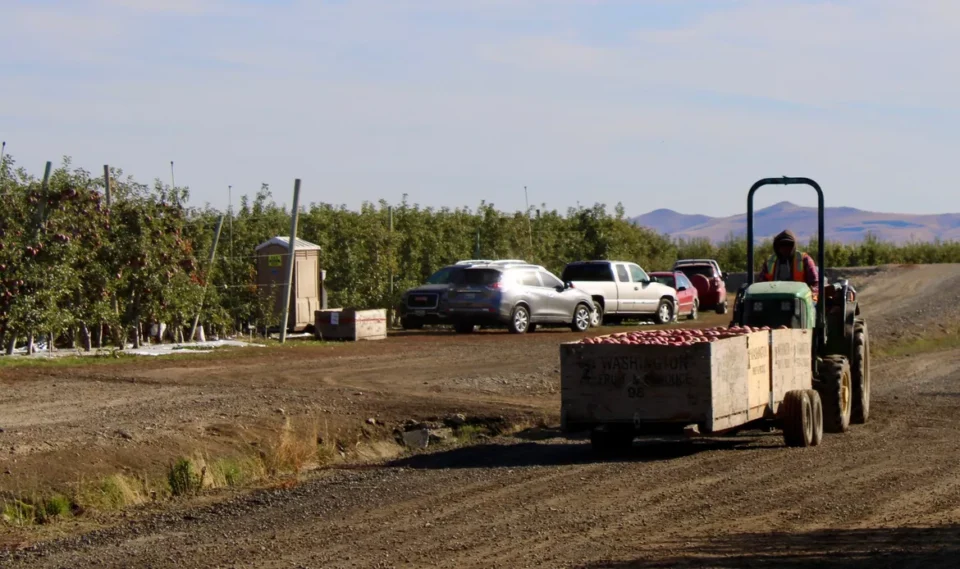
Wildfires have come in hot and early this season – and farm labor advocates say it will only get worse for workers.
“We have to be checking air quality to make sure it’s safe for workers,” said Renson Miranda, field services director at the Worker and Farmer Labor Association .
Wildfires are already disrupting the summer season, worsening air quality and working conditions for approximately 113,000 farmworkers across the state. Miranda, who’s worked at WAFLA for seven years , said cherry and blueberry harvests have not yet faced significant delays but warned that as wildfires remain unpredictable disruptions could increase in the coming weeks, raising respiratory health risks for farmworkers.
Miranda said delays can include starting work earlier to avoid the heat and smoky conditions, or shifting picking to nighttime hours. He said the association works with more than 100 farm contractors across the state.
“We don’t like to, but we have to do what we got to do. The fruit can’t wait too long out in the orchard,” he said.
Although most fires are burning west of the Yakima area, Miranda said winds are pushing smoke south into the lower Yakima Valley, where many farmworkers are picking fruit.
A 2023 University of Washington study on wildfire smoke monitoring in rural central Washington reported that while there have been limited studies focused specifically on agricultural workers, research on other heavily exposed groups points to clear health risks.
According to the study, wildland firefighters have linked repeated exposure to wildfire smoke with short-term decreases in lung function and possible long-term risks such as hypertension.
Research in the general population also has associated smoke exposure with cardiovascular issues, low birth weight and mental health impacts, raising concerns about repeated exposure among outdoor agricultural workers.
Washington adopted permanent wildfire smoke protections for outdoor workers in 2023, with rules taking effect in 2024 that require agricultural employers to monitor air quality and reduce exposure when smoke reaches unsafe levels.
Under Washington Labor and Industries wildfire smoke standards, employers are legally required to provide masks to workers once the air quality index top 100. An index from 101 to 150 is considered unhealthy for sensitive groups, like people with asthma. Air quality over 150 is considered unhealthy for anyone.
“We can’t make it mandatory for everybody to wear, but if it gets to a level where it’s really high, like 180, 200, then nobody’s gonna work, it’s just too unsafe,” Miranda said.
However, Maricela Santana-Walle, environmental justice coordinator for We Are Ella, said that even when air quality is not at its worst, agricultural work requires long hours outdoors throughout the growing season, leaving workers still highly exposed.
“A lot of farmworkers are either picking or pruning trees; they’re doing other tests that involve being outdoors,” Santana-Walle said.
“When we’re thinking about the time that they’re outdoors from like early May, even sometimes like late April, to all the way to October, all those months are very dry and very hot and so they’re all susceptible to the smoke,” she said.
A helping hand
As wildfire smoke begins to mark the early weeks of fire season, Nuestras Raíces Community Center is assembling 80 resource kits for farmworkers out in the fields of Adams County.
Partnering with the Washington Immigrant Solidarity Network, each kit will include long -sleeved shirts, goggles, masks as well as pulse monitors. Fernanda Mazcot, executive director of the nonprofit, said the monitors will help farmworkers check their respiratory levels while on the job.
She also said they are including “know your rights” brochures in the resource kits due to ongoing immigration enforcement fears. Mazcot said they hope to understand if any farmworkers aren’t filing complaints when it comes to wildfire protections due to immigration crackdowns.
“We’re going to see if we can go in and get more information about the conditions that they’re working under, and then what is being offered to them by the employers,” she said.
Miranda said through WAFLA, they are setting up tents for farmworkers to use as shaded rest areas during breaks and lunch hours. He said they also have jugs of water being filled up throughout the day while farmworkers pick.
“It’s just a matter of farmers really reminding their crew leaders, their supervisors, their foremans to be proactive in reminding their workers the importance of taking breaks, drinking enough water, and when we have to wear the masks, suggest that they do,” he said.
“You can play a video at the beginning of wildfire season, and say, ‘Hey guys during wildfire season, drink plenty of water,’ but that’s not enough. We got to keep reminding them every single day,” Miranda said.
Monica Carrillo-Casas, reporting on northeastern rural communities for the Spokesman-Review, is with the Washington State Murrow Fellowships, a local news program supported by state legislators.


Real first and last names — as well as city of residence — are required for all commenters.
This is so we can verify your identity before approving your comment.
By commenting here you agree to abide by our Code of Conduct. Please read our code at the bottom of this page before commenting.