
Will you chip in to support our nonprofit newsroom with a donation today?
Yes, I want to support My MLTnews!
This is the latest in our “Health Matters” series focused on health topics in South Snohomish County and sponsored by the Verdant Health Commission. Read past articles in this series here.
Snohomish County increases testing even as statewide rates remain among lowest in country
The Edmonds School District has spent the past year swapping out old faucets and installing filters to keep lead out of students’ drinking water. But health advocates say there’s more work to be done in a state where so few young children are tested for the toxin, leaving possible exposures undetected.
“We’re robbing children of their potential,” said Rep. Gerry Pollet, D-Seattle, who authored the state legislation requiring school water testing. “They’re possibly drinking lead in their house or school and we’re not screening them the way the law says we’re supposed to – which could have long-term effects.”
Lead is a heavy metal that has been used in everyday items from paint to gasoline and plumbing. The toxin – even in very low levels – can have detrimental health impacts, especially for the youngest children.

While the U.S. took steps decades ago to reduce lead in common items like paint and gasoline, lingering effects remain. Today, the primary source of lead exposure among children stems from lead-based paint chips and contaminated soil, notes a 2023 Washington state audit. Lead can also enter the water supply through lead pipes and plumbing fixtures.
School water testing reveals trouble spots
Several years ago, Pollet took steps to reduce lead exposure, authoring a law that required school districts across the state to test water sources for lead. His thought process: While it’s tough to test all water children consume, schools are a key component of a child’s daily schedule.
That testing revealed numerous sites statewide that exceeded the school standard of 5 parts per billion (ppb), many by dozens of times. In the Edmonds School District, for example, tests identified a sink in a Brier Terrace Middle School cafeteria that measured 412 ppb and a former Alderwood Middle School kitchen sink that registered 396 ppb – both roughly 80 times the level allowed in public schools.
Once schools identify problematic locations, the law requires them to address the underlying source and then retest.
“We were very clear and transparent in our communications about the results and what we’re doing to remediate,” said Curtis Campbell, the Edmonds School District spokesperson.
In most cases, an older faucet was the culprit, and the District simply removed that fixture. Some faucets manufactured before 2014 legally contained lead, which can leach into standing water — especially when the faucet isn’t regularly used. That’s why letting the water run for a few minutes before drinking can reduce lead exposure.
In a few cases, though, the lead likely entered the water supply via interior piping. For those situations, the District used lead elimination filters, a more financially viable option than tearing through walls to find the culprit. The District also replaced some water fountains.
The water efforts cost the Edmonds School District just over $300,000, $241,300 of which a grant covered. The District shouldered additional costs of about $60,000-$65,000, which included water deliveries during the remediation, various coordination efforts, managing the grant and meeting with the community.
“Obviously some people were more concerned than others,” spokesperson Campbell said. “We didn’t have people showing up to board meetings, but we did have questions.”
The District did not receive any reports of students with elevated blood lead levels, and people interviewed by My Neighborhood News Group also reported no elevated results — including a parent who tested a child exposed to a kindergarten sink at Sherwood Elementary, a site that measured 323 ppb.
Why lead is dangerous for young children
Young children are especially vulnerable to lead because of the way their bodies absorb the toxin, explained Dr. Kenisha Campbell, a pediatrician and adolescent medicine specialist serving as chief medical officer of the Seattle Children’s Care Network. Plus, babies and toddlers are more likely to put objects with lead, such as toys or jewelry or even paint chips, in their mouths.

Once the substance enters their small bodies, their gut absorbs much higher amounts –about 50% compared to roughly 10% for adults, she said. Lead can also enter the body through the skin or lungs. Once absorbed, lead travels to the blood, bones, and teeth and soft tissues, like the brain, liver or kidneys. Lead easily crosses the blood-brain barrier, so even low levels can impact someone’s learning ability, attention span and IQ.
“There is no safe level,” Dr. Campbell said. “If there’s a higher concentration, there’s a higher impact.”
Blood tests a crucial — but underused –strategy
Blood screening tests are a key tool to identify and eliminate lead contact among young children, public health experts say. That’s because it’s hard to detect exposure otherwise.
“You’re not going to have any obvious acute symptoms but the impacts are lifelong, particularly for children under 6 whose bodies are rapidly developing,” said Gift-Noelle Wango, the children and family health supervisor for Snohomish County Health Department. “That’s why it’s important to increase testing rates.”
But Washington’s blood lead-level testing is one of the lowest in the United States, according to a 2023 state audit of children enrolled in Medicaid. When compared to six other Western states, Washington had the highest percentage of children with elevated blood lead levels, yet had the second-lowest testing rate.
“Here in the beautiful Evergreen State, we may think lead exposure is only an issue on the East Coast or in the Midwest, places with a history of industrial pollution and older homes,” the state report noted.
Homes built before 1978 are more likely to contain lead-based paint. About 47% of housing in Washington state was built before 1980, according to the state department of health.
Children may also be exposed through contaminated soil, take-home lead from a household member’s occupation or hobby (such as construction, metal work or making lead fishing weights), imported spices, cosmetics, traditional medicines and lead-glazed pottery or cookware, Wango noted.
Washington’s testing rates among country’s lowest
Across the U.S. — and even within states themselves — childhood lead testing rates vary widely. While some states test all children regardless of insurance type or perceived risk, others focus efforts only on specific population. Massachusetts reported testing roughly 75% of children in 2024, while Washington state’s 2024 figure was under 10%.
All children who use Medicaid, the health insurance for low-income residents known as Apple Health in Washington, are supposed to receive testing at 12 months and 24 months, according to federal regulations. Children from low-income households face a heightened risk of lead exposure. They might live in older homes that aren’t well maintained, or reside in industrial areas where lead has seeped into the soil. Nutritional deficits are another factor that disproportionately impacts lower-income children. If a child’s calcium and iron levels are low, for example, the body will absorb more lead.
Regardless of a child’s insurance type, though, blood testing is recommended at 12 and 24 months if there is any risk factor for lead exposure, according to the American Academy of Pediatrics. That could include living in a home that was built before lead paint was banned in 1978, especially if it has been recently remodeled or has chipping paint.
Adherence to those guidelines can differ, too, among individual medical providers.
“I feel there is a lack of awareness for all kids,” Dr. Campbell said. “Providers are supposed to be asking standard questions to find out if they’re exposed, but the questions are not routinely being asked.”
Efforts aim at boosting lead testing rates
The Washington State Auditor’s Office laid out steps that could improve testing rates, including adjusting language in contracts from the Health Care Authority, the agency that administers Medicaid in Washington. The audit points to contracts that do not clearly specify that managed care organizations are responsible for ensuring that providers conduct all required blood lead tests. (The State Auditor’s Office is currently working on a follow-up report.)
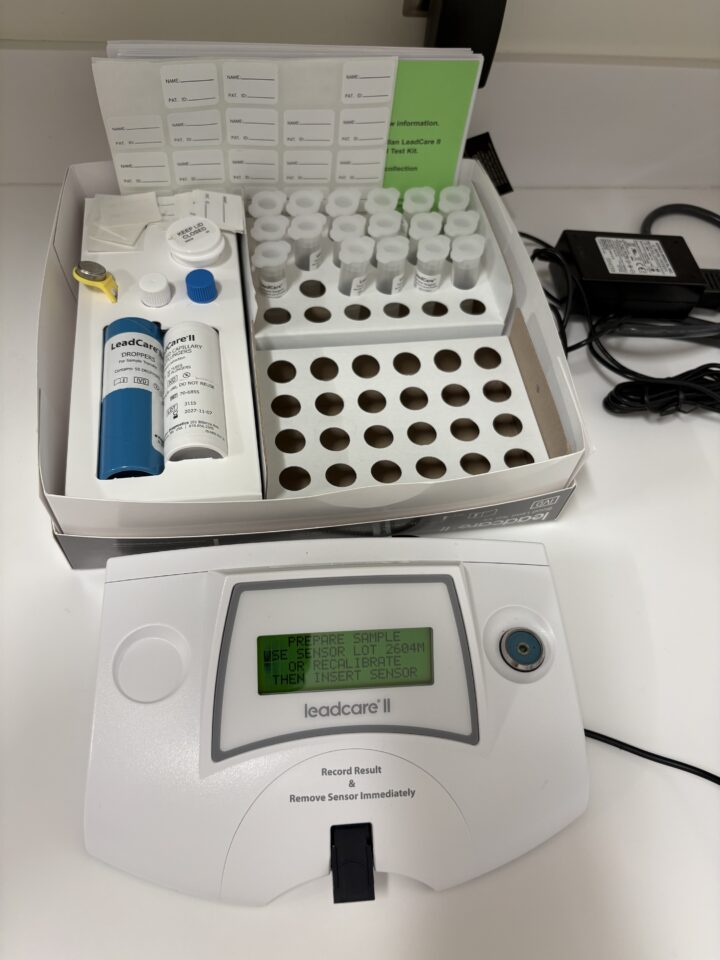
Making testing more convenient for providers is another strategy that could soon make inroads locally. Richmond Pediatrics in Mountlake Terrace is one of several Puget Sound clinics receiving new lead screening machines. Molina Healthcare of Washington, a managed care company that specializes in health insurance for low-income individuals, is funding the machines in the hopes of elevating the screening rates, a company spokeswoman said.
That step could increase testing figures, based on Dr. Campbell’s experience at the Odessa Brown Children’s Clinic, a location where about 65% of its patients use Medicaid insurance. Even though federal guidance calls for all Medicaid-enrolled children to be screened, just 5% received a blood draw before the clinic added the new machine. Now, that number has soared to nearly all children with Medicaid.
The rising rates likely have to do with provider education and convenience, Dr. Campbell said. Previously, the lead testing required a blood draw, which can be tricky for young patients. Now, a simple finger prick can identify lead present in the blood.
“This increases access to screening,” she said. “Kids don’t want a blood draw and parents don’t want to deal with unnecessary blood draws.”
If lead is identified, a blood draw is still necessary to confirm results. So far, the increased screening hasn’t identified many high lead levels, though Dr. Campbell cautioned that there can be geographic variety depending upon a facility’s location. A clinic in an area with older homes or near former industrial sites could present higher figures.
Parents should be proactive to ensure their children aren’t being exposed to lead, Dr. Campbell said. She encouraged all parents and guardians to bring up the topic with a pediatrician, asking: Can we talk about my child’s risk of lead exposure?
Snohomish County makes strides
Historically, Snohomish County’s blood lead testing rates have fallen below the already low state average. That began to shift around 2024, with the County edging slightly past the state and eventually surpassing the overall Washington figures last year. The County’s rates of testing all children rose from 3.3% in 2020 to 11.7% in 2025.

“We have been doing a lot of work to raise awareness,” said Katie Curtis, the prevention services division director at the Snohomish County Health Department.
Earlier this year, the state Health Department lowered the “lead public health action level” from 5 micrograms per deciliter (µg/dL) to 3.5 µg/dL, a measurement of the lead in one’s blood. Snohomish County had already implemented the lower lead public health action level in 2022 ahead of the statewide change, resulting in more children being identified and more outreach to their medical providers, Wango added.
Beyond testing, Snohomish County also directly works with low-income housing agencies to support the health of children living there. The department created a health care provider toolkit and has met with clinicians to spread awareness that lead exposure can happen in Washington state, too.
“The community isn’t aware it’s still a problem and still needs to be addressed,” Wango said. “The hope is that we can create awareness so providers will initiate the discussion.”
Moving forward, steps such as including reminders in the electronic health record could help, too, she added. Improving Medicaid reimbursements for the tests may be another incentive.
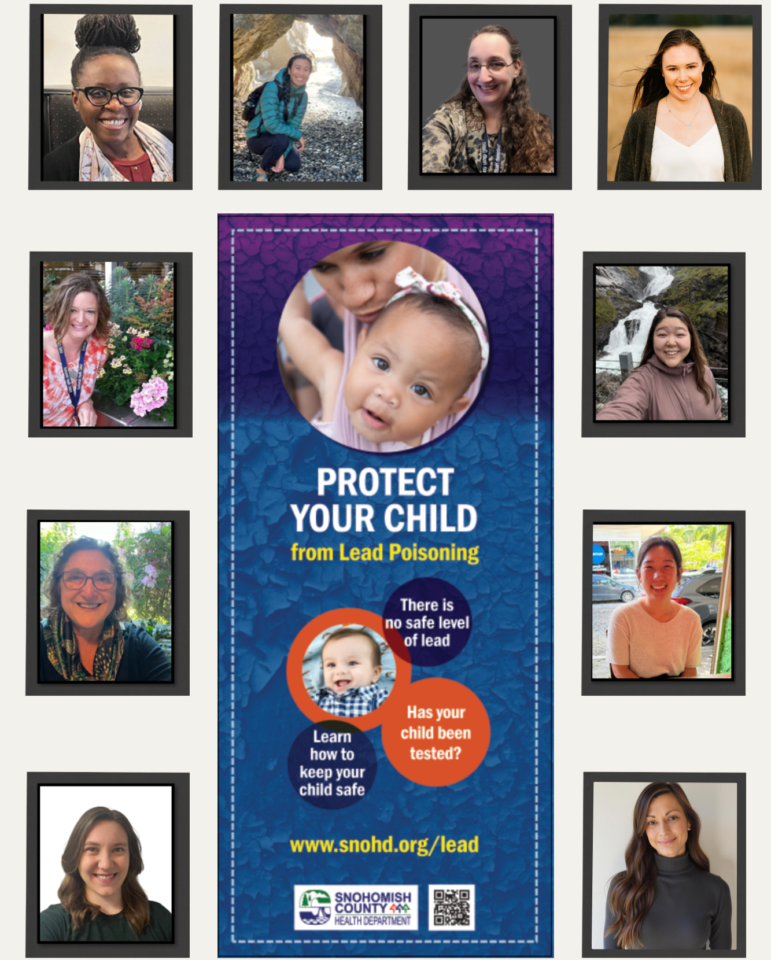
“As more providers learn this is an issue, I believe they’re going to increase testing,” she said. “But clinical settings need to put in systems to support providers who want to do that.”
The work in the Edmonds School District this year added to those communication and educational efforts, she said. The outreach materials that accompanied the lead testing results – plus the schoolyard conversations that likely followed – all contribute to a growing community awareness of lead exposure and its health impacts.
“The water testing is an opportunity to educate and increase awareness,” she said. “Any opportunity to address the issue of lead in blood is the right move.”
More information and resources
Highest lead scores in the Edmonds School District
The Edmonds School District identified numerous sites that far exceeded state standards for lead in public schools, or 5 ppb. These sites have already — or are in the process of –being addressed. For more information on all schools and updates on remediation, check out these reports.
- 412 ppb: Brier Terrace Middle School cafeteria sink
- 396 ppb: Former Alderwood Middle School kitchen sink
- 323 ppb: Sherwood Elementary classroom
- 285 ppb: Hilltop Elementary workroom sink
- 212 ppb: Former Alderwood Middle School kitchen pot filler
When should children enrolled in Medicaid get tested for lead?
- 12 months
- 24 months
- Between 24 and 72 months if not previously tested, particularly if they have risk factors like living in a home built before 1978.
Source: Testing for Lead Exposure | Washington State Department of Health
Snohomish Country’s lead testing rate for children under age 6
2020: 3.3%
2021: 3.8%
2022: 4.2%
2023: 6.4%
2024: 9.6%
2025: 11.7%
Common sources of lead exposure for children
- Lead-based paint
- Contaminated soil
- Children’s toys and jewelry
- Water
- Lead-glazed ceramic pottery and cookware
- Traditional home remedies and cosmetics
- Imported candy
Source: Common Sources of Lead Exposure | Washington State Department of Health
Kellie Schmitt is an award-winning health reporter based in Edmonds. She covers health policy, public health and children’s health for a variety of publications including the Johns Hopkins University Public Health Magazine, ParentMap, and USC’s Center for Health Journalism. She has a master’s in science writing from Johns Hopkins University.
This series is supported by funding from the Verdant Health Commission. The My Neighborhood News Group maintains full editorial control over content produced as part of this series.


Real first and last names — as well as city of residence — are required for all commenters.
This is so we can verify your identity before approving your comment.
By commenting here you agree to abide by our Code of Conduct. Please read our code at the bottom of this page before commenting.