
Will you chip in to support our nonprofit newsroom with a donation today?
Yes, I want to support My MLTnews!
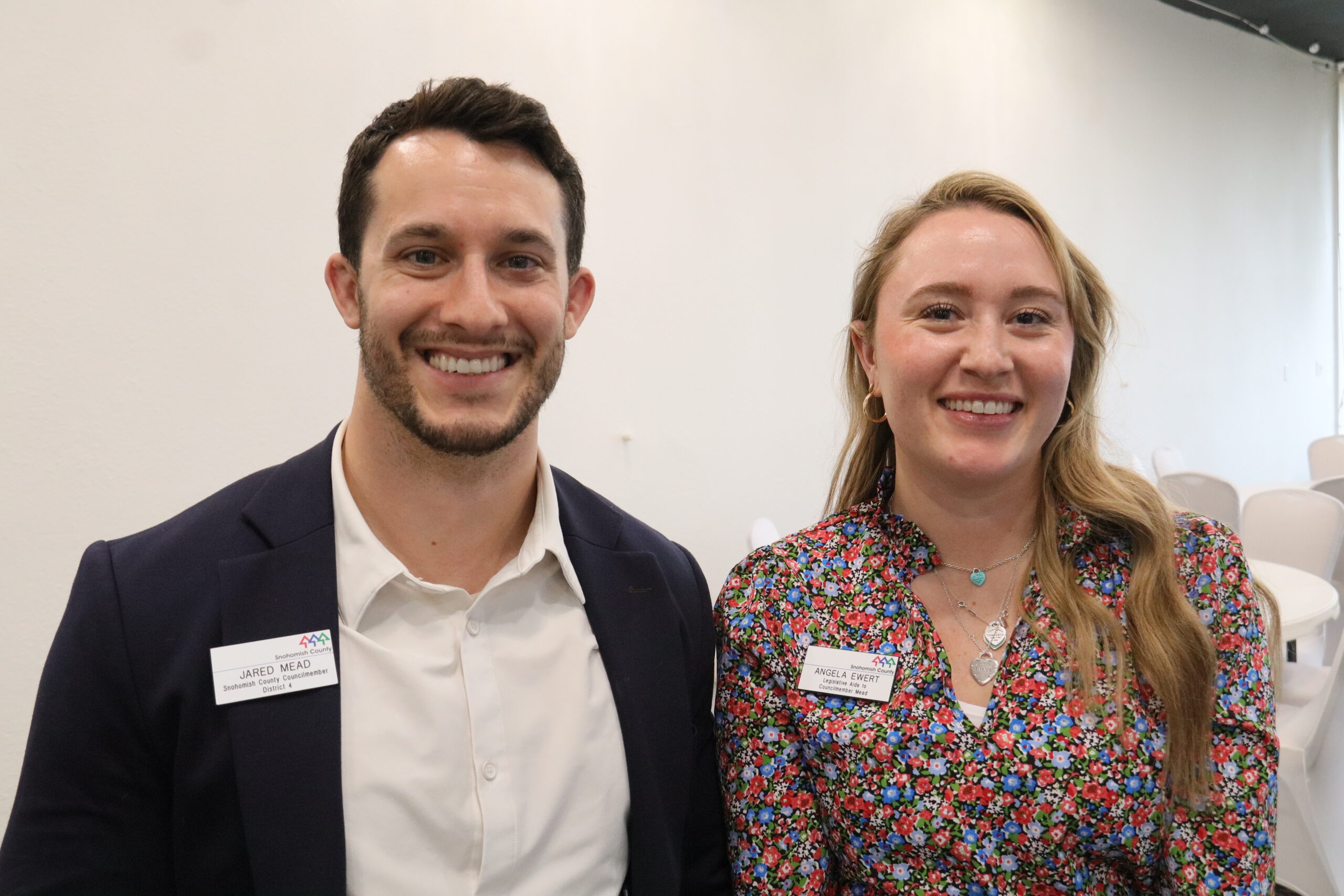
Snohomish County Councilmember Jared Mead, who represents District 4 including Mountlake Terrace and Brier, talked to about a dozen business owners Thursday about countywide issues, such as affordable housing, preserving small farms and the county budget. The event was hosted by the Mountlake Terrace Chamber of Commerce and Shahi Tandoor & Grill.
With the current Snohomish County population nearing 900,000, Mead said housing and population growth are the “most critical issues of our time” because the County expects to have about 350,000 more people by 2044. Under the Washington state’s Growth Management Act, the County must plan for that influx, which Mead translates to about 180,000 units of housing, mostly through upzoning within existing growth boundaries.
Mead said the County’s newly adopted Comprehensive Plan shifts too heavily toward rental development at the expense of homeownership. He said the County currently has about 340,000 housing units serving nearly 900,000 residents, with about 70% consisting of owner-occupied housing and 30% rentals. However, under the new plan that ratio is expected to reverse over the next 20 years.
“We’re completely inverting the ratio,” Mead said, noting that about 70% of the planned 180,000 new units would be rental apartments, primarily along transit corridors, while only 30% would be ownership opportunities.
Mead called the plan “morally bankrupt, criminal and short-sighted.” He warned the policy could have long-term economic consequences by discouraging people from putting down roots in the area.
“You don’t see a future where you don’t see the capability of owning housing,” Mead said, adding that the housing approach could lead to economic challenges in 15 years because people will not start families or long-term careers in a place where they see no path to home ownership. Mead said he proposed changes to the Comprehensive Plan with some Republican colleagues but those efforts were vetoed.
“Next year we will have a change in leadership at the County level, and we’ll see a bunch of new ideas being proposed for how we’re going to address the housing crisis,” Mead said.
Mead said the average age of a first-time homebuyer is now 41, compared to 31 before the COVID-19 pandemic. He added that the age of owning a home “never eclipsed 30 years old in American history” before 2015.
“This is the first generation that is not guaranteed,” Mead said, referring to the long-held expectation that children will be better off than their parents. He linked housing affordability challenges to delayed marriage, declining birth rates and worsening mental health.
“If somebody doesn’t feel solid financially, they’re not going to care about what’s happening in Iran…AI, climate change…They’re going to care about feeding their kids,” he said. “This generation, my generation, cannot buy anything anymore.”
County budget
Mead said Snohomish County faces a growing structural budget deficit and limited options to address it. The County’s $330 million annual budget relies mostly on sales tax and property tax revenue, each making up about one-third, with the remainder coming from fees and other sources. He said state-imposed limits cap property tax increases at 1% annually, even as inflation and costs rise faster.
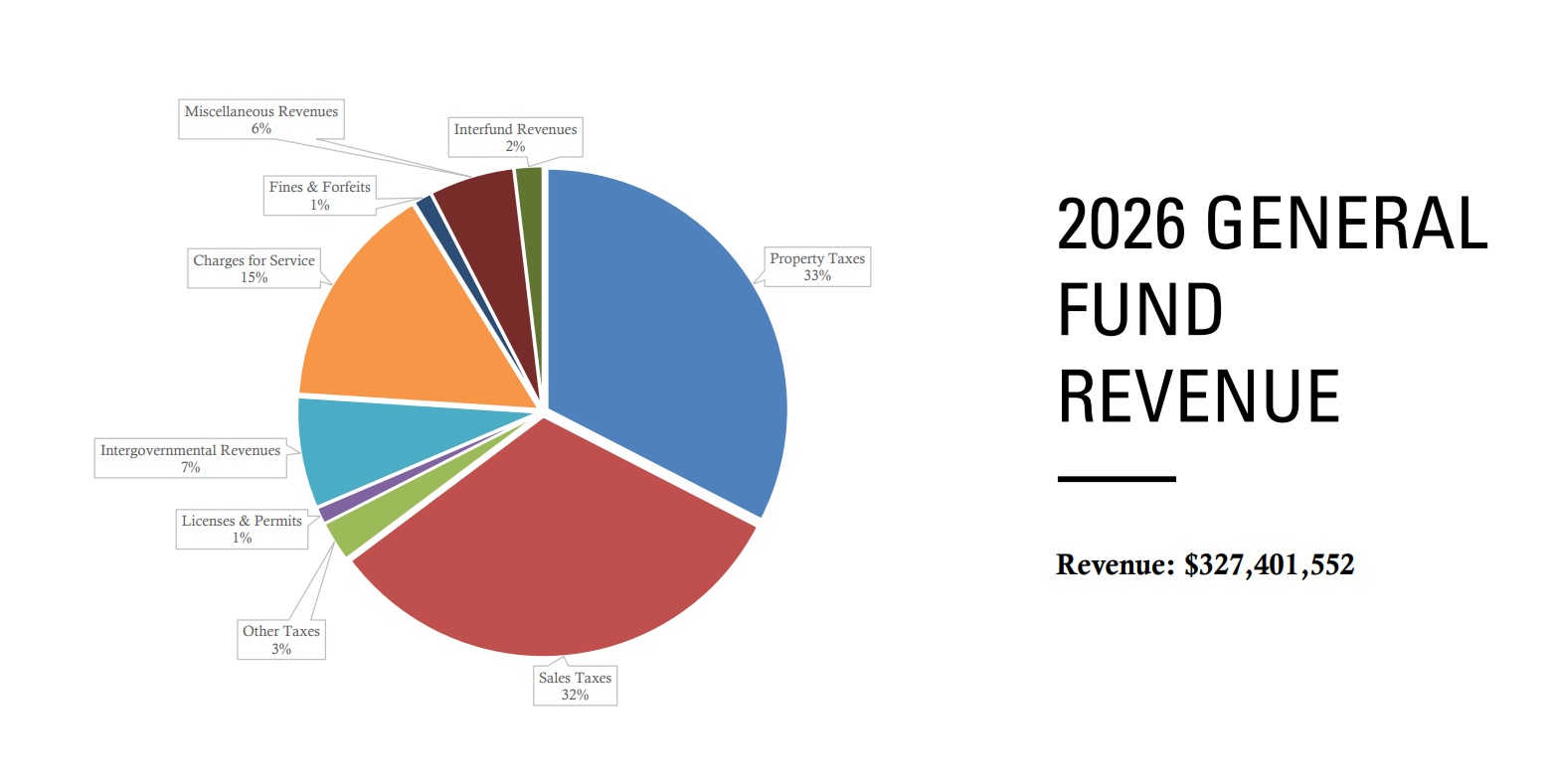
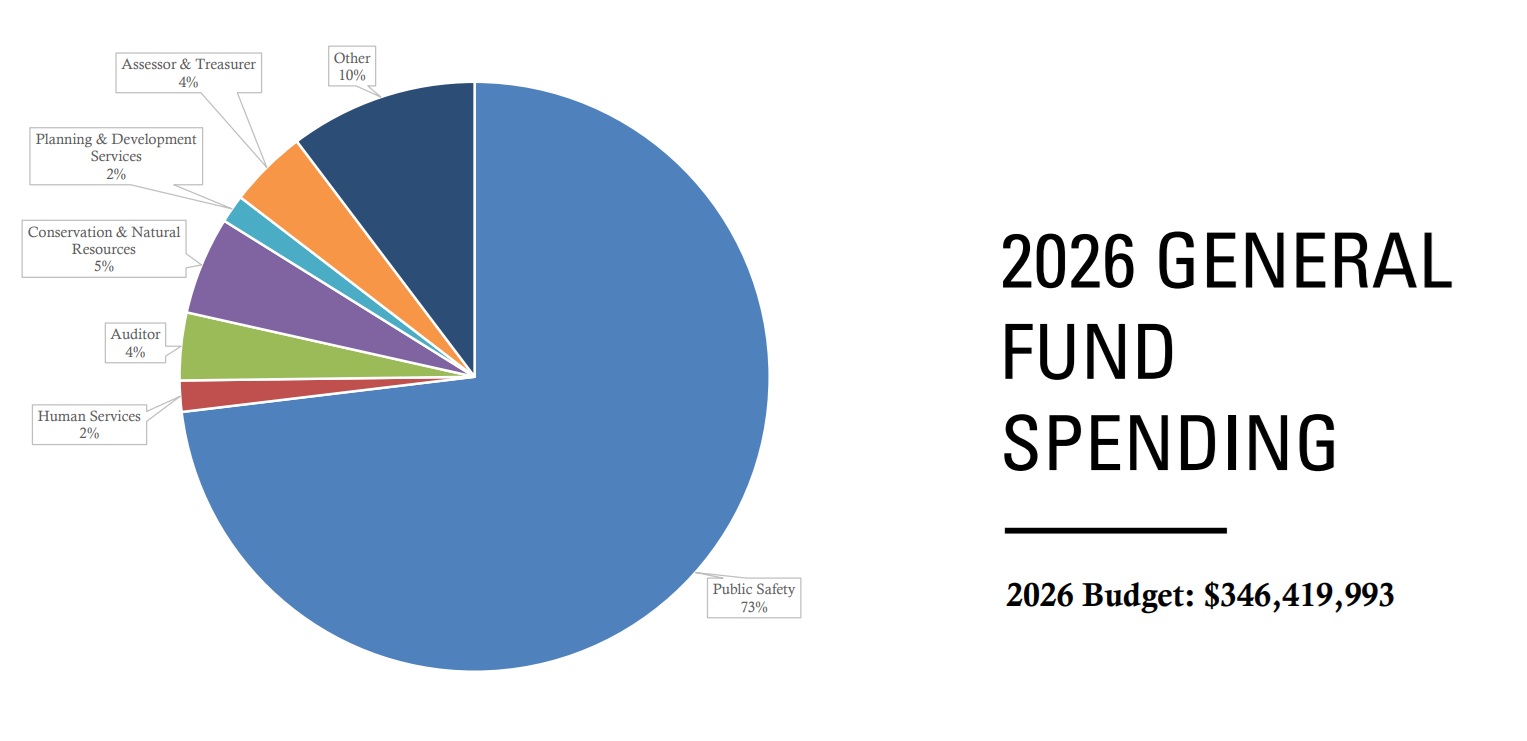
“General inflation is beating our government’s budget,” Mead said, adding that elected officials have historically avoided raising revenue while continuing to approve spending. He said the County has run a structural deficit since before the pandemic, which was temporarily offset by about $200 million in federal aid. He said the deficit has since grown from about $17 million annually to nearly $28 million due to inflation, labor costs and other factors.
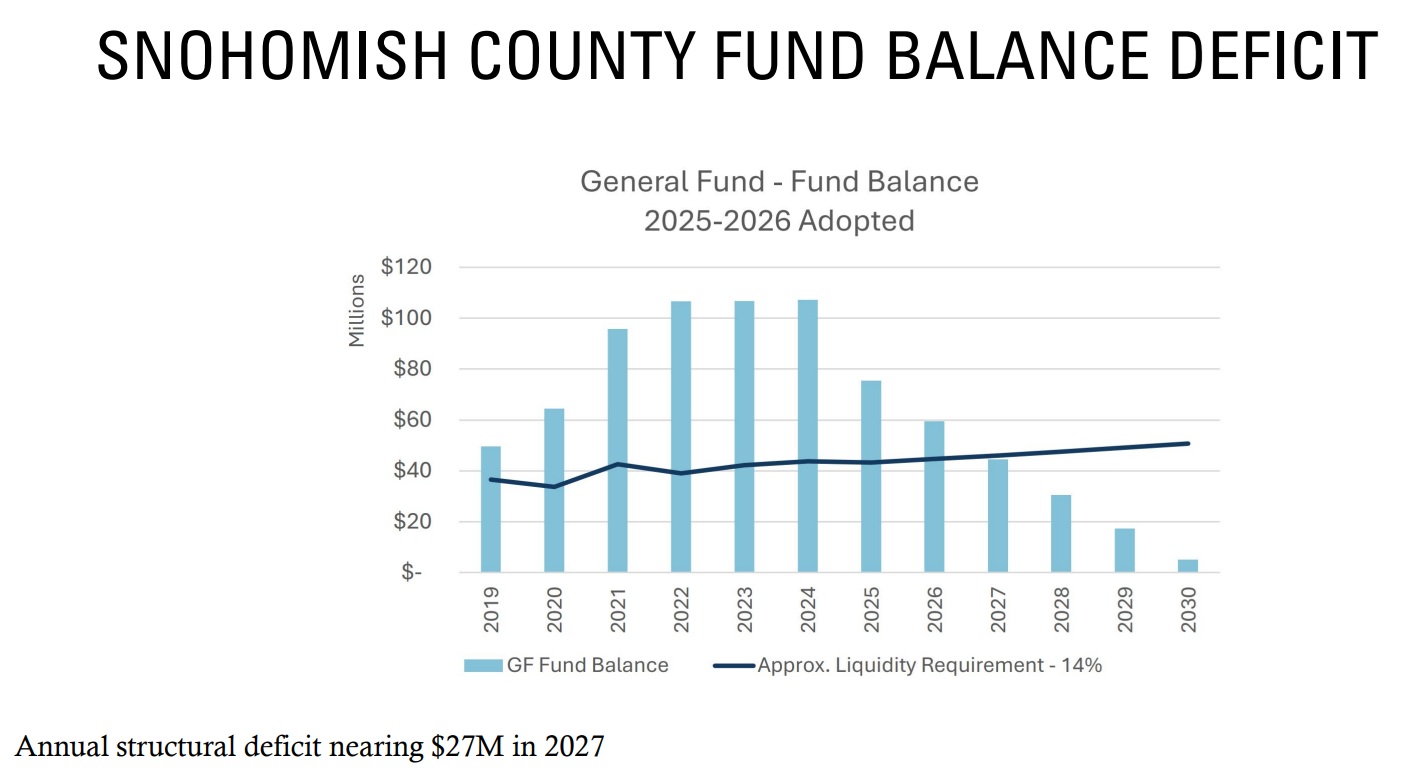
Mead said when he was elected to the County Council, previous County Councilmembers chose to skip the banked capacity option, which had built up to about 8.5%. Currently that capacity is at 4.5%. The current proposal from the county executive, he said, is to combine the regular 1% increase with the remaining banked capacity in a single move.
“You can park it, and you can take it out next year,” he said. “So you can do 1% each year, but you can do your 1% plus whatever you banked.”

Mead criticized the use of one-time American Rescue Plan Act (ARPA) funds to support ongoing programs, saying it created long-term obligations without sustainable funding. He also pushed back on a set of revenue proposals backed by the county executive and a fiscal task force, including a sales tax increase, higher property taxes and new vehicle fees. He said those combined measures could cost the average taxpayer hundreds of dollars annually.
“I calculated it all out. It’s around $600 to $800 a year, potentially a little bit more, depending on what rate we use for the road levy increase,” he said. “I think that that’s too much. I think that there’s a way to reduce spending to a level that we don’t need to pull all of the levers.”
Mead said he favors a mix of targeted cuts and limited revenue increases rather than relying primarily on new taxes.
Edmonds resident Ann Jacky, who co-owns Network Wiring Services in Mountlake Terrace with her husband Dan, said she noticed many cottage homes were built in Lynnwood, and wondered why more middle housing isn’t being built.
The County defines middle housing as duplexes, triplexes, townhouses, courtyard apartments, cottage housing and stacked flats. They fall between detached single-family homes and dense apartments.
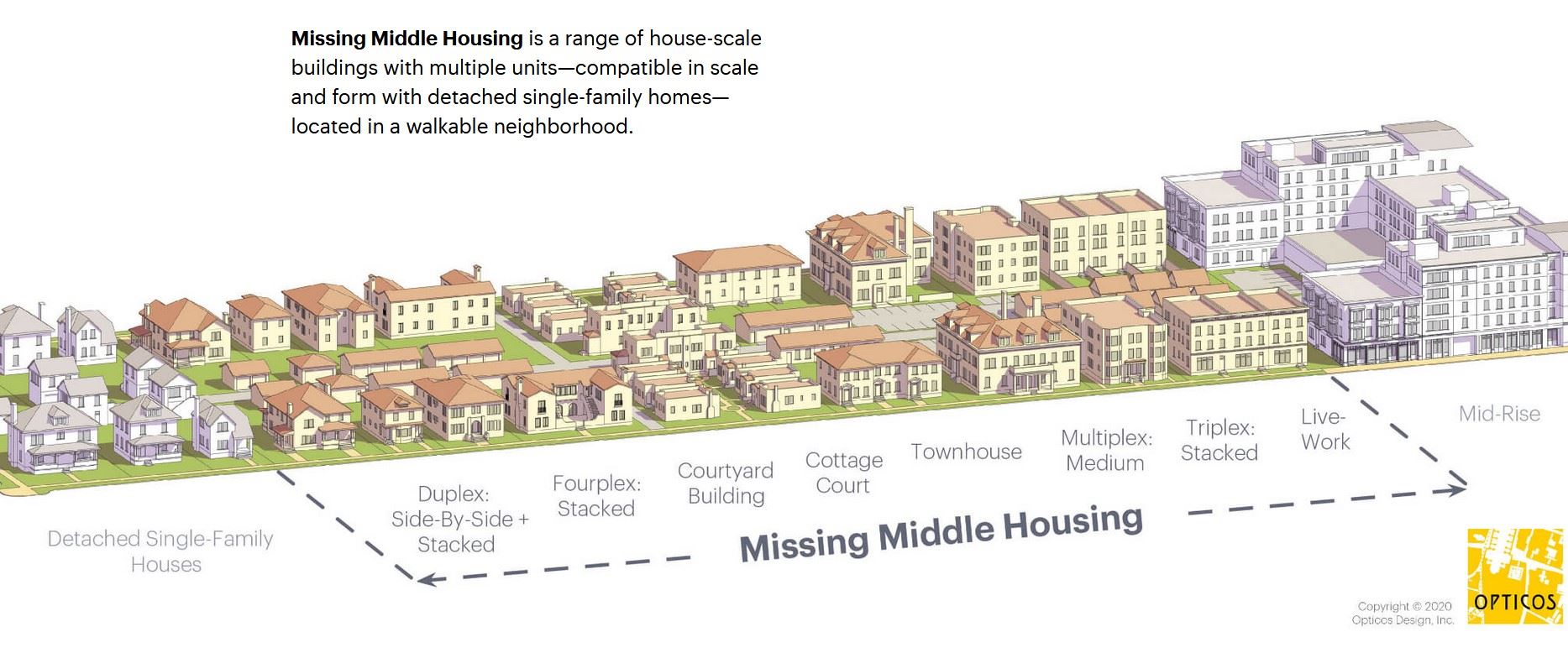
Middle housing. (Image courtesy of Snohomish County)Mead said developers are not building enough condos, which he described as a key source of more attainable homeownership, because of legal and political barriers.
“Condos are the key to [affordable housing]. It’s a supply and demand problem,” Mead said, adding that most existing condos were built about 20 years ago.
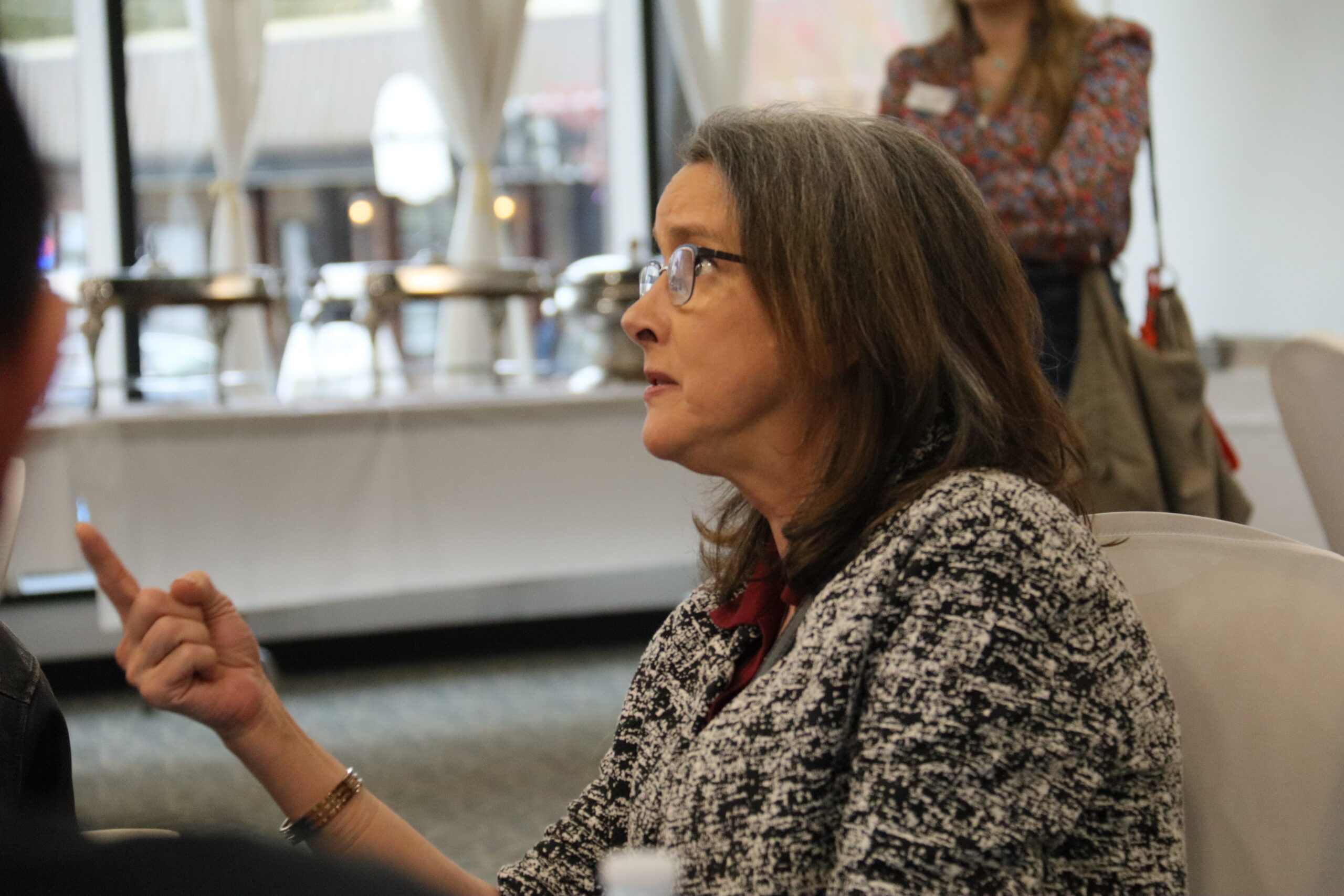
He said because of condo liability laws, developers pursue alternatives that are often less efficient or more expensive.
“It’s cheaper for a developer to build a 3,200-square-foot mega mansion, sell it for $1.6 million and move on,” he said. Mead said he would prioritize condominium liability reform if given the opportunity to push for changes at the state level.
Farmland preservation
Espresso Break owner Maria Ellis talked about disappearing farmland and development pressures in Snohomish and nearby communities. Mead said rural areas are generally protected under current zoning and are not being converted to housing. He said the County is supporting farmers through policies, such as allowing agritourism – including events like corn mazes and weddings – which can help farms stay financially viable.
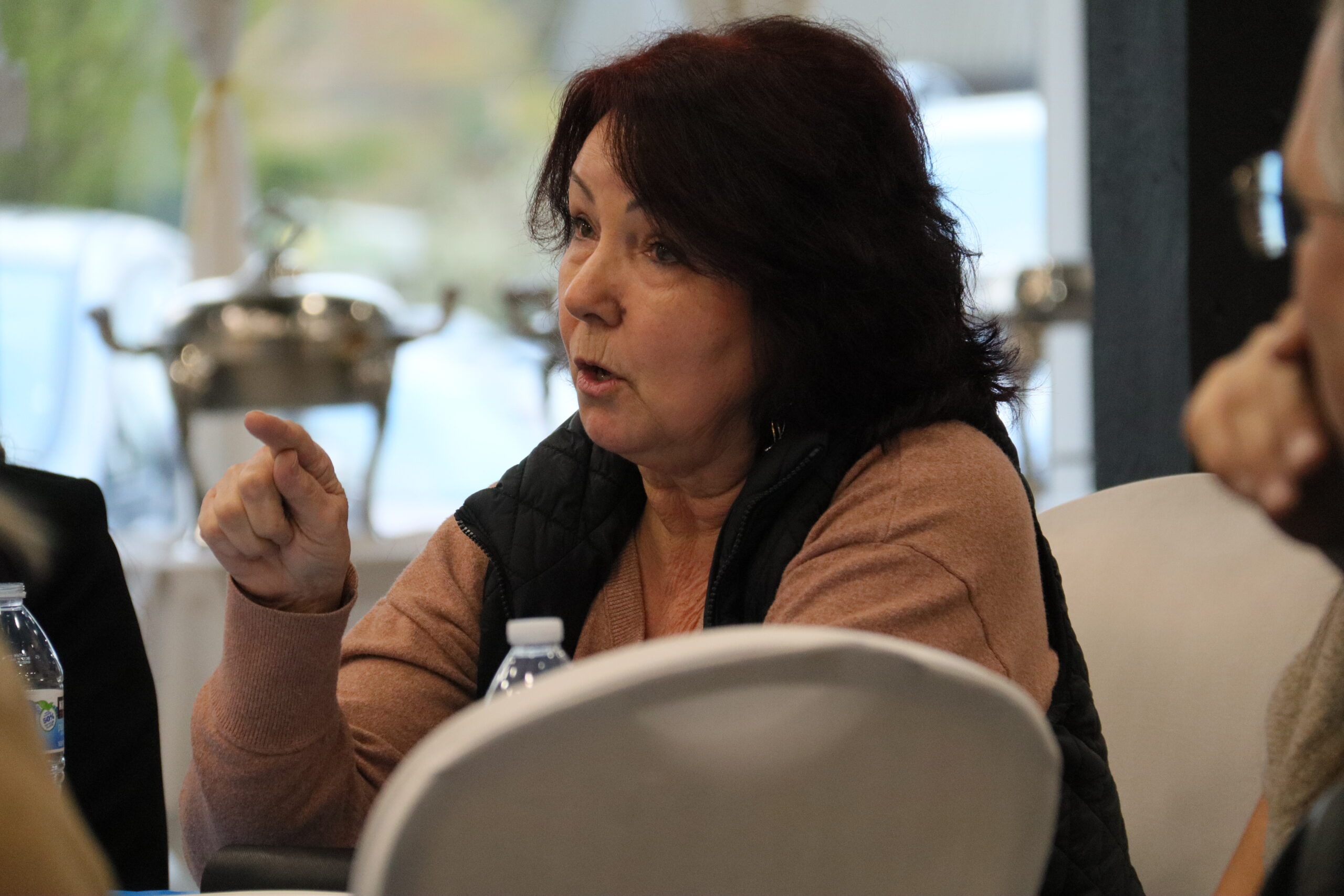
“That’s the way that the farmers have been able to…stay afloat in non-busy seasons,” Mead said.
He pointed to county efforts to support agriculture, including the development of the Food and Farming Center that will help farmers bring food to markets and improve access to local food in urban areas.
Homelessness
Mead said the County used its ARPA funds to purchase two motels – one in Edmonds and one in Everett – for New Start Centers, creating about 150 units of transitional housing for people experiencing homelessness. He added the opening of the Edmonds location will be May.
Mead also said the County has expanded its use of mental health crisis responders who work alongside deputies. He said the County currently has about 11 crisis responders and has seen improved outcomes when those teams respond instead of officers alone.
Jobs and layoffs
Mountlake Terrace resident Amer Mohammed talked about the layoffs in the tech and aerospace sectors, including companies such as Microsoft, Amazon and Boeing. Mead said job losses and economic uncertainty in the region are driven largely by factors outside local control, such as the tariffs and the war with Iran. But he said Snohomish County is focused on attracting future industries by fostering a business-friendly environment and investing in emerging sectors, such as sustainable aviation fuel and partnerships with Washington State University.

“You got to think about the reason why [business owners] would pick [Snohomish County],” he said. “Is it safe? Is it prosperous? Is it is there housing for my workforce?”
Mead said the local government has to consider public safety, homelessness, housing zoning and transportation infrastructure, all of which affect whether business owners want to invest or not. “Are we getting the Everett Link in the next 25 years? Those kinds of decisions are all local government decisions,” he said.
Mead also said the issue is not just job availability, but whether wages keep pace with the cost of living. He noted the average individual income in the County is about $67,000, compared with an average home price of about $760,000.
“It’s not just like we need jobs. There’s plenty of jobs,” Mead said. “It’s like that job pays $40,000…that doesn’t do anything for me.”

Mead said he will spend the next two months talking to all the chambers of commerce in his District and gathering input from local business owners before the County Council takes action.
“I’m open to getting coffee, having real conversations,” he said.


Real first and last names — as well as city of residence — are required for all commenters.
This is so we can verify your identity before approving your comment.
By commenting here you agree to abide by our Code of Conduct. Please read our code at the bottom of this page before commenting.