
Will you chip in to support our nonprofit newsroom with a donation today?
Yes, I want to support My MLTnews!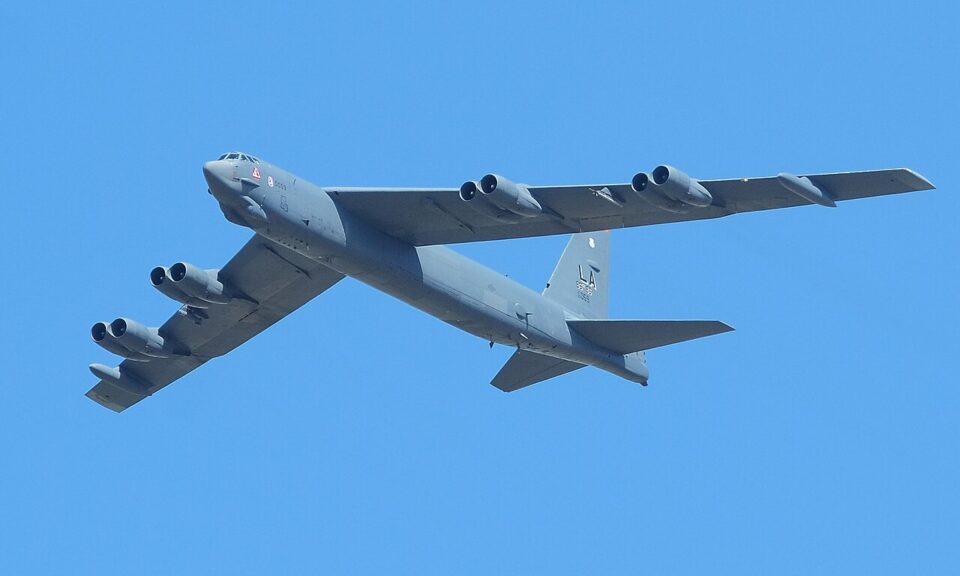
Since Feb. 28, the U.S. military has been dropping bombs on Iran. In return, President Trump has gained the gratitude of Israel’s Prime Minister, Benjamin Netanyahu and Saudi Arabia’s Crown Prince, Mohammed bin Salman. For decades, the ayatollahs who rule Iran have used their oil wealth to finance terrorists around the Middle East, including Hezbollah in Lebanon, the Houthis in Yemen, and Hamas, the terrorists who massacred more than 1,200 Israelis in October 2023.
The bombing has been devastating for many Iranian citizens. Iranians living in Tehran had already been enduring violent totalitarian oppression and had been suffering from global warming. Last year, the president of Iran announced that droughts around Tehran were making the city unlivable and that the entire population might have to abandon their homes and build a new city somewhere near fresh water.
The American bombing will change the Iranian families whose children are killed and the Iranian children whose parents are killed. I can imagine they will develop a lifelong commitment to getting revenge. However, the Iranian government massacred over 30,000 of its own citizens in January.
If bombing did the trick to stop the bloodthirsty government, maybe some families might eventually forgive the U.S. for killing their children. I could believe that some people in Germany and Japan eventually forgave the U.S. for having killed their children during World War II, even though I’ve never heard of such forgiveness. Perhaps we will be forgiven, but I am skeptical because I doubt that dropping bombs on cities is a good way to stop a murderous government.
The bombing has raised the price of gasoline in the U.S. by about a dollar per gallon. And, with the bombing, the price of Exxon stock rose 15% in one month: A nice return for people who finance gasoline.
Since the bombing started, Iran has been preventing oil tankers from getting through the Strait of Hormuz. About 20% of the world’s oil and liquified natural gas sail from the Persian Gulf states through the Strait, including most of the oil and natural gas from Saudi Arabia, Iraq, Kuwait, Bahrain, Qatar, the United Arab Emirates and Iran.
The bombing has had financial benefits for Iran. They have less competition selling oil. The Iranians allow their own ships through to markets that have lost most of Saudi Arabia’s oil. Iran is charging two million dollars per tanker to let other countries’ tankers through. Iran claims it also allows through tankers from countries that object to the U.S. bombing.
To try to head off the looming oil crisis he created, President Trump has arranged to stop some sanctions on Iranian oil exports. The sanctions had originally been put in place to defund and penalize Iran for paying for terrorism and building nuclear weapons. The result is that America is now improving revenues for the Ayatollahs’ collaborators.
Before the bombing, very little of the oil and natural gas that went through the Strait of Hormuz ended up in the U.S. The U.S. gets about 2% of the petroleum it burns from Persian Gulf countries. Most of the oil that goes through the Strait ends up in Asia.
The challenge for American gasoline prices is that Asian countries will look elsewhere for oil, bidding up global prices. In anticipation of coming shortages, the price of a barrel of oil on international markets jumped 70% from Feb. 27 to March 30.
We went through something like this gasoline price shock when Russia invaded Ukraine in February 2022. At that time, gasoline prices in Washington State jumped 70 cents right away, and then jumped another 80 cents two months later, ending up $1.50 over January prices. On average, gas prices in Washington stayed up an average of 60 cents over pre-war levels for the following two years. If prices follow a similar pattern now, we will see another $1 jump in May, and the price increase will last until March 2028.
What to do
The violence of petroleum markets is appalling. The international meddling of countries that get rich with oil money is awful. If you have been thinking about buying an electric vehicle (EV), now is a good time. At $5.40 per gallon, driving down to Tacoma and back will cost you about $22.00 in gasoline.
Snopud electricity now costs less than 12 cents per kilowatt hour. For an EV, that is about 3 cents of electricity per mile. Driving down to Tacoma and back would cost you $3.00 and would not support violent regimes around the world.
Recently, I’ve heard about several two-car families who have replaced one of their gas cars with an EV. That is a way to ease into driving electric vehicles, and they find they rarely drive the gas car anymore.
If you have some trade-in value in your current car or truck, check out what used EVs you can buy. For example, if you drive a 2021 Toyota RAV4 with 75,000 miles on it, you can trade it in for about $20,000. Without adding any payment on top, for $20,000, you could get a 2023 Subaru Solterra, a 2023 Tesla Model 3 or a 2024 Volkswagen ID.4.
If you do not already ride public transportation, that’s another good idea. Light rail trains leave Lynnwood and Mountlake Terrace every 4 minutes now. A 33-minute ride gets you to downtown Seattle, and you don’t have to pay for parking when you get there. For most people, a trip down to Tacoma and back would cost $12. If you are over 64, get a senior Orca card. With a senior card, traveling to Tacoma would cost you $2 each way.
This too will pass
Experts estimate that fossil fuel consumption will continue to rise for a few more years and then start dropping within the next decade. Once America has bought its last gallon of gas, we will look back on our Persian Gulf wars as an unfortunate episode and be glad that murderous regimes no longer profit every time we drive to the grocery store.

Nick Maxwell is a certified climate action planner at Climate Protection NW, teaches about climate protection at the Creative Retirement Institute and serves on the Edmonds Planning Board.


Real first and last names — as well as city of residence — are required for all commenters.
This is so we can verify your identity before approving your comment.
By commenting here you agree to abide by our Code of Conduct. Please read our code at the bottom of this page before commenting.