
Will you chip in to support our nonprofit newsroom with a donation today?
Yes, I want to support My MLTnews!
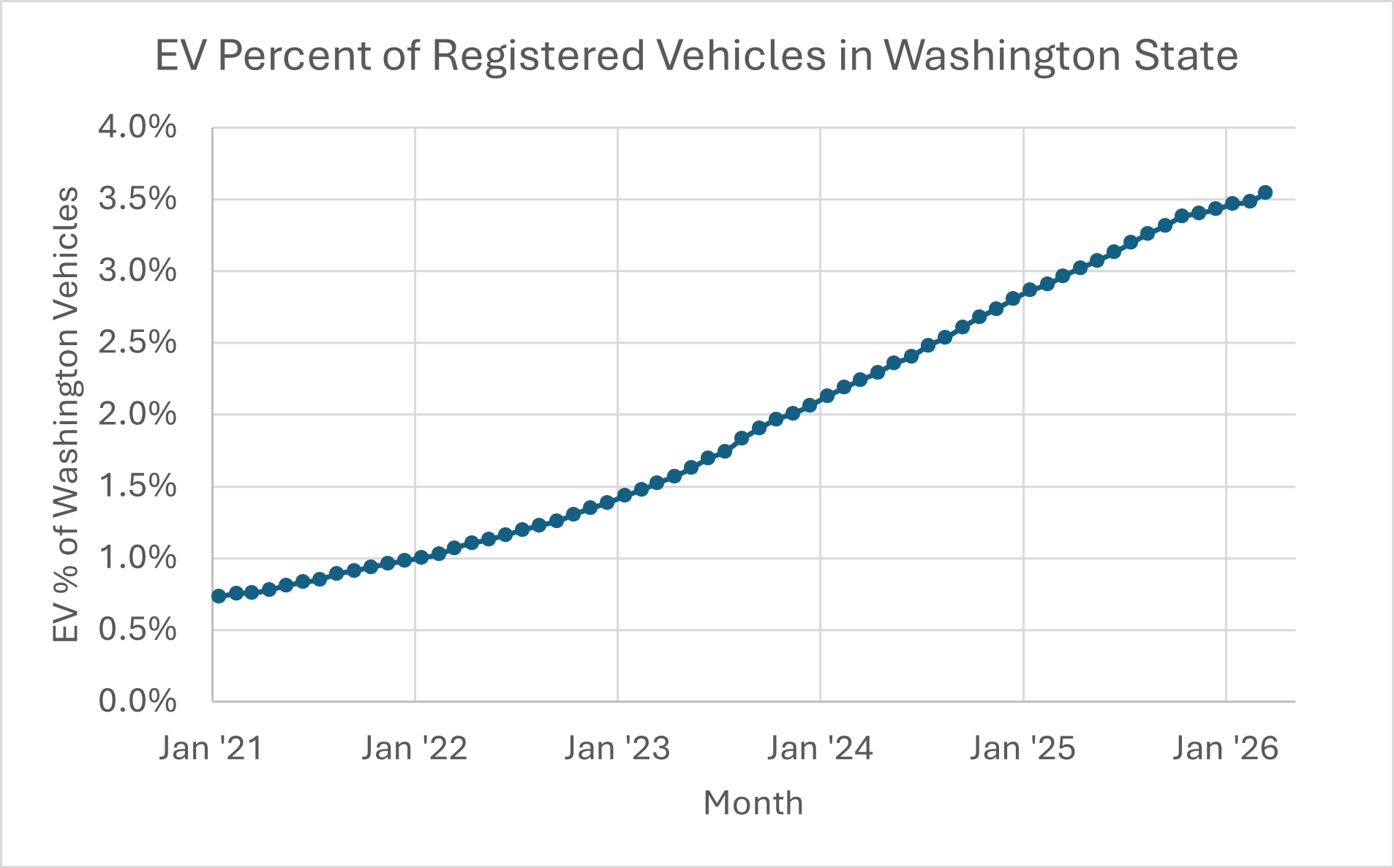
People are continuing to switch from gas cars to electric vehicles (EVs). In April 2026, Washington residents owned 237,000 EVs. That is 37,000 more than the number of EVs owned in April 2025, according to data from the Washington State Department of Licensing. Last month, gas vehicle ownership was down to 6.5 million compared to 6.6 million in 2025.
That means gas-powered cars and trucks are disappearing faster than EVs are appearing. The number of gas vehicles dropped by 100,000 while the number of EVs rose by 37,000. Altogether, EVs rose 18% from 3% in April 2025 to 3.6% last month.
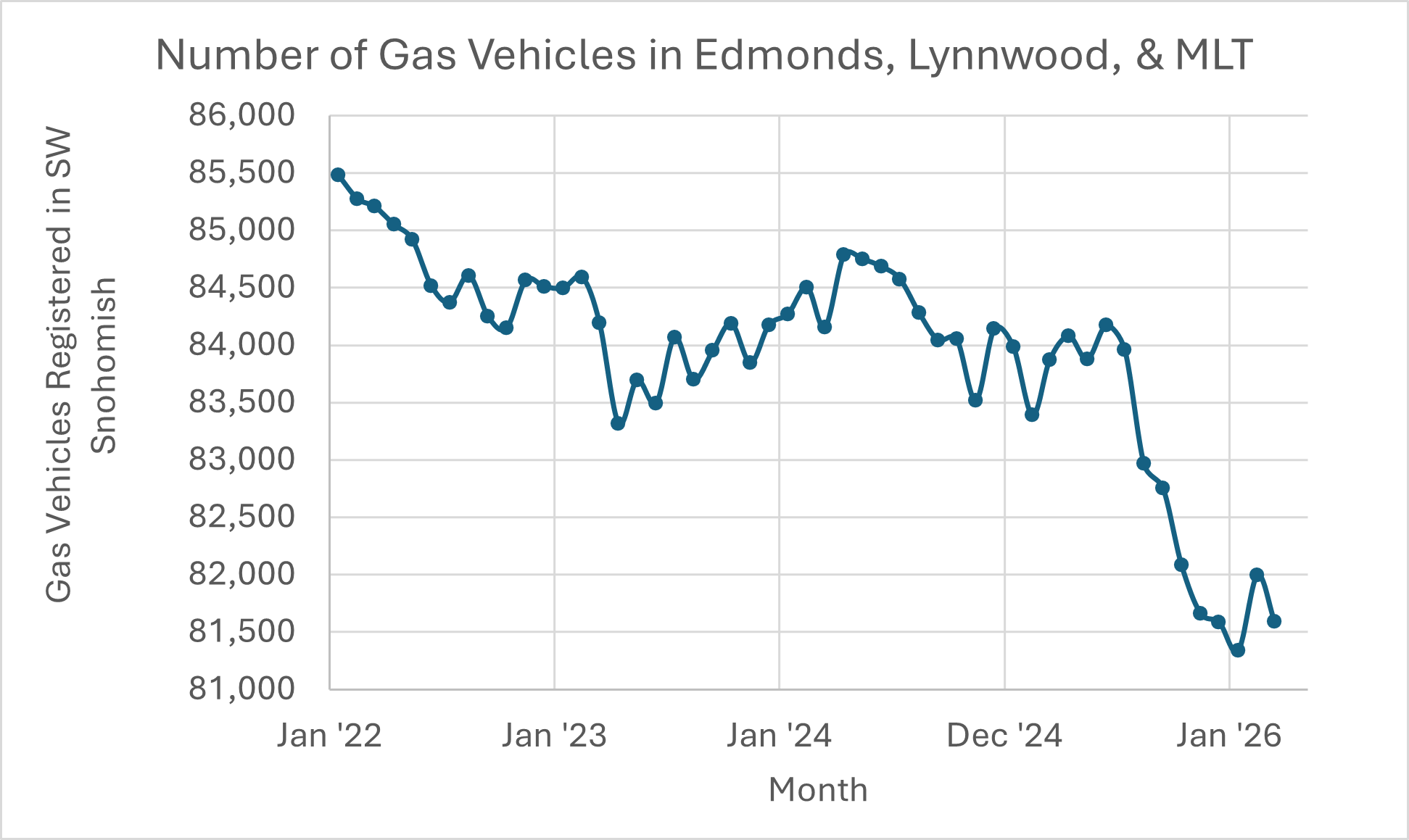
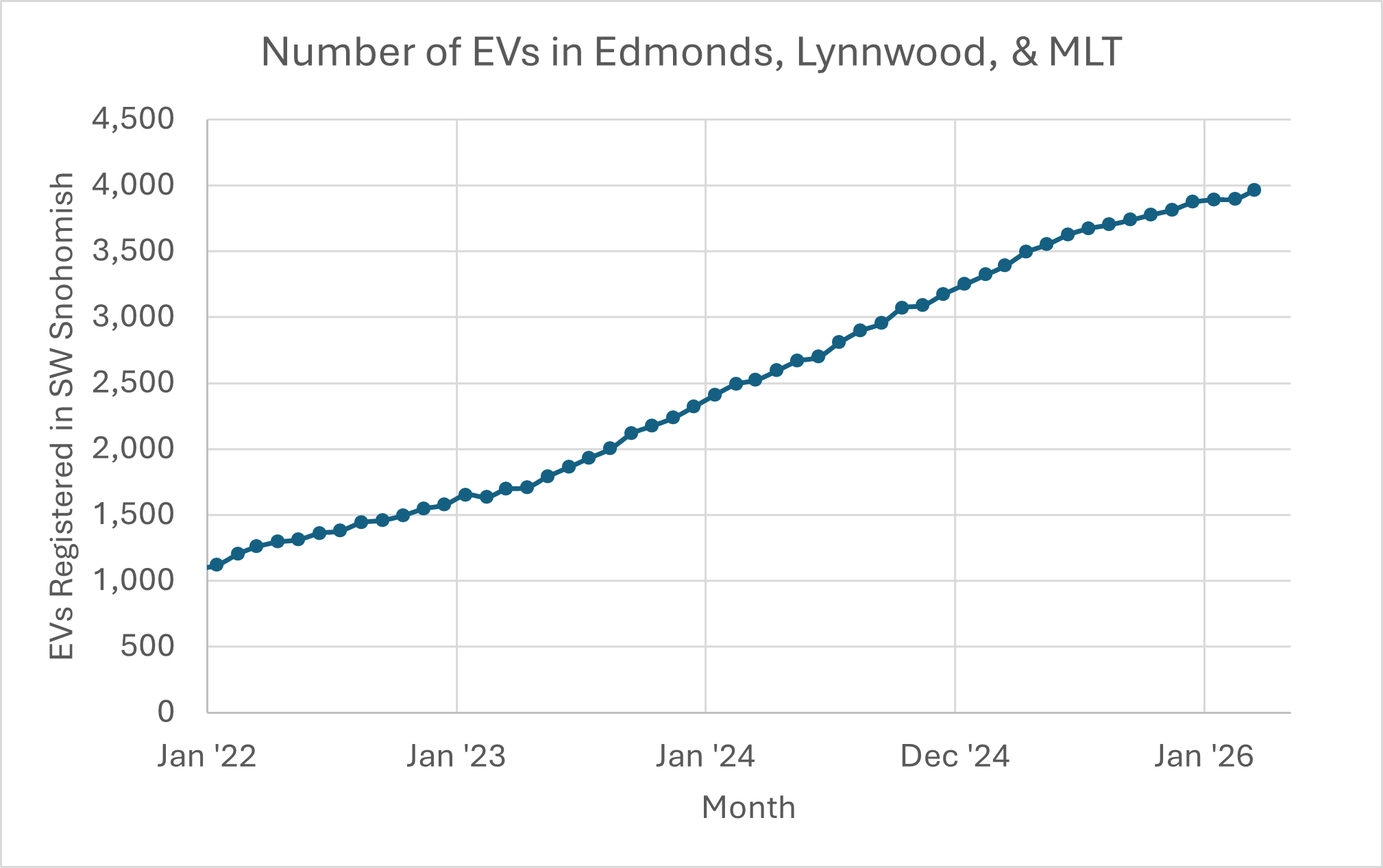
In southwest Snohomish County, EV ownership is even more common. Locally, 4.6% of cars and trucks are EVs, or about 1 out of every 22 vehicles.
Local trends mirror Washington state overall. Gas vehicle ownership has been falling since 2021.
EV ownership has been rising steadily.
Used car sales
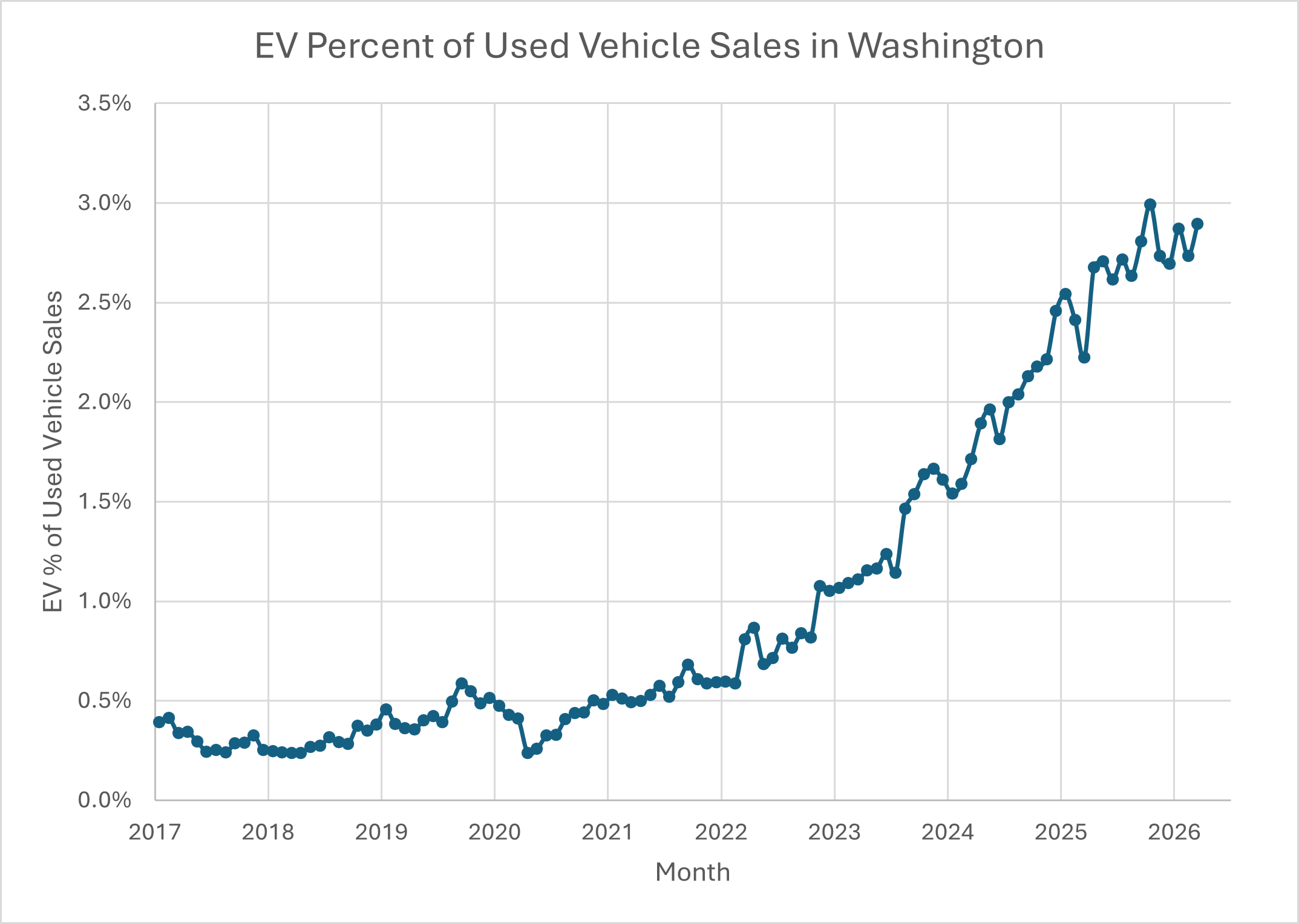
In Washington, EVs reached 3% of used sales in October 2025. October marked the end of the Inflation Reduction Act incentive, which offers federal tax credits and rebates to encourage people and businesses to buy EVs. While EV popularity fell in November, it recovered in January, returning to 2.9% by March.
New car sales
New-vehicle sales have been more volatile than used car sales. As with used vehicles, the popularity of EVs in new-vehicle sales dropped after the Inflation Reduction Act and has somewhat recovered.
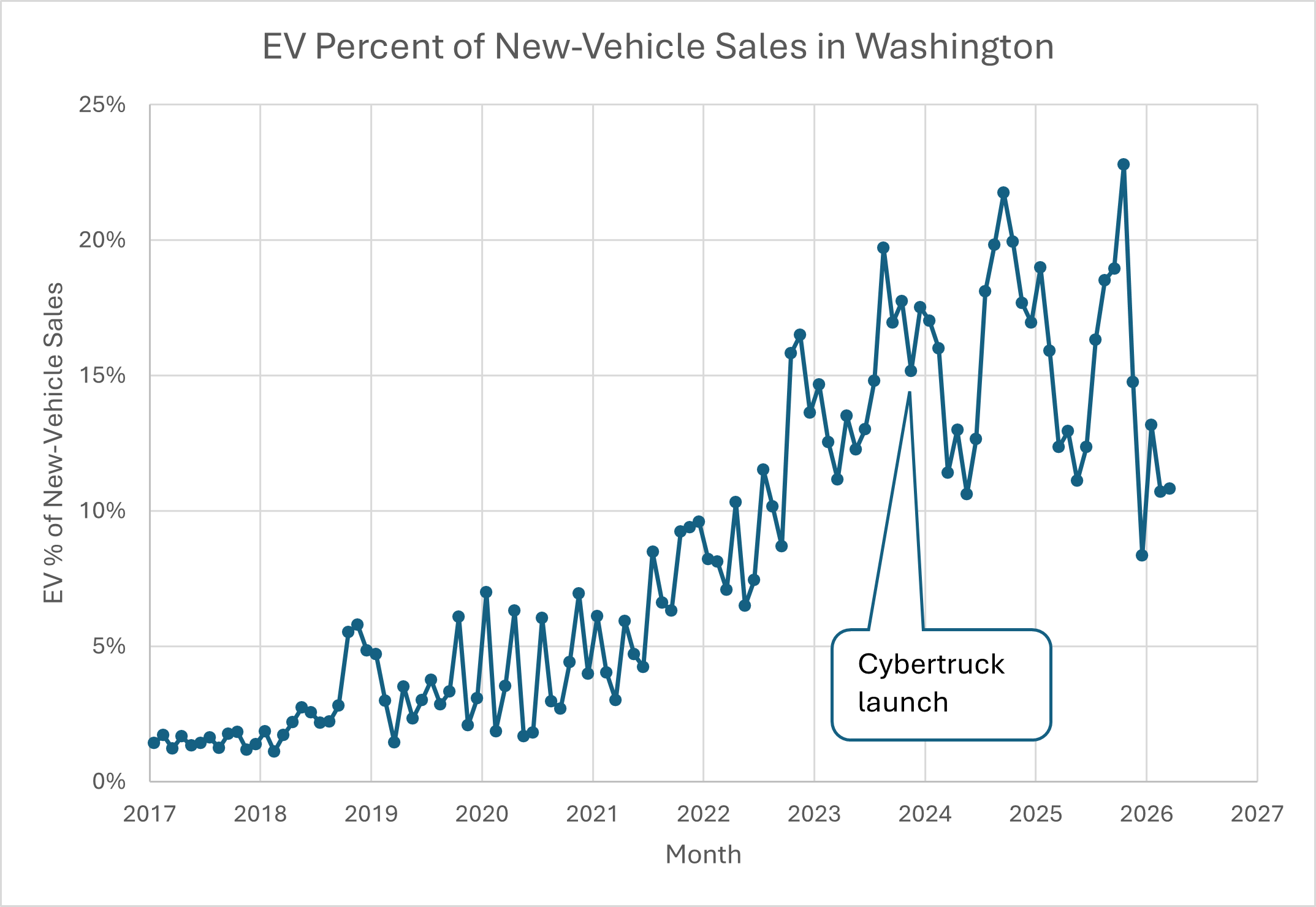
The U.S. new EV market is dominated by Tesla. Since 2017, EV sales were growing reliably until the launch of the Tesla Cybertruck. Since then, new EV sales have been rising to new highs and also dropping to new lows.
The EV recovery in 2026 is probably partly due to lower prices. Tesla reduced the price of its Tesla Model Y from $50,000 in 2025 to $40,000 now. Hyundai cut the price of its popular Hyundai IONIQ 5 EV from $44,000 to $35,000. Toyota’s bZ EV now costs $35,000.
Southwest Snohomish County sales
Sales in Edmonds, Lynnwood and Mountlake Terrace have followed the same trends as Washington overall. Used EVs have continued rising in popularity.
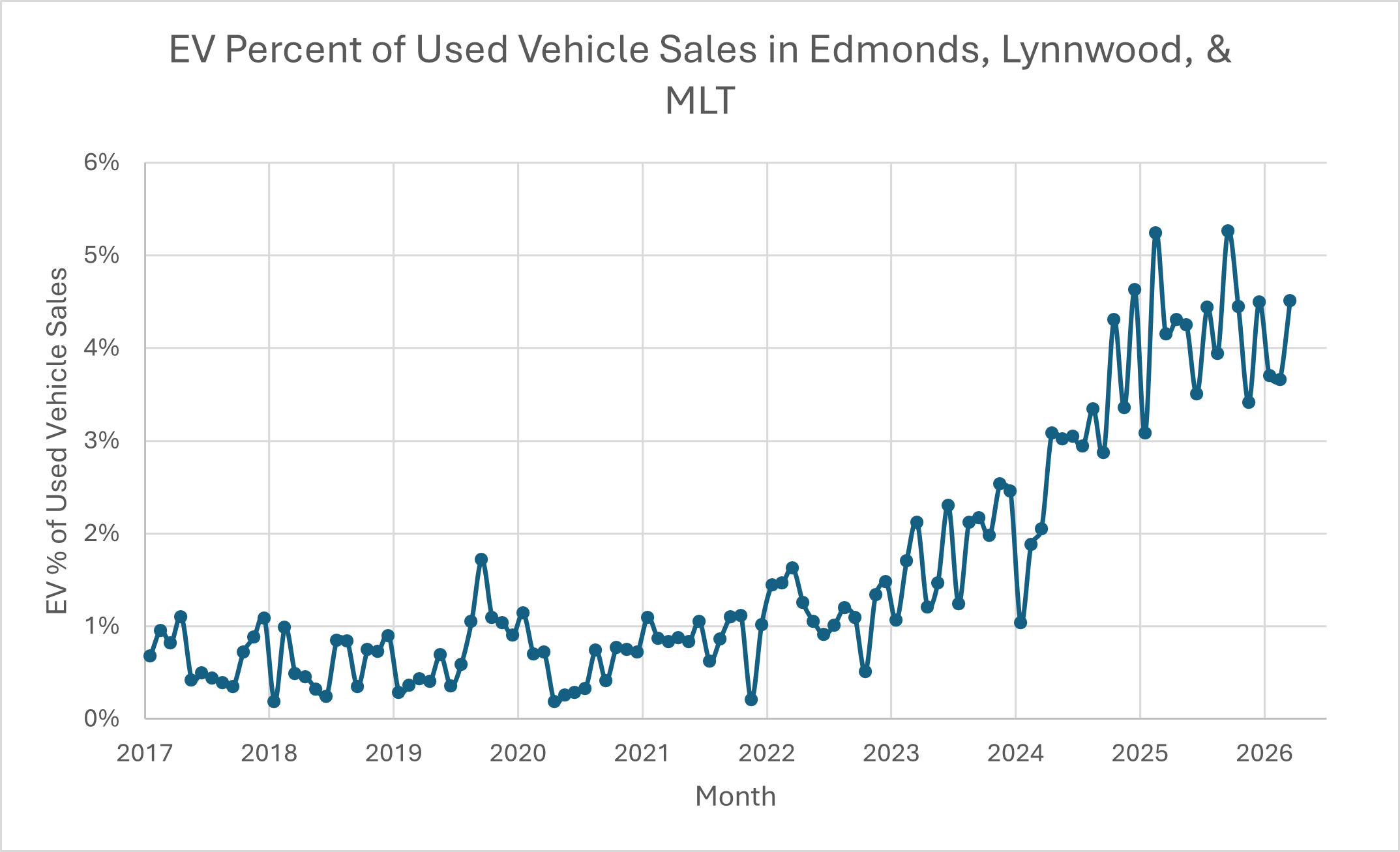
By March 2026, EVs reached 4.5% of used-vehicle sales and 15% of new-vehicle sales.
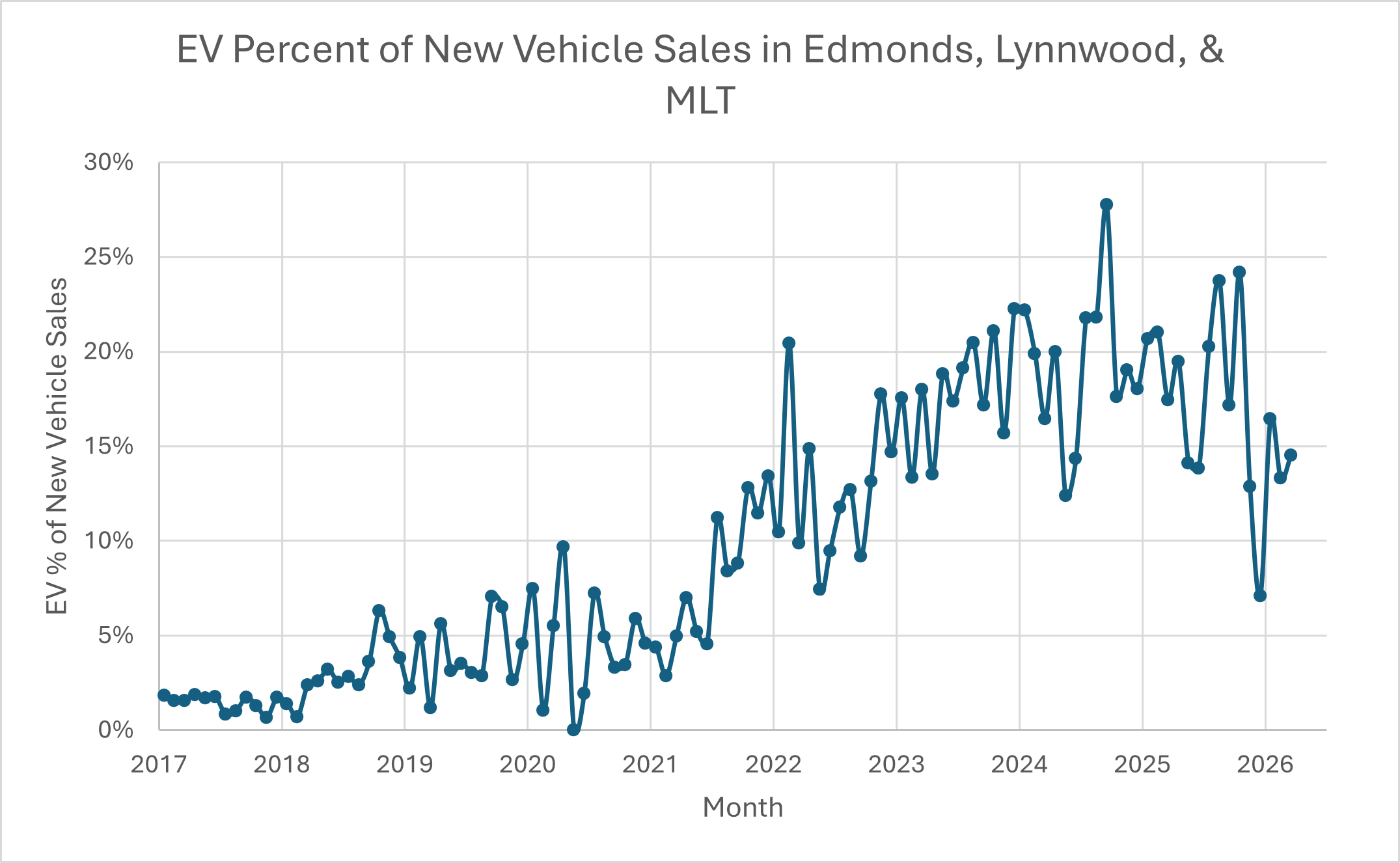
In Washington state overall, sales of new EVs dropped significantly after the Inflation Reduction Act ended and then somewhat recovered in January, February and March.
Why the fuss?
In March, I provided a quick overview of global warming and why our most important objective is to stop burning gasoline and natural gas.
We know carbon dioxide holds heat in our air. We know so much about this that we can make carbon dioxide sensors for greenhouses and public buildings. Those sensors work by shining heat through the air and measuring how much stays in the air. More heat tells us there is more carbon dioxide.
From tax records, we know how much fossil fuel was burned and how much carbon dioxide has been released since the 1800s. Combine that with how much carbon dioxide heats our air, and you can estimate how much we are heating the planet.
Carbon dioxide emissions from burning gasoline, natural gas and coal have contributed to floods, such as those on the Guadalupe River in Texas and in Valencia, Spain. Gasoline burning is also contributing to droughts and wildfires, including the fires in Los Angeles and Lahaina.
The biggest opportunity for southwest Snohomish County to reduce emissions is to stop burning gasoline and natural gas. Electricity in the region is almost entirely clean. About 95% of Snohomish County Public Utility District’s electricity is generated without releasing carbon dioxide.
Coal is not burned locally. Most regional contributions to global warming come from cars and trucks burning gasoline and diesel, along with some homes burning natural gas. Together, those sources release nearly all local global warming pollution. That is why the focus remains on reducing gasoline vehicle use and removing natural gas from homes. It is also why EV adoption and natural gas adoption are tracked every three months.


Real first and last names — as well as city of residence — are required for all commenters.
This is so we can verify your identity before approving your comment.
By commenting here you agree to abide by our Code of Conduct. Please read our code at the bottom of this page before commenting.