
Will you chip in to support our nonprofit newsroom with a donation today?
Yes, I want to support My MLTnews!
Key takeaways:
- Council discusses oversight group options for the Flock camera system.
- Public commenters say they are still dubious of Flock.
- City’s community engagement plan reviewed.
- Public hearing to annex 224229 48th Ave. W. scheduled for Aug. 21.
The Mountlake Terrace City Council reviewed the formation of a Flock camera oversight group during its Thursday, Aug. 7 meeting, hearing from public commenters who want the contract canceled.
Following approval of the Flock contract June 5, the city council must establish a process for oversight and review. City Manager Jeff Niten on Thursday summarized what has happened since the council vote and what city staff research has found:
- Members of the Diversity, Equity and Inclusion Commission (DEIC) met with Police Chief Pete Caw and Cmdr. Scott King twice in July. Items for discussion included the Flock system, the policy adopted by the council in conjunction with the contract and other concerns.
- DEIC Chair Scott Matsuda suggested at the June 18 DEIC meeting that the commission create a subcommittee to meet with representatives of the Mountlake Terrace Police Department periodically to evaluate the Flock system.
- During the July 24 council meeting, councilmembers stated an interest in different types of review systems used in Washington state.
Niten said that in the city’s research of cities nationwide, staff didn’t find any jurisdictions with oversight or review groups expressly for Flock systems.
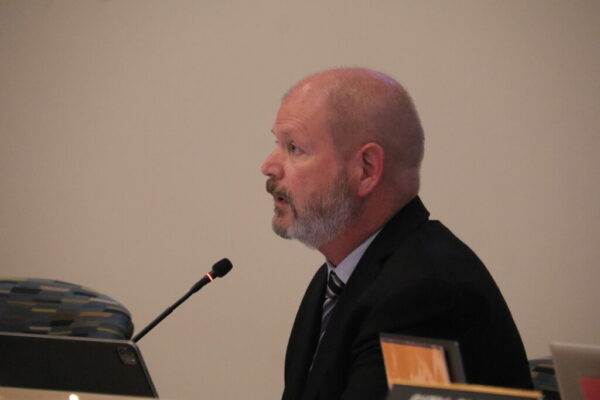
During the discussion, Councilmember Erin Murray asked about the status of the Mountlake Terrace Police Advisory Board as a possible option for overseeing Flock.
Niten said the police advisory board was essentially discontinued after a Feb. 27, 2017, memo from then-Chief Gregory Wilson to City Manager, Scott Hugill. Instead of having regular meetings, the advisory board schedule was changed to an as-needed basis and has not met since 2018.
Since the board was created through city ordinance and it hasn’t been disbanded, it still exists and can be reactivated, he said.
Typically, there are five different structures of police advisory citizen groups, Niten said
- Type 1: A community board that investigates allegations and recommends findings to the police chief.
- Type 2: A citizen review board like the one in the City of Tacoma. Under this model, police investigate allegations and develop findings. Community members then review and make recommendations that the chief or sheriff approves or rejects.
- Type 3: An appeal process where complainants can appeal the findings of the police department to residents through an appointed group.
- Type 4: An auditor investigates the complaint process of the law enforcement agency, thus reporting on the thoroughness and fairness of the process to the department and the public. King County’s Office of Citizen Complaints – Ombudsman is an example of a Type 4 structure that does not have a citizen board.
- Type 5: Advisory only, with no oversight or investigation responsibilities.An example of a Type 5 structure is the City of Everett’s Chief’s Community Advisory Board. Recommendations made by the board are advisory and not binding on the chief of police or the department but should be considered by the chief and used to help guide decisions related to the department. Everett’s Advisory Board was suspended from 2020 until recently and has held one meeting in 2025.
Niten said another option could be a hybrid system as used in Seattle, which is a combination of Types 2 and 4: the Office of Professional Accountability (OPA), an auditor and a review board.
The OPA auditor’s reports are public, and the OPA review board holds meetings twice a month in a public forum. The auditor reviews all investigations completed during the previous week and may order further investigation. The review board is made of seven appointed members who conduct an independent review of the quality of the OPA complaint process, review policies and procedures, and gather public input.
Potential performance metrics that can be added to the performance measures were also presented. Possible metrics include the percentage of crime reduction, crimes solved using the Flock system and the number of times the Flock data is accessed.
During public comments on the Flock oversight, speakers still expressed concerns over the system and its potential misuse.
“It feels like we have adopted a mass surveillance system with very little justification for it,” Mountlake Terrace resident George Stanton said.
Read more about the Flock public comments here.
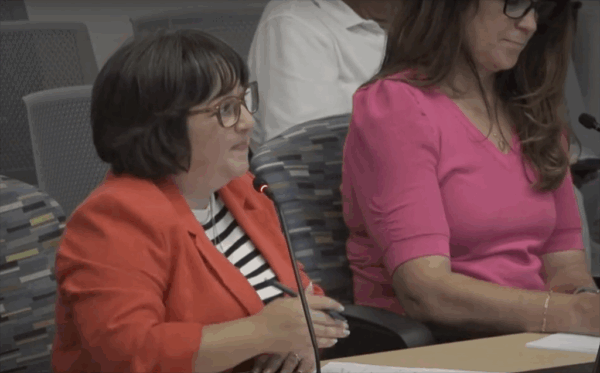
In other business, the council reviewed the city’s community engagement plan with Communications and Community Engagement Manager Sienna Spencer-Markles and Deputy City Manager Carolyn Hope.
Spencer-Markles explained that cities are responsible for encouraging community engagement to ensure programs, projects, plans and policies accurately reflect the citizens’ wants and needs. Further, there is a broad spectrum of issues that should have community input.
The engagement plan gives staff and council the requirements, tools and strategies to support engagement work, with an emphasis on building relationships in the community, she said.
The city council also moved to schedule an Aug. 21 public hearing and the first reading of an ordinance to annex 224229 48th Ave W. into Mountlake Terrace. This annexation will allow the residence to connect to city utilities.
The next city council meeting is a study/work session starting at 7 p.m., Aug. 14, at Mountlake Terrace City Hall, 23204 58th Ave. W., Mountlake Terrace. To attend the meeting online, visit zoom.us/join and enter meeting ID 810 1113 9518; no passcode is needed.
To make a public comment remotely, complete the registration form within 24 hours of the meeting’s start.
To listen via telephone, call 1-253-215-8782 and enter the same meeting ID.
You can also view livestreamed meetings and past video recordings at www.youtube.com/cityofmlt.
The agenda can be viewed here.


Why are the police being consulted on limiting their own power? This is a governance issue and a Fourth Amendment violation that results in unwarranted mass surveillance of law abiding residents. The Police are not our government but meant to be the servants of our community. The negotiation should be between the citizens whose rights are about to be infringed and the government that represents them. The police fall nowhere in that discussion unless now they are elected?
Shouldn’t we get with the program and have an Elected Mayor so that this runaway Council can be vetoed when they overstep? It’s deeply concerning that the Police have a direct say but that the community does not. We aren’t’ trusted to elect our own mayor. The Council opposes this. I know. I asked when I interviewed for the vacant City Council spot.
Not very equitable. Not responsible. Not compatible with democracy.