
Will you chip in to support our nonprofit newsroom with a donation today?
Yes, I want to support My MLTnews!“It has been my lot,” he observed, “to meet, in the diversified panorama of human existence, with an occasional oasis, but never with one so green, so gushing, as the present!”
— Charles Dickens, David Copperfield, 1850
As I look out my window, I see the pile of wood chips that will soon be spread throughout the garden. It is the beginning of the gardening year and the re-building of an oasis. Wood chips and compost have improved the soil over the years and my plants are happy. Lifting and dividing some of the more exuberant perennials is part of the process of sustaining a bountiful garden.
I have a small suburban yard, but my lawn is getting smaller and my actual flower garden is expanding. As a plant collector, I always need more space for exotic new additions. I share this piece of earth with insects, plants, animals and my neighbors. This is my passion, but it is for all of us.
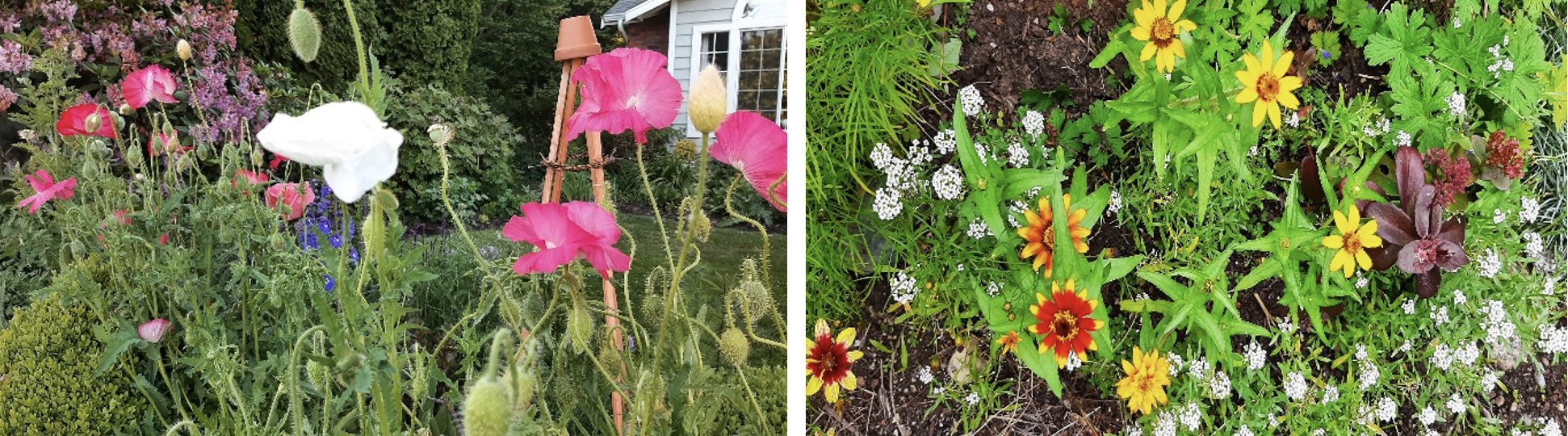
Instead of a carefully planned garden with a specific color palette, my garden includes all colors! Red poppies, pink cosmos, blue nigella, green zinnias, tall dahlias from seeds, bright yellow dinner plates from tubers.
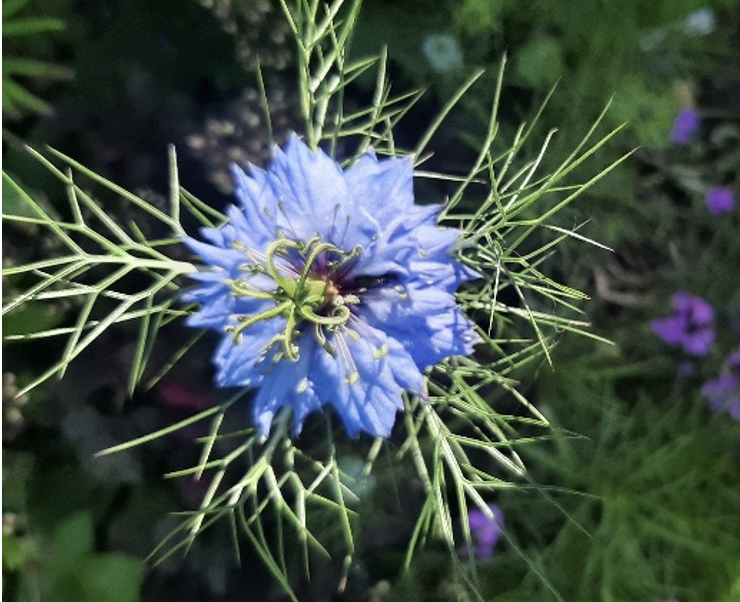
It starts in the spring with the bulbs, then the hardy annuals; next are dahlias, then asters. Even if you plan your garden design perfectly, it will all change next year. Go with it and enjoy the controlled chaos.
Gardens are insect havens
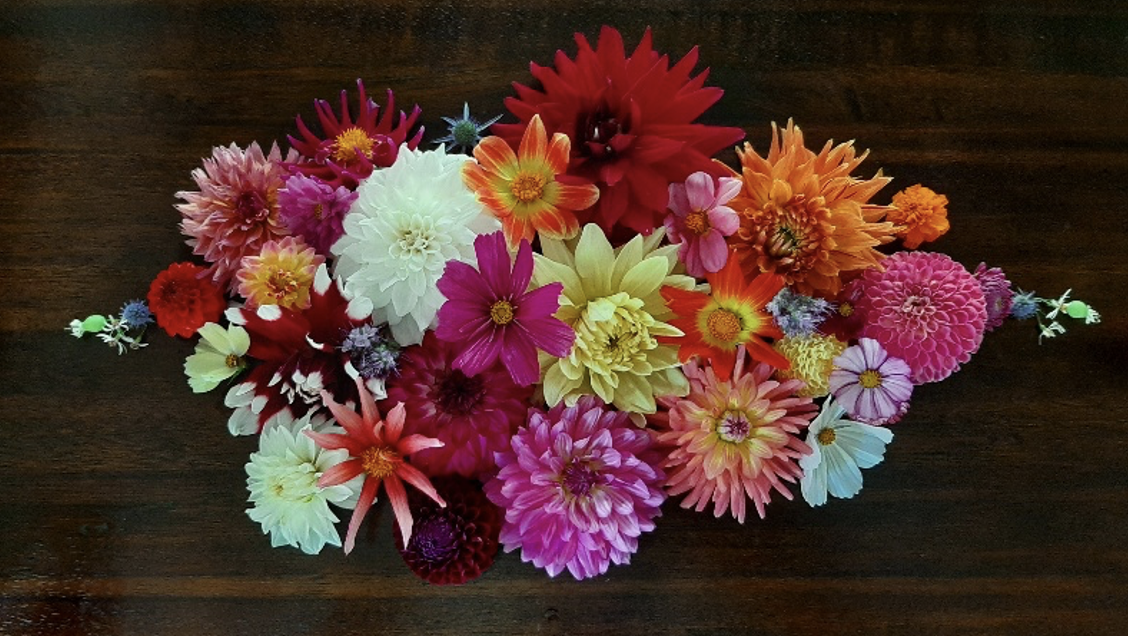
Returning in the late spring are the golden digger wasps. They swarm around the eryngium (common name: sea holly). It is quite a show. Giant wasps next to tiny green flies.
Lamb’s-ear and lavender have velvet foliage and attract different pollinators. The wool carder bees in particular will guard these plants or anything that has soft grey leaves, bumping other insects trying to land on a flower. We call them the “bossy bees.” They use the fuzz from the leaves to build nests.
Last summer while sitting on my front porch I could hear a subtle scratching sound. I finally spotted a bee carrying a grey ball of fluff as it flew off. So amazing.
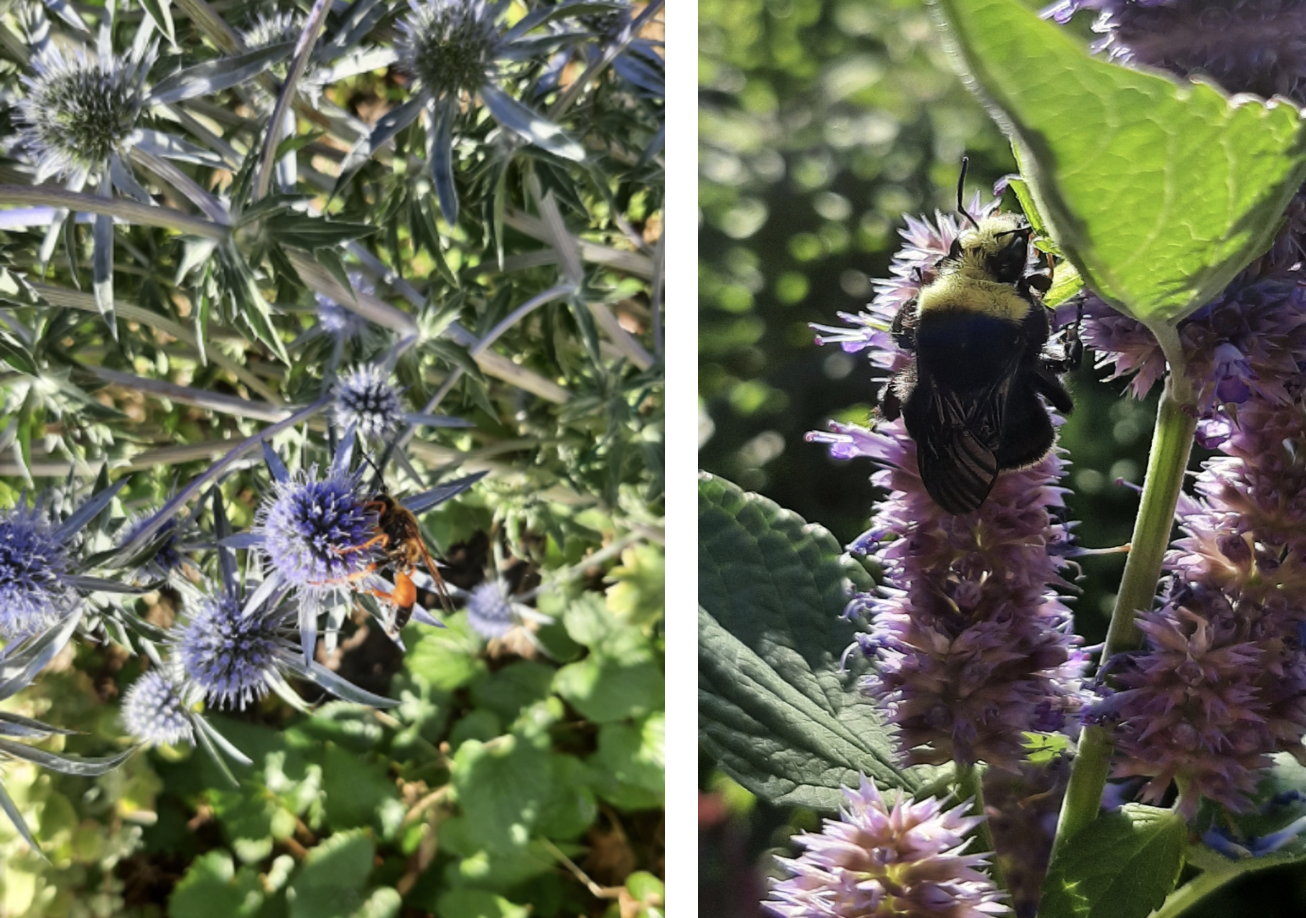
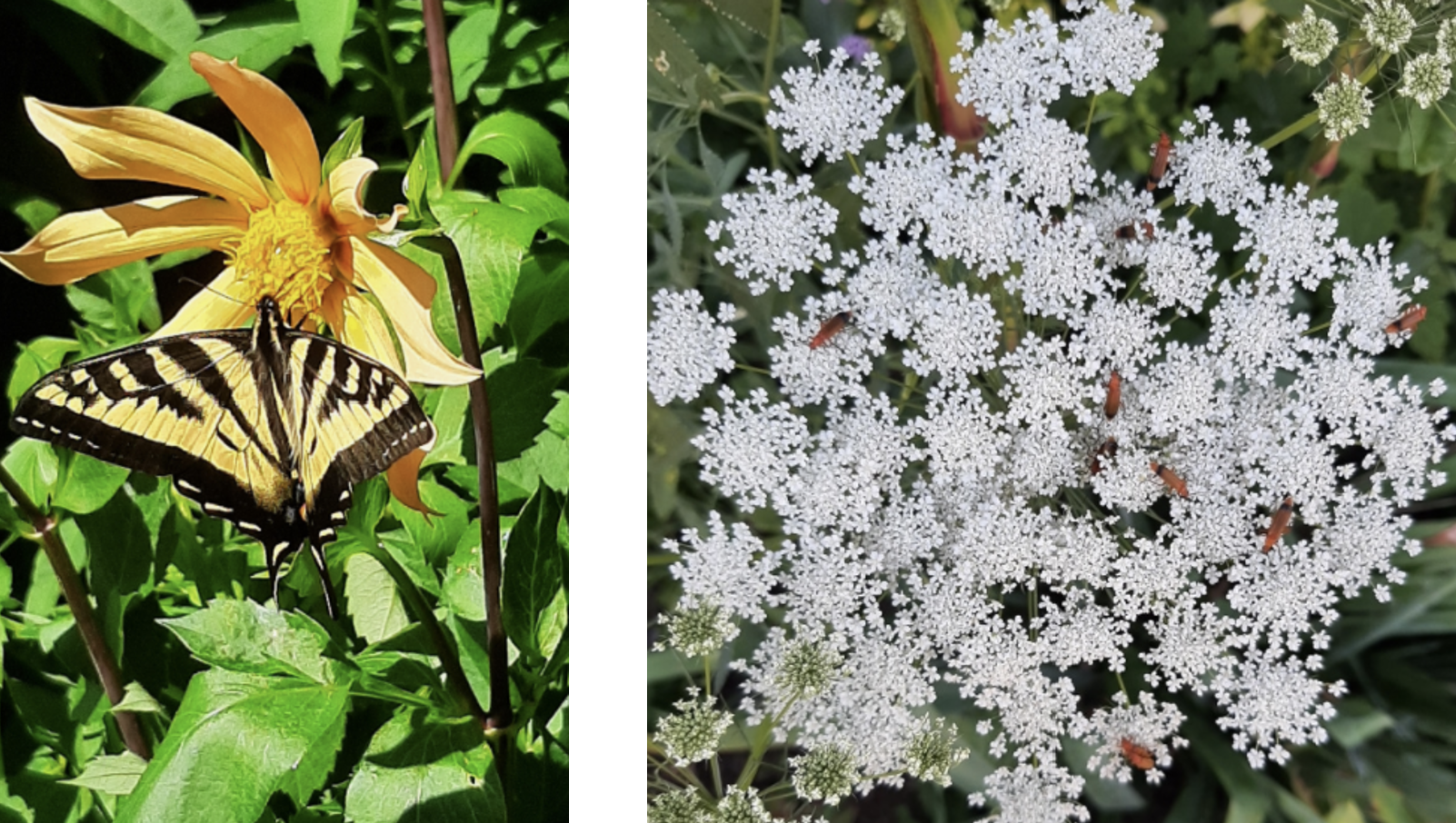
Walking by the pieris in early spring, the bumble bees zip past my ear. Swallowtail butterflies land gently on flowers. Ammi majus(false Queen Anne’s lace) blossoms are covered in red beetles. Moths explore as the light fades. Hoverflies surprise. It is a joyous insect oasis.
Gardens create community
Strangers stop to check out what is new in the garden. Some bring their cameras and photograph the blossoms and insects.
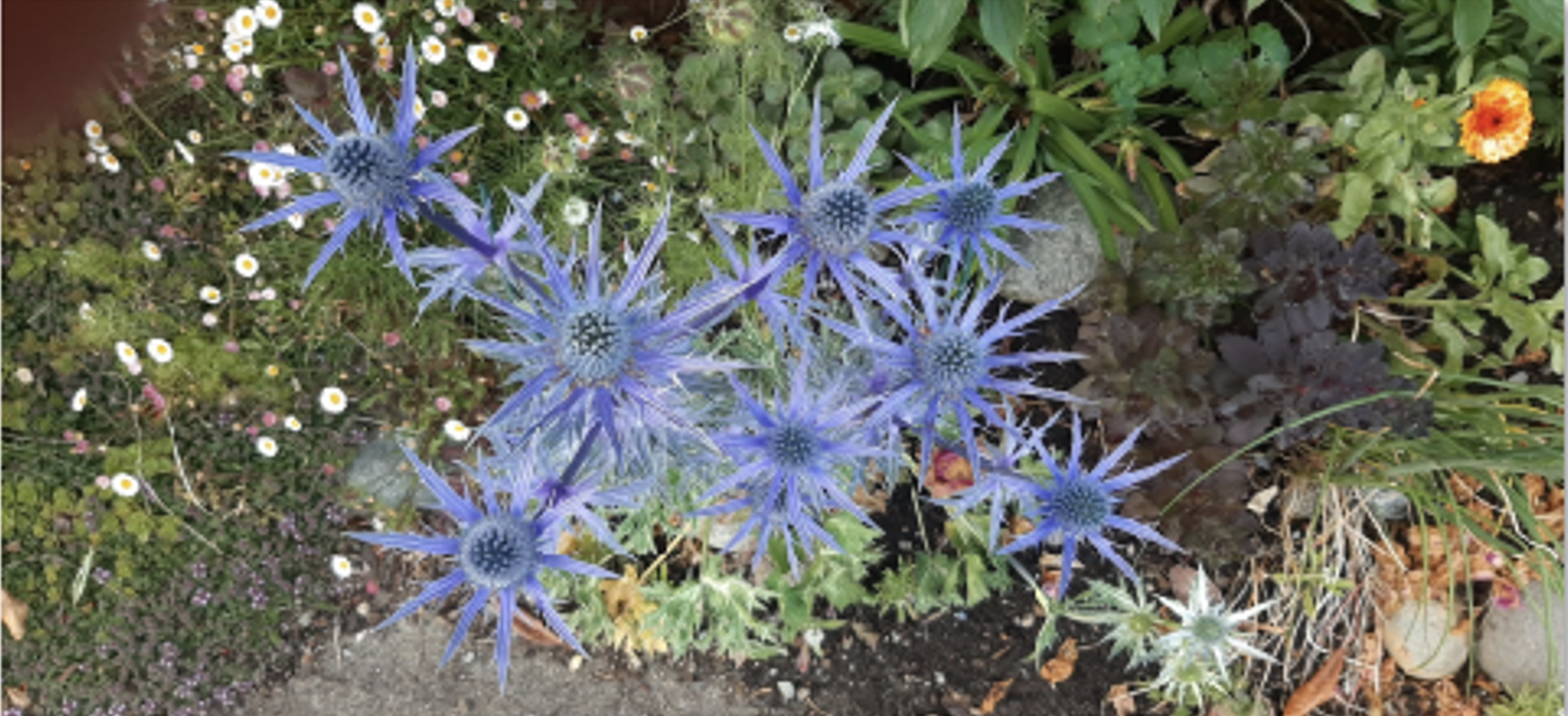
Several plants are showstoppers. Eryngium is definitely the photographers’ favorite. I now have four varieties. They are spikey plants but so unusual, and one in particular has bright blue flowers, stems and leaves almost as though they were painted.
Another great plant is Nicotiana ‘Night Flight.’ Its tall deep pink tubular flowers attract moths with their rich scent. My several varieties of this plant self-seed politely.
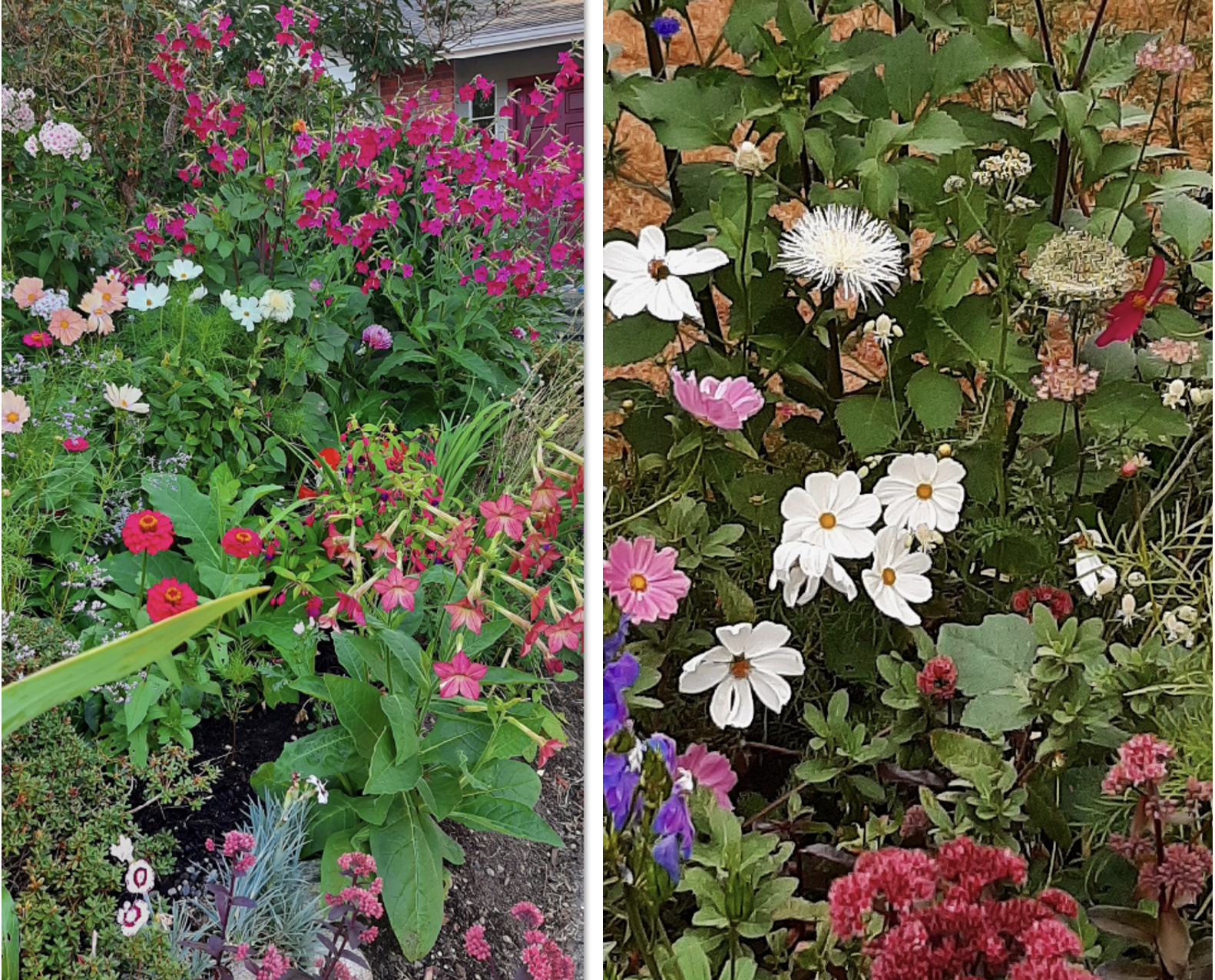
I want flowers that are multipurpose. Is it a host plant for butterflies, do pollinators visit, are seed heads feeding the birds? Does the color dazzle? All of us can marvel at what the changing seasons bring, so with each season we can enjoy a constantly evolving oasis.
Because of the garden, I have met several of my neighbors for the first time and established friendships. Dog walkers tell me they go out of their way to view my yard. People smile. Plants are shared. Festive flowers win.
Gardens are for the birds, too
In the middle of our neighbor’s front lawn is a large twelve-foot-tall rhododendron. Sprouting through the top of it, an old Himalayan blackberry sprouting looks like a fountain of brown decaying branches. This has created a tiny refuge that is filled with birds.
Robins, sparrows and towhees scurry underneath. Chickadees, finches and juncos dive through the upper branches. It is so unexpected and joyful, such a riot of bird calls. This little bit of neglect creates a safe habitat for the birds, a brown and green tangled avian oasis.
A food oasis
In my back garden there is a small patch of vegetables and fruit. What a pleasure to pick green beans for dinner. The zucchini plants are prolific producers, and abundant greens make the freshest salad. Homegrown tomatoes are delicious.
Mixed throughout are some edible flowers. Whatever is left over goes to seed and everyone is happy; bees, birds and seeds to save for the next planting. No herbicides, no pesticides. I now have a tiny organic food oasis.
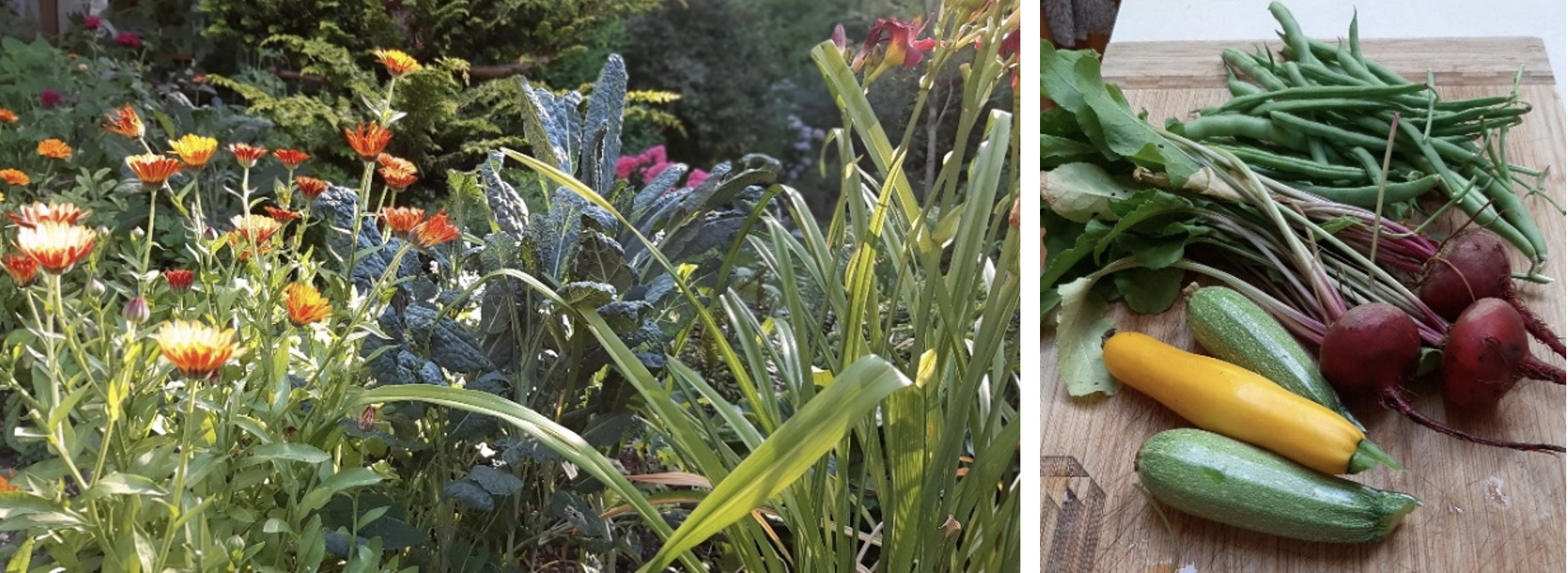
L-R: Kale and calendula. Summer harvest.
The wetland next to my house is a great example of a native plant sanctuary. There are huckleberries, osoberries, twin berries, thimble berries, salal and mahonia. I am also adding more native plants to my own garden. I’ve planted kinnikinnic along the lot line.
Throughout our community where there are these small natural spaces, maybe you can “adopt” the space — cleaning up discarded plastic and keeping weeds down – but don’t be too tidy. Whether in your yard or on the verges, solitary bees love leaf litter and use it for cover.
Stack your sticks, layer your leaves and leave your logs. If you build it, they will come; if you care for it, they will stay.
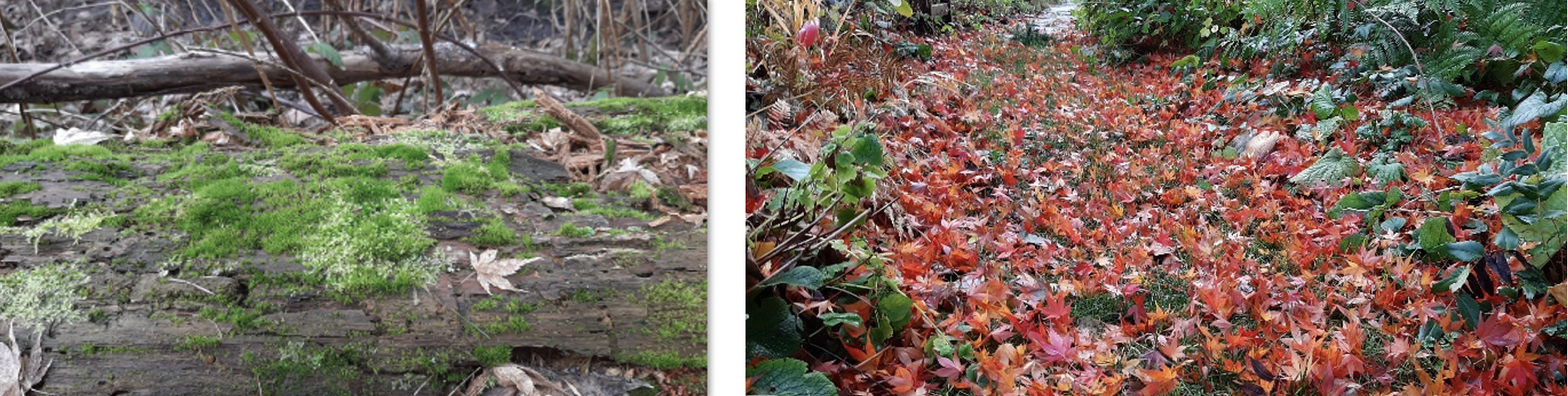
Last fall we left seed heads of sunflowers, Agastache and coneflowers. Chickadees and finches balanced on the dried stems and pecked at seeds. A dozen robins flew back and forth between the purple fruit of the beautyberry and the orange berries of the mountain ash.
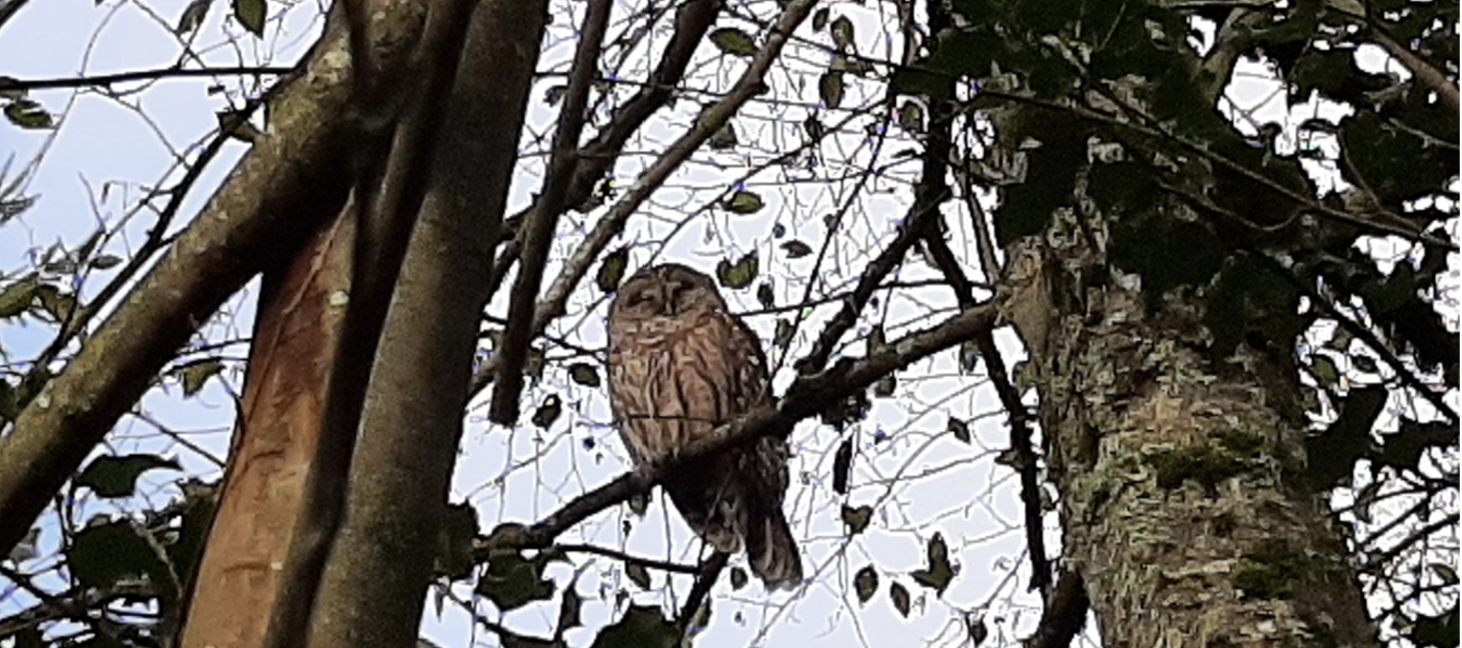
Hummingbirds visit salvia and hardy fuchsia. I found a critter path running through our yard into the wetland next door. One night we heard a barred owl call. We spotted him looking down at us with a sardonic inscrutable stare.
When grey winter gives way to the greening of spring, share your dream, plant your seeds, inspire strangers, spread compost and kindness. You are part of the ‘diversified panorama of human existence.’ Your small piece of earth can make a difference. Take a deep breath, build and become that occasional oasis, because we all need it.
Annette NcCorchuk Sergneri gardens in Lynnwood. She is a published poet and writes essays for the Northwest Perennial Alliance. She is also the treasurer of the Alderwood Garden Club and volunteers with Friends of the Lynnwood Library.
For Gardeners is a monthly column by and for local gardeners. You can find past articles here.


Real first and last names — as well as city of residence — are required for all commenters.
This is so we can verify your identity before approving your comment.
By commenting here you agree to abide by our Code of Conduct. Please read our code at the bottom of this page before commenting.