
Will you chip in to support our nonprofit newsroom with a donation today?
Yes, I want to support My MLTnews!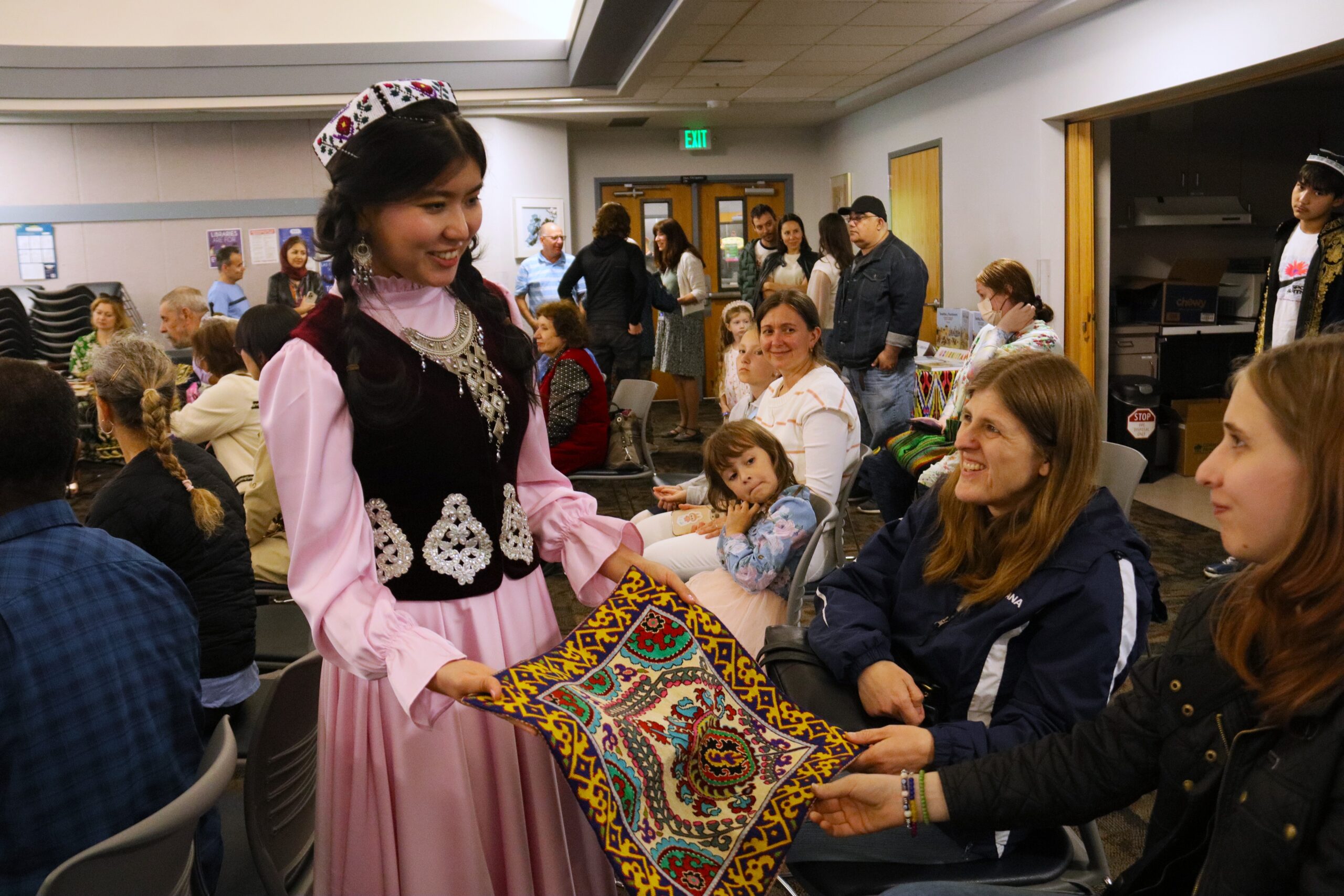
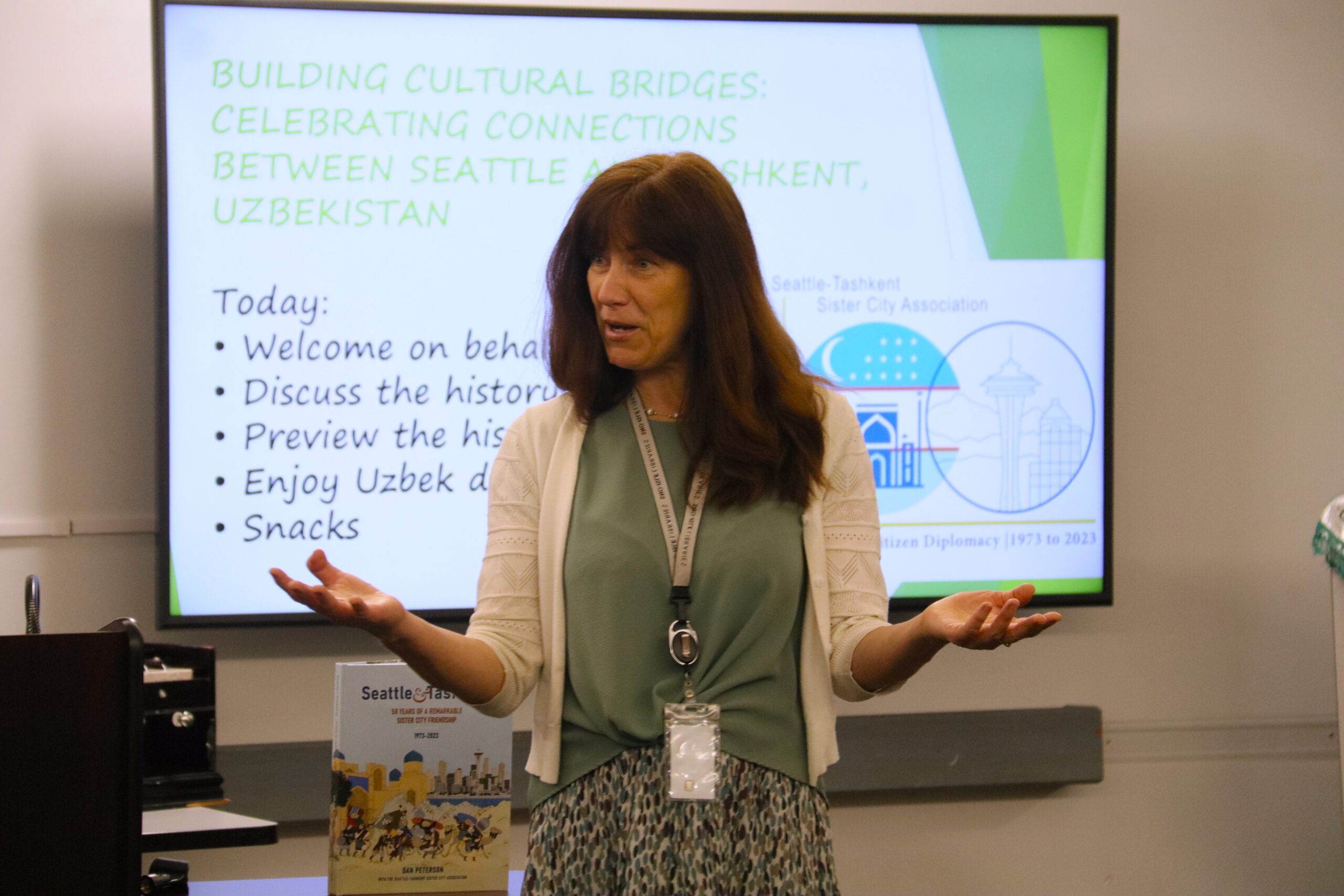
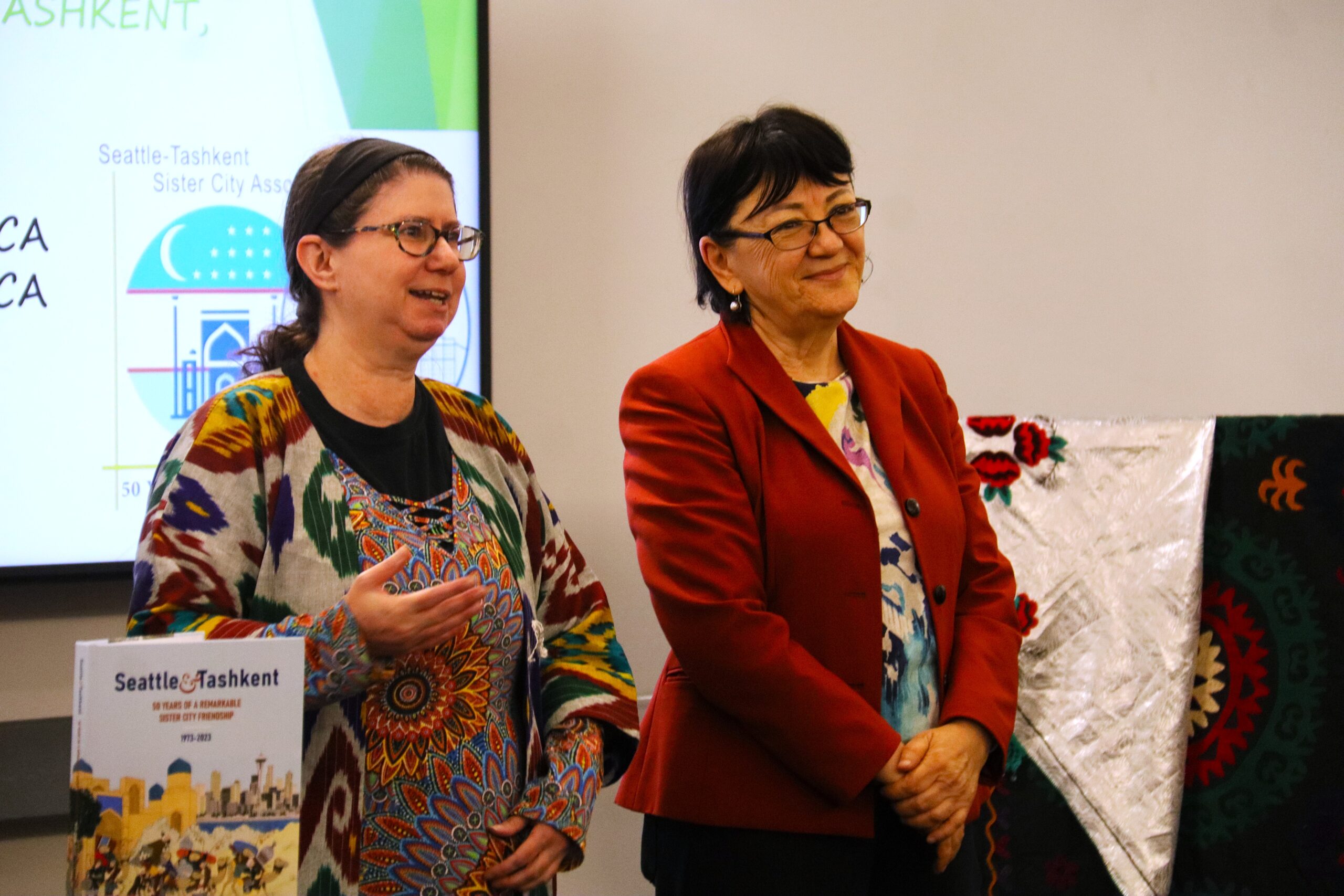
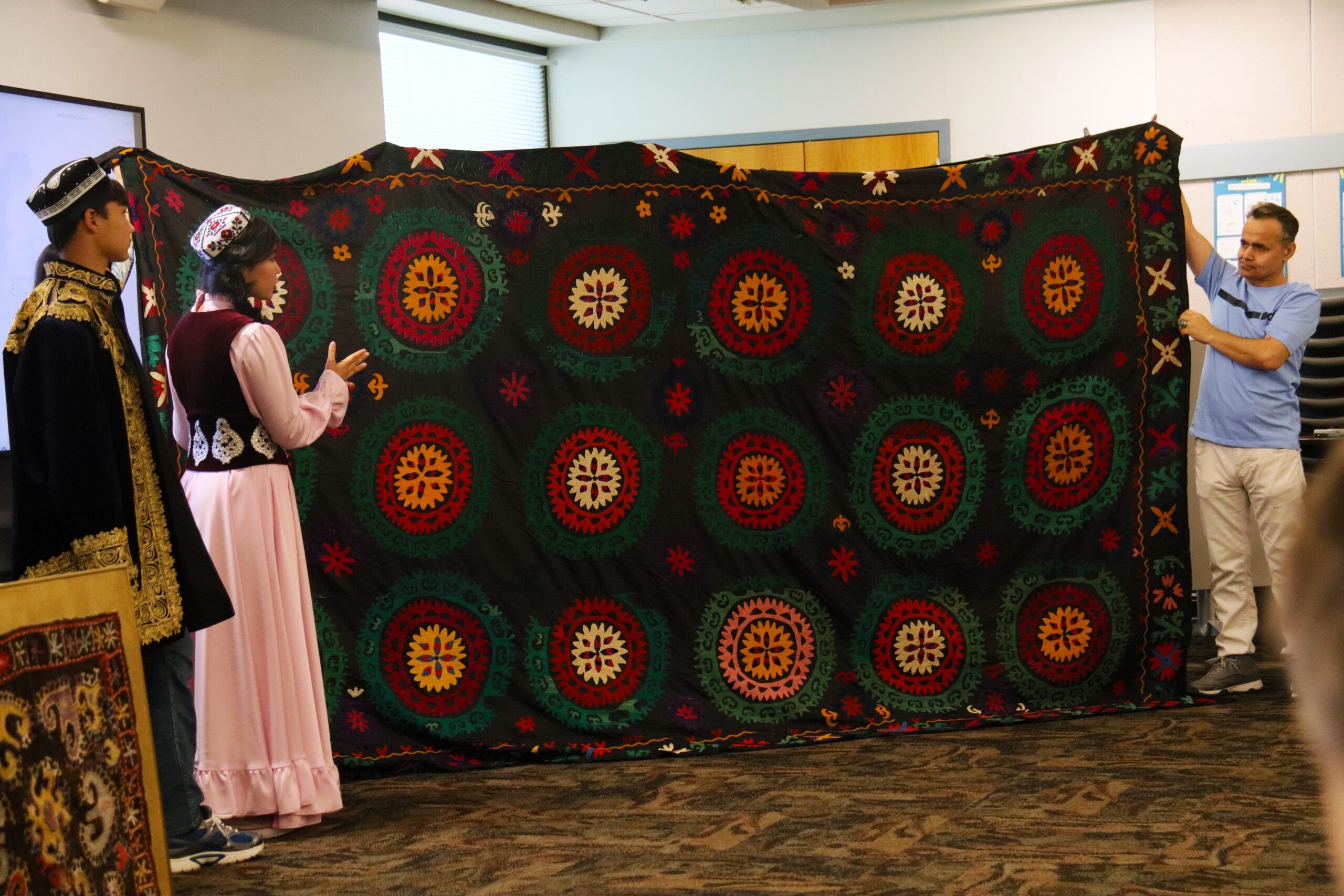
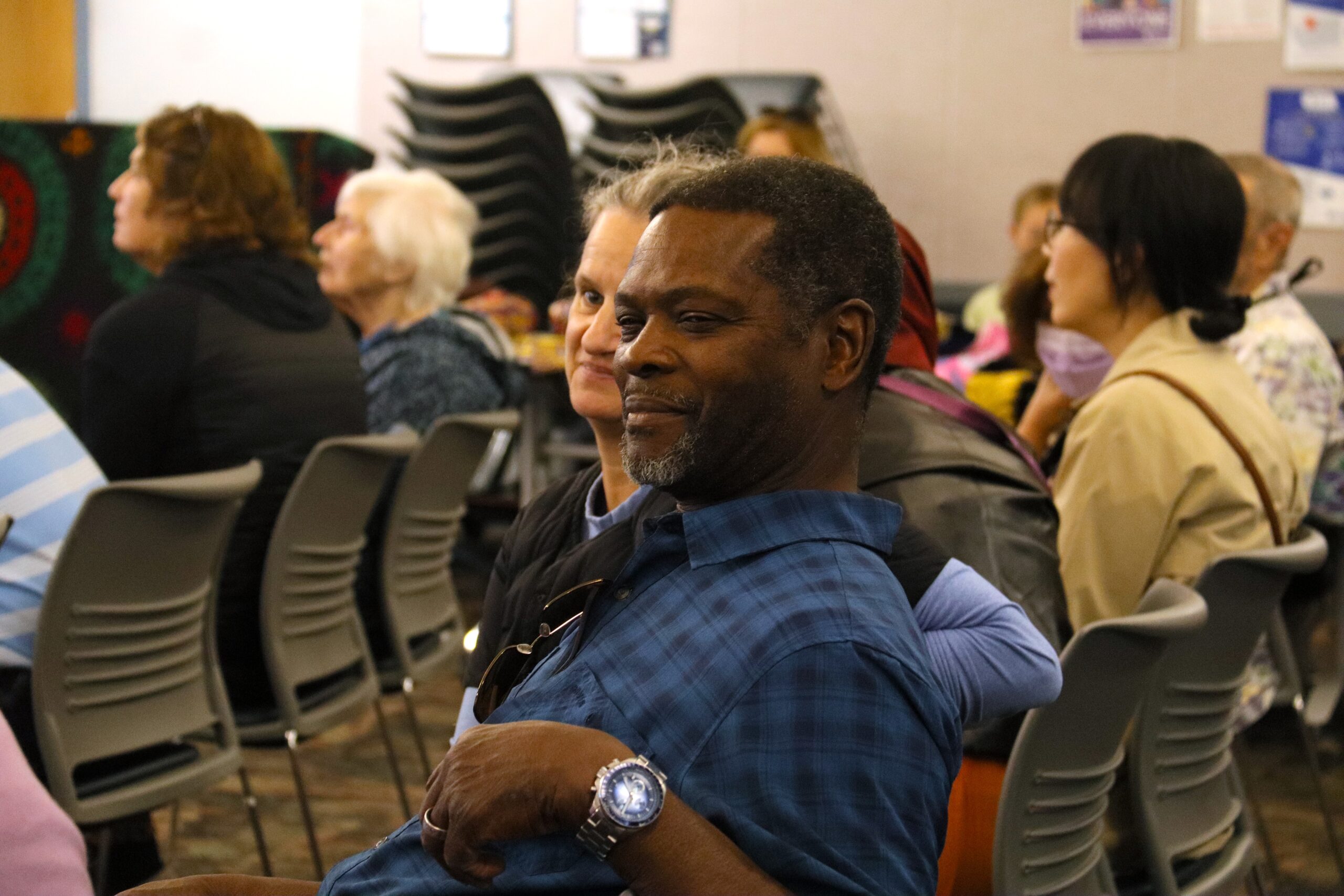
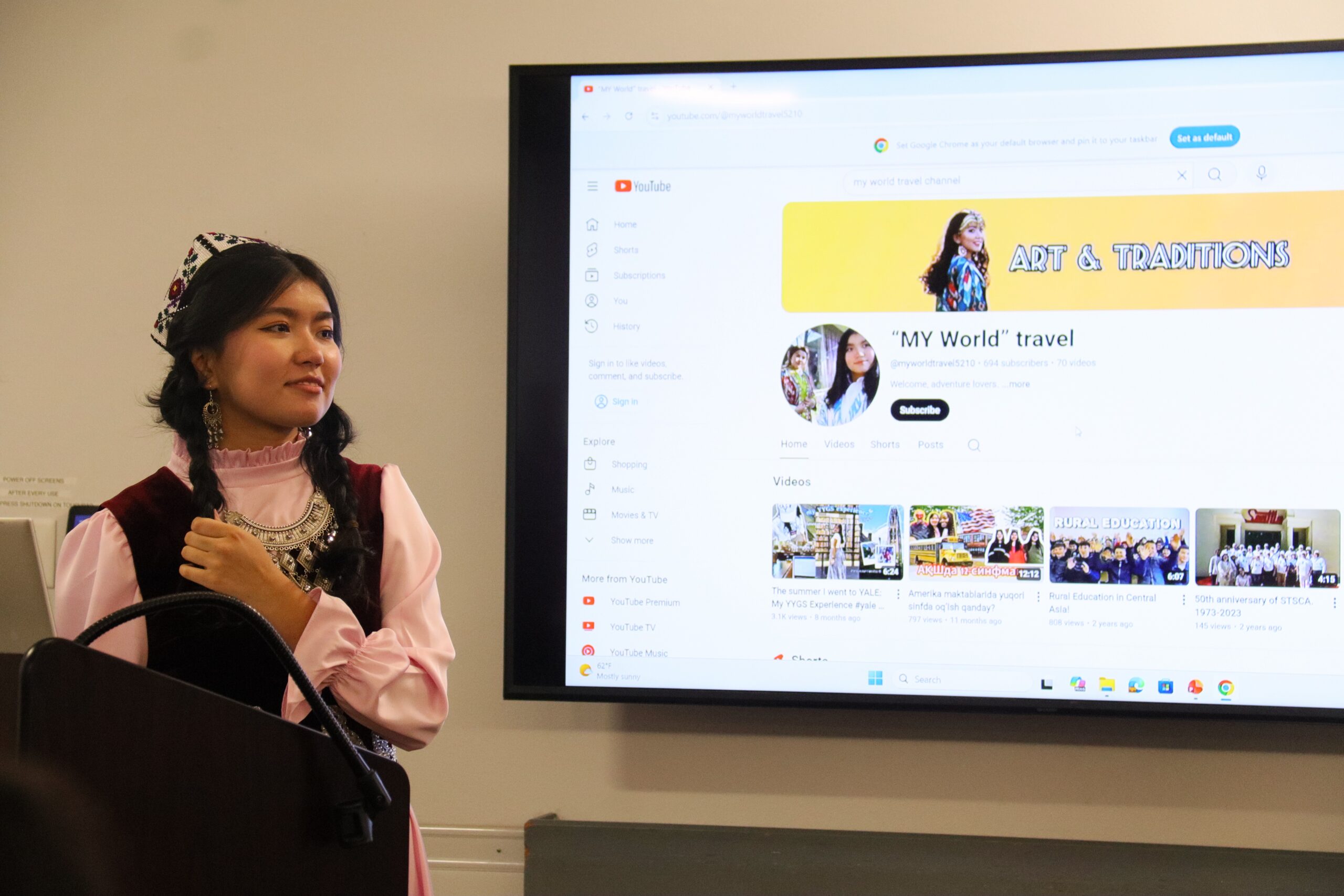
Several Uzbek Mountlake Terrace residents joined former Seattle-Tashkent Sister City Association (STSCA) President Dan Peterson at the Mountlake Terrace Library Saturday afternoon to share Uzbekistan culture and the history of how Seattle and Tashkent became sister cities.
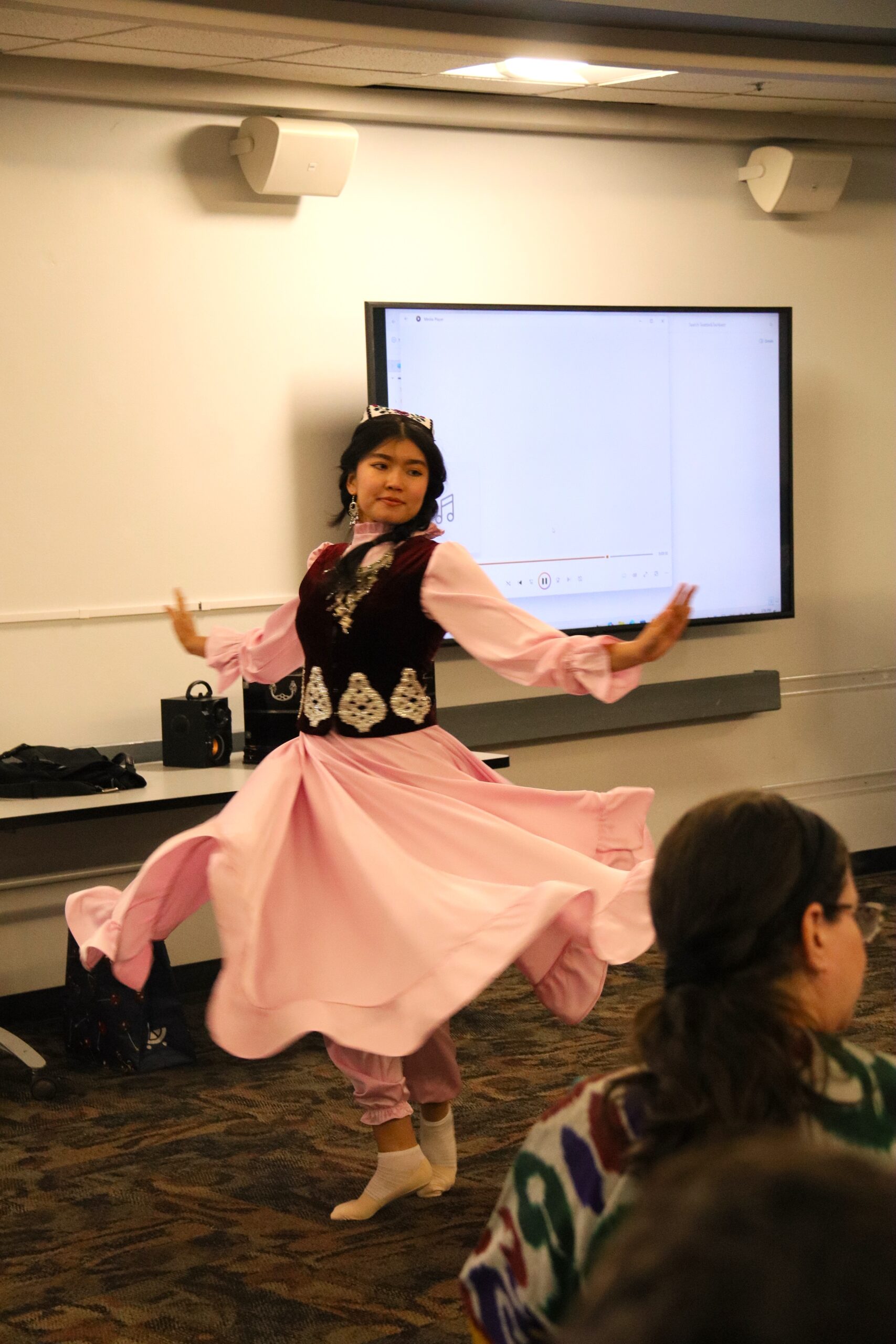
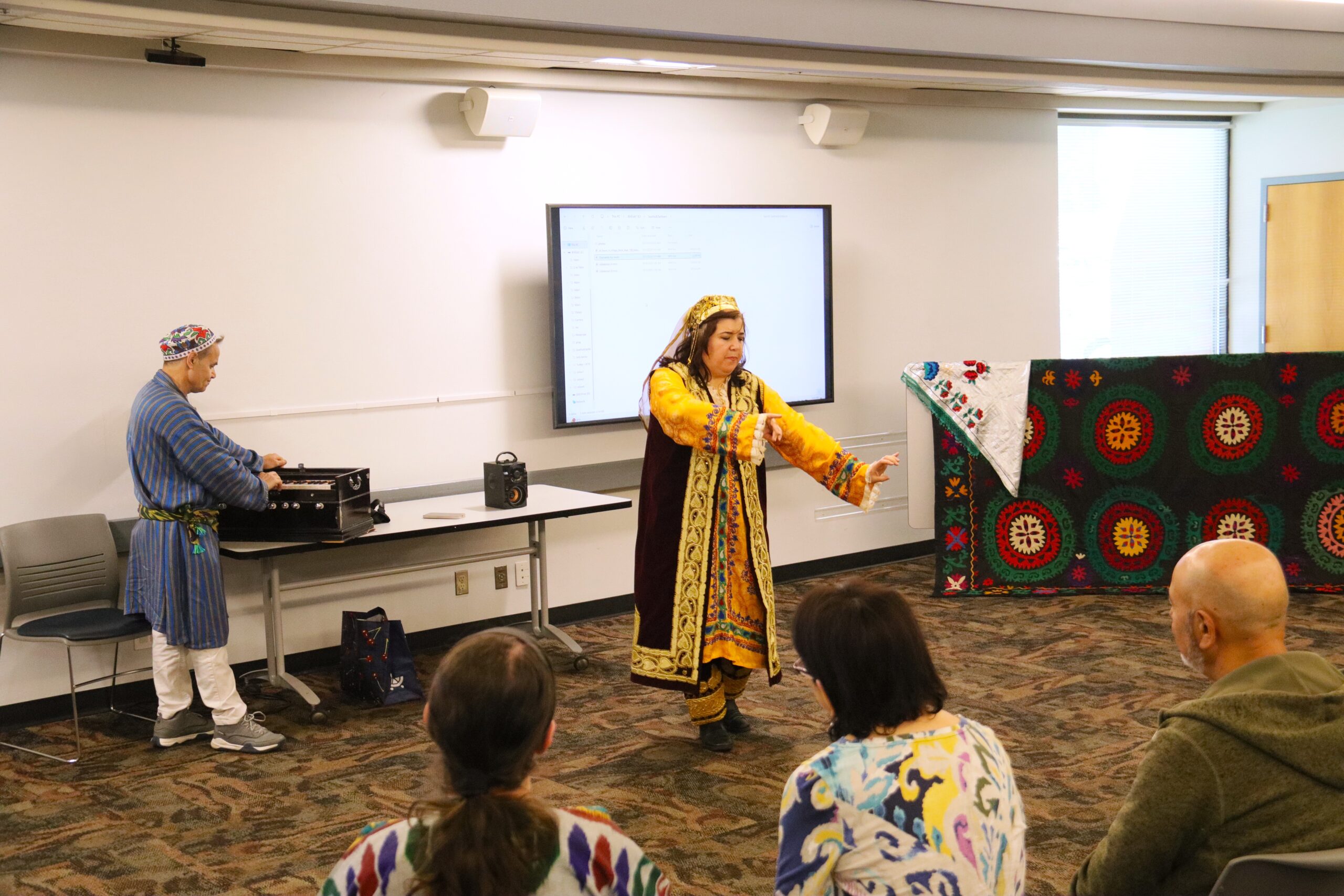
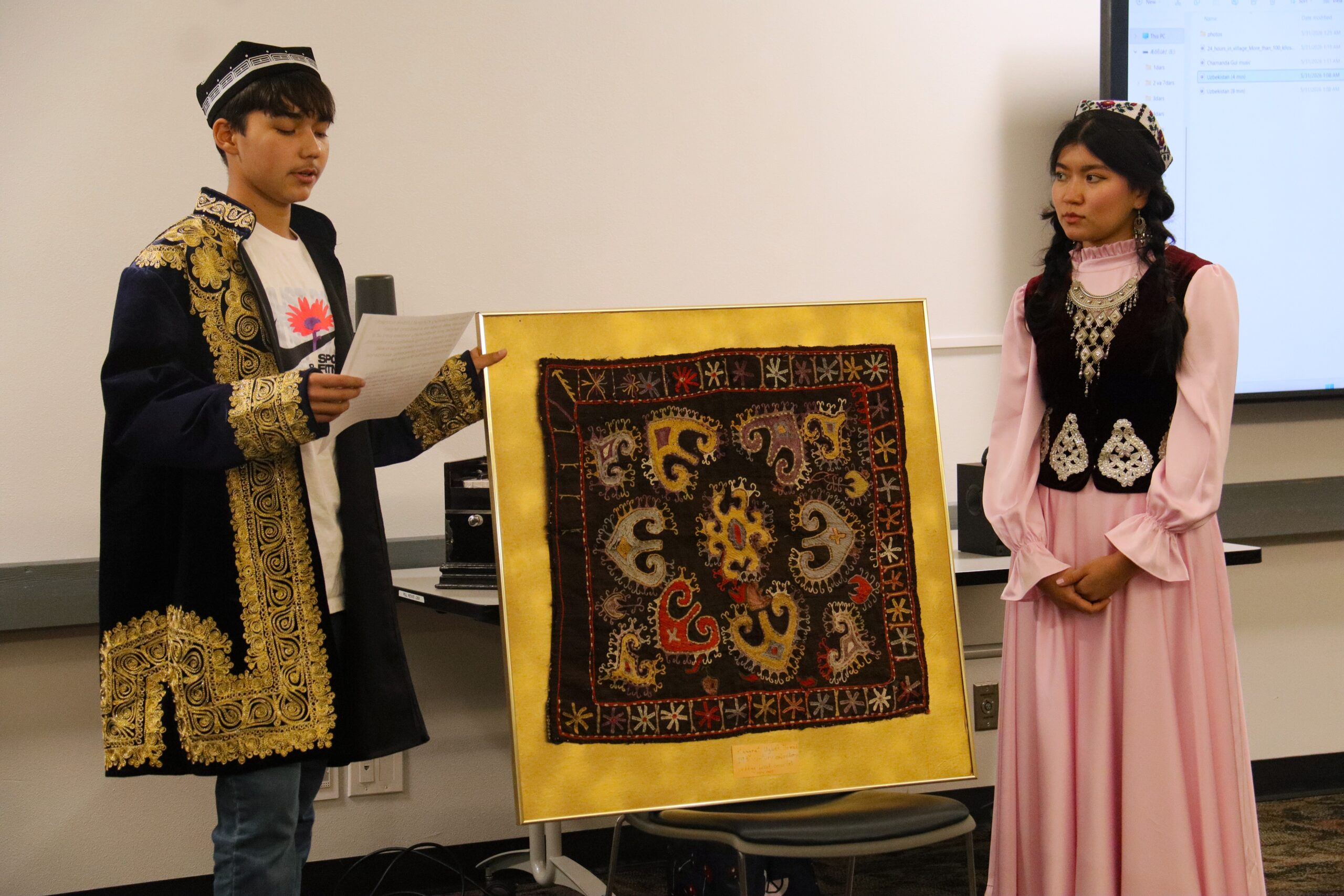
There were two dance performances by Madina Abdurashidova, Mohammed Hadid and Maksuda Yuksel, and snacks and drinks were provided to guests.
During the presentation, Peterson said that Uzbekistan’s capital of Tashkent is almost exactly on the opposite side of the Earth from Seattle. The city sits along the Silk Road and its population is about 95% Muslim. While Uzbekistan was established as its own country in 1992 after the fall of the Soviet Union, Tashkent is more than 2,200 years old, Peterson said.
“As Americans, we don’t learn a lot about Central Asia,” he added.
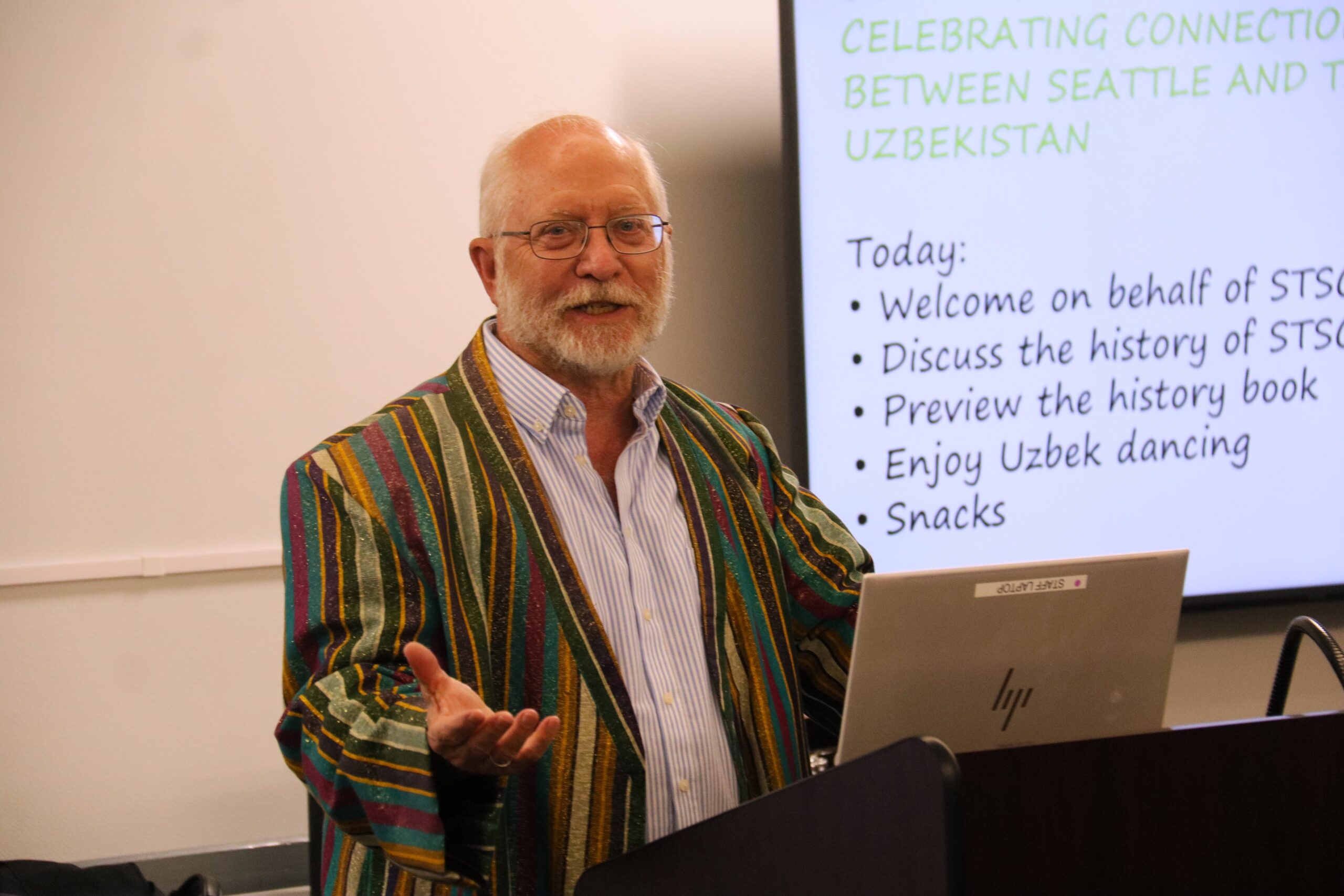
Peterson said the sister cities idea started with President Dwight D. Eisenhower in 1956 as a peace-building tool. He noted that Eisenhower was worried that the U.S. military may get too strong.
“Whenever I think of him, I think of a Japanese saying, ‘If you have a hammer, everything looks like a nail,’” Peterson said. “And so he started this whole movement, and it expanded…[and] there are literally thousands of sister cities throughout the world.”
Peterson pointed to a Turkic language professor from the University of Washington who built relationships with Tashkent State University in the 1960s. He also credited Professor Ilse Cirtautas, a UW Near Eastern languages scholar who started visiting Tashkent every year to do research. Those scholarly exchanges laid the groundwork for a deeper connection between both cities.
In 1971, Alaska Airlines launched tourism flights to the Soviet Union and sought to expand to Irkutsk, Sochi and Tashkent. To promote the routes, the airline invited the Soviet mayors to Seattle for a dinner at the Space Needle and asked Seattle Mayor Wes Uhlman to attend.
Peterson quoted Uhlman’s recollection of that night: “They asked me if I would come and join the mayors for dinner at the top of the Space Needle. I sat next to Mayor Husnitdin Asamov of Tashkent, who didn’t speak any English, but I spoke a little Russian. We talked about continuing our relationship.”
Peterson described that conversation as “a critical event, people talking to people, not thinking about which country we’re from, but what we can do.”
In 1972, Uhlman then wrote to Asamov, proposing a sister-city relationship.
“It will be a great honor for us to establish permanent, friendly and business contact with the City of Seattle,” Kazimov replied.
“The State Department of the United States government said no way,” Peterson said. And so, he said Uhlman turned to U.S. Sen. Warren Magnuson for help, and Magnuson told the Secretary of State that he would “hold up the entire budget for the State Department unless you approve this.” The pressure worked.
“Within a week, Mayor Uhlman said we received a letter of approval,” Peterson said.
Then the Seattle City Council passed an ordinance forming the sister city of Tashkent-Seattle in 1973.
Peterson added that the anti-war movement in the late 1960s and early 1970s had played an indirect role in forming the sister cities.
“There’s a lot of citizen activism, which really helped,” he said.
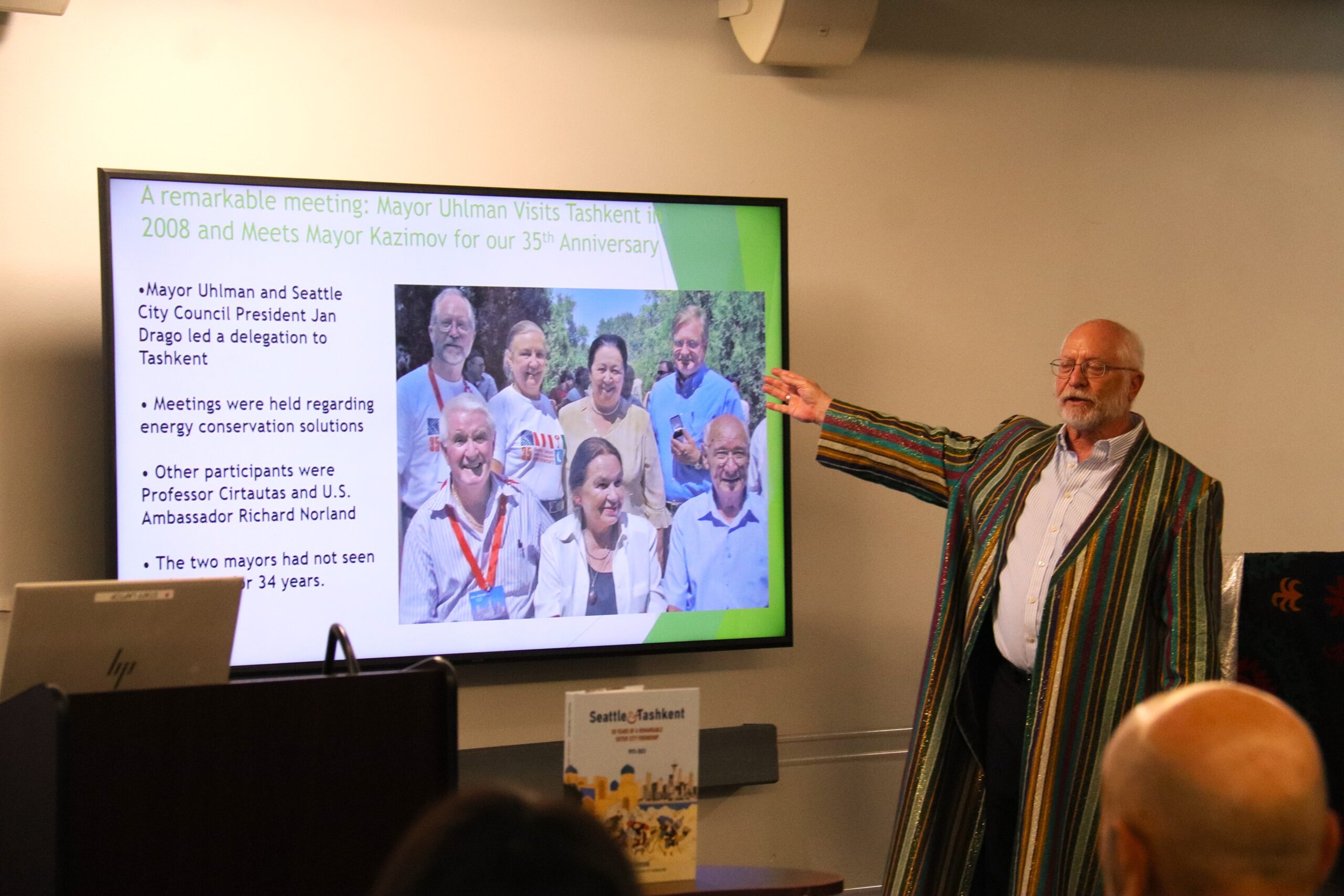
While Peterson said he doesn’t know why the Soviet Union supported the sister city idea, he knows that the mayor of Tashkent could never do this without Moscow’s approval.
“I still look at that and just go, ‘wow, you guys are courageous,’” he said.
In 1983, Seattle citizens collected about 40,000 signatures on petitions for peace that were handed out on the streets of Tashkent, a formal “declaration of peace” signed by the mayors rejecting nuclear weapons. A peace park was constructed in Tashkent with materials and tiles from Seattle.
“Seattle has almost as many sister cities as L.A. or New York,” Peterson said. “We wanted to share a story, but we also wanted to teach the citizens in each place about our history, and we wanted to promote peace and understanding.”
Peterson invited audience members from Uzbekistan to compare their experiences between libraries in Tashkent and Mountlake Terrace. One speaker said people need an ID and a ticket to enter a major library in Tashkent and are often not allowed to borrow books, contrasting that with the “friendly” atmosphere and abundant tools in the Mountlake Terrace Library.
Another speaker talked about past restrictions in Uzbekistan that required special permission from authorities to access certain books. Peterson said that U.S. libraries “operate a lot on trust, and it works.”
Peterson told My MLT News that being part of a sister city means that a city like Mountlake Terrace is recognized as part of a global community.
“We talk about how citizen-to-citizen diplomacy helps us make the world smaller and safer, and that’s important for all of us to remember,” he said. “As Mayor Uhlman [said], ‘Governments may not always get along, but people do.’ And people want to get along together, for the most part. For me, sharing this information is just really important for us to remember.”
For more history of the Seattle-Tashkent sister cities, visit STSCA’s history page.
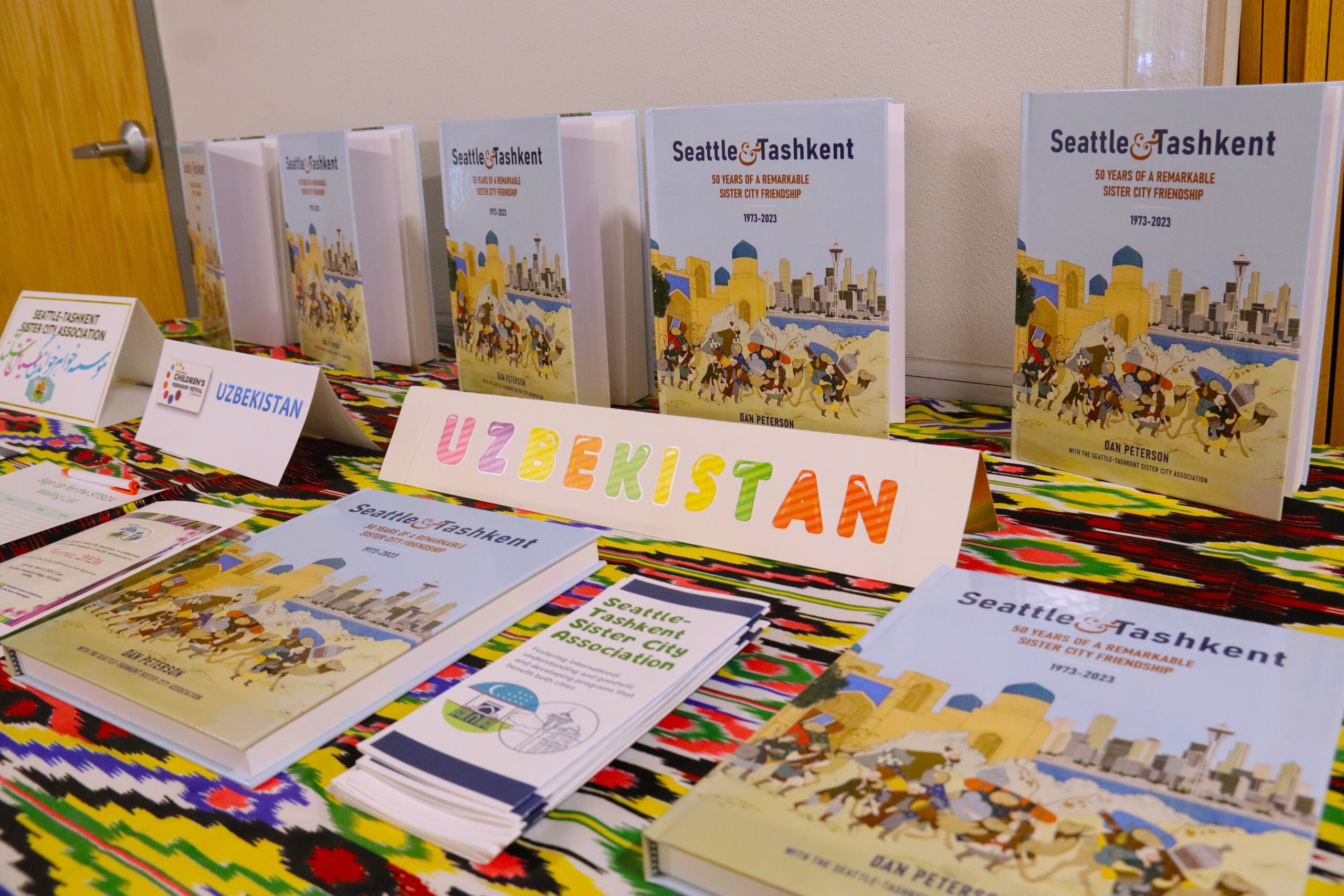
The book Seattle & Tashkent 50 Years of a Remarkable Sister City Friendship is sold on the STSCA website.


Real first and last names — as well as city of residence — are required for all commenters.
This is so we can verify your identity before approving your comment.
By commenting here you agree to abide by our Code of Conduct. Please read our code at the bottom of this page before commenting.