
Will you chip in to support our nonprofit newsroom with a donation today?
Yes, I want to support My MLTnews!
Snohomish County Superior Court officials hosted their first Law Day Friday, inviting local media to tour parts of the county courthouse and have an open chat with judges, attorneys, county councilmembers and other court staff.
Led by Judge Anna Alexander and accompanied by several staff, the group toured the courthouse’s law library and the first floor where criminal and domestic trials are held.
Among the media attending were Ian Davis-Leonard from The Herald, Kienan Briscoe from the Lynnwood Times and Ruby Storey from UW News Lab, who is writing for the Edmonds Beacon.
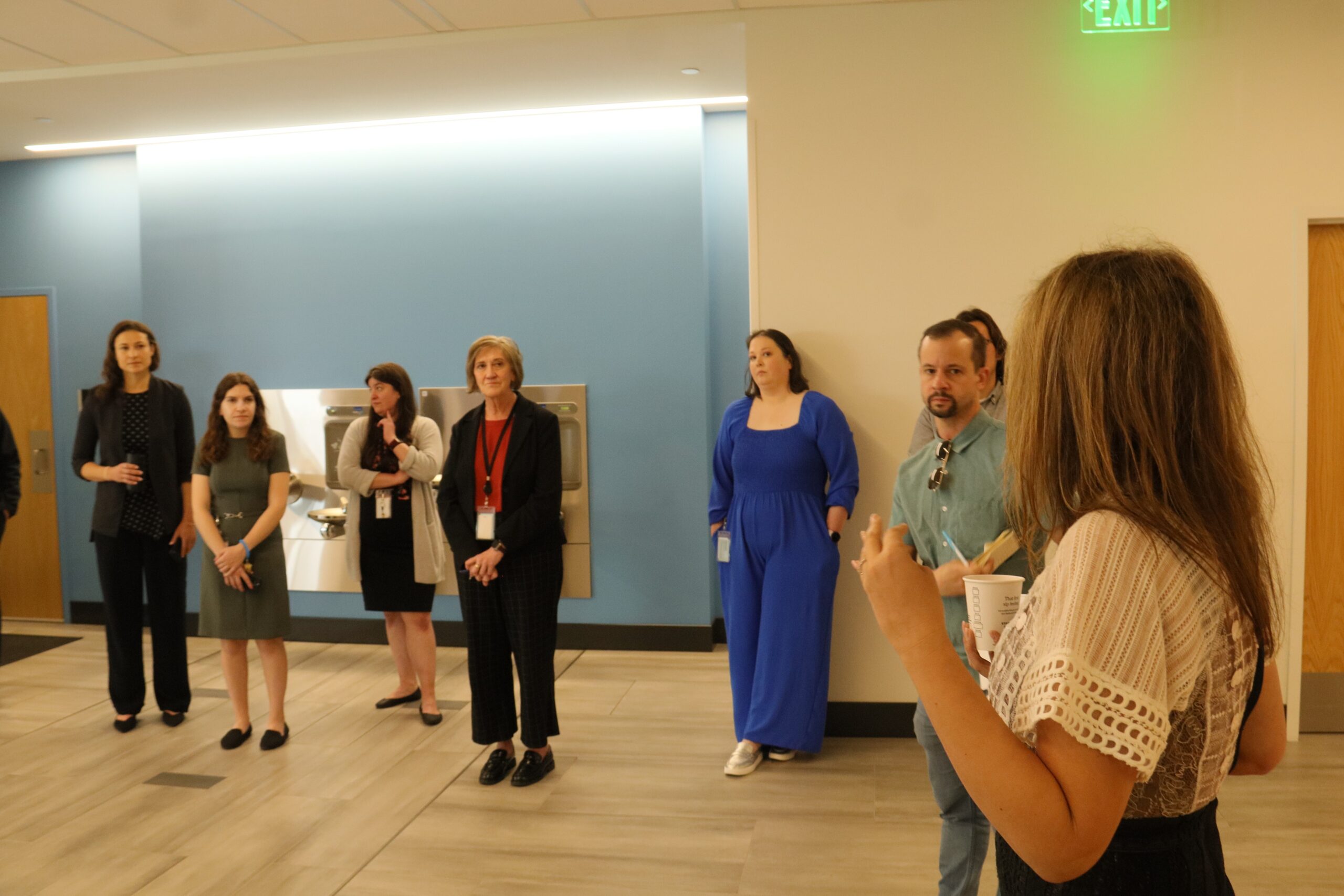
Law Librarian Florence Mpinda said the public library has about 1,300 books and provides access to law databases statewide. While many attorneys and commissioners use the library, Mpinda and Alexander said many people who represent themselves in court use it, too, due to high litigation costs.
“We do have a lot of forms now available to people,” Mpinda said. “We opened last year in July, [and] we have a packet online. Anyone can access it…at a cost when we work on them, but it’s cheap for anyone to work on and use.”
These packets include forms related to eviction, probation, civil and small estate cases.
“For example, someone in the Prosecutor’s Office domestic violence unit has a victim who can’t get direct legal advice from a prosecutor because they’re not their lawyer or from their advocate. They can send them down here,” Alexander said.

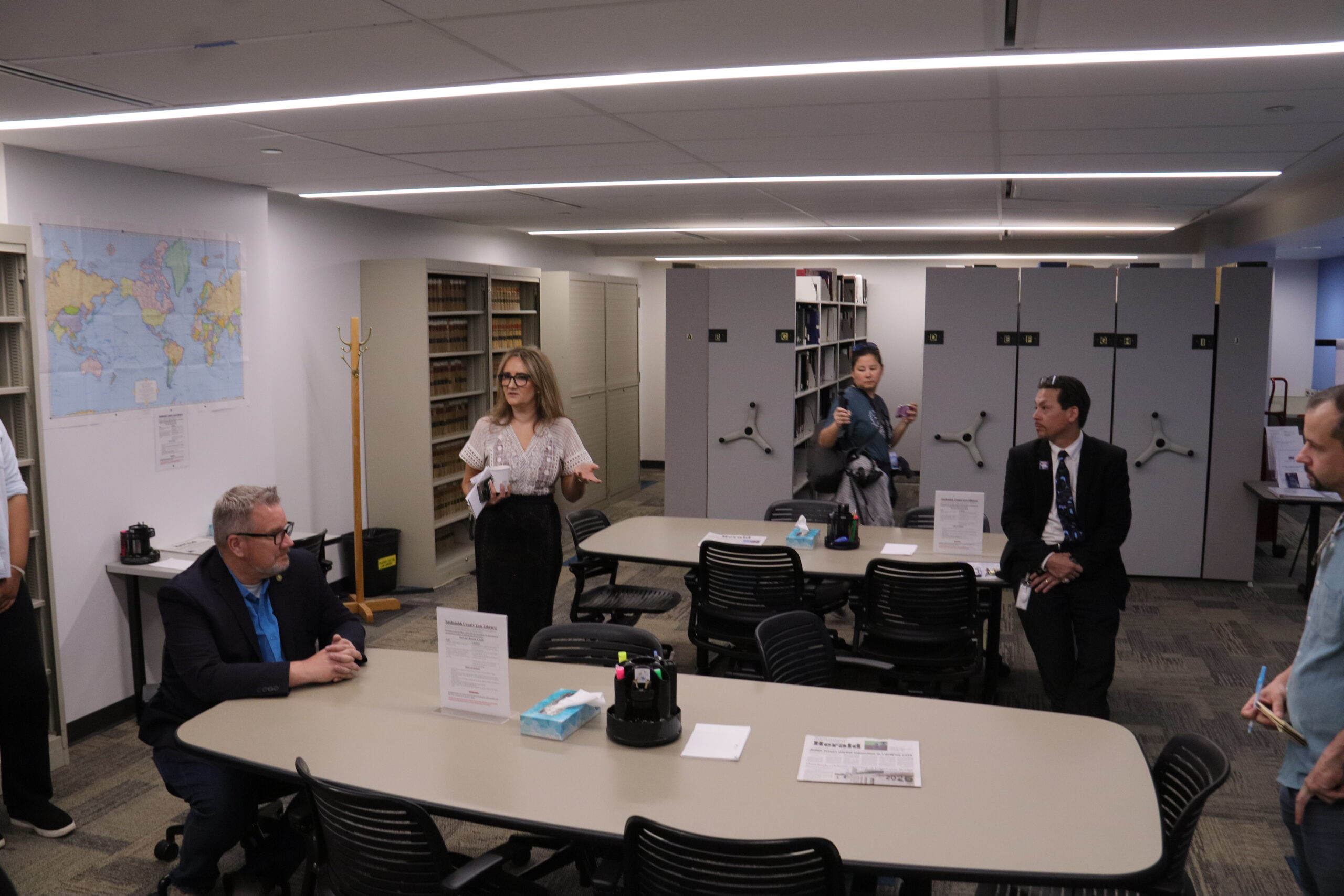
Mpinda added that the law library is funded with property tax and court filing fees, not legal fees, and library staff do not give legal advice.
Law Day is recognized nationwide on May 1 and was first created in 1958 by the American Bar Association and was proclaimed by President Dwight D. Eisenhower. Judge Jennifer Langbehm said after the tour that Eisenhower envisioned Law Day as “a time for Americans to reflect on the great heritage of liberty, justice and equality under law.”
“That phrase, ‘under law,’ does a great deal of work,” Langbehm said. “It suggests constraint. It suggests humility, and perhaps most importantly, it suggests that no one – not a litigant, not a lawyer, not a judge – is the measure of justice. The law is, as John Adams famously put it, ‘We aspire to be a government of laws and not of men’.”
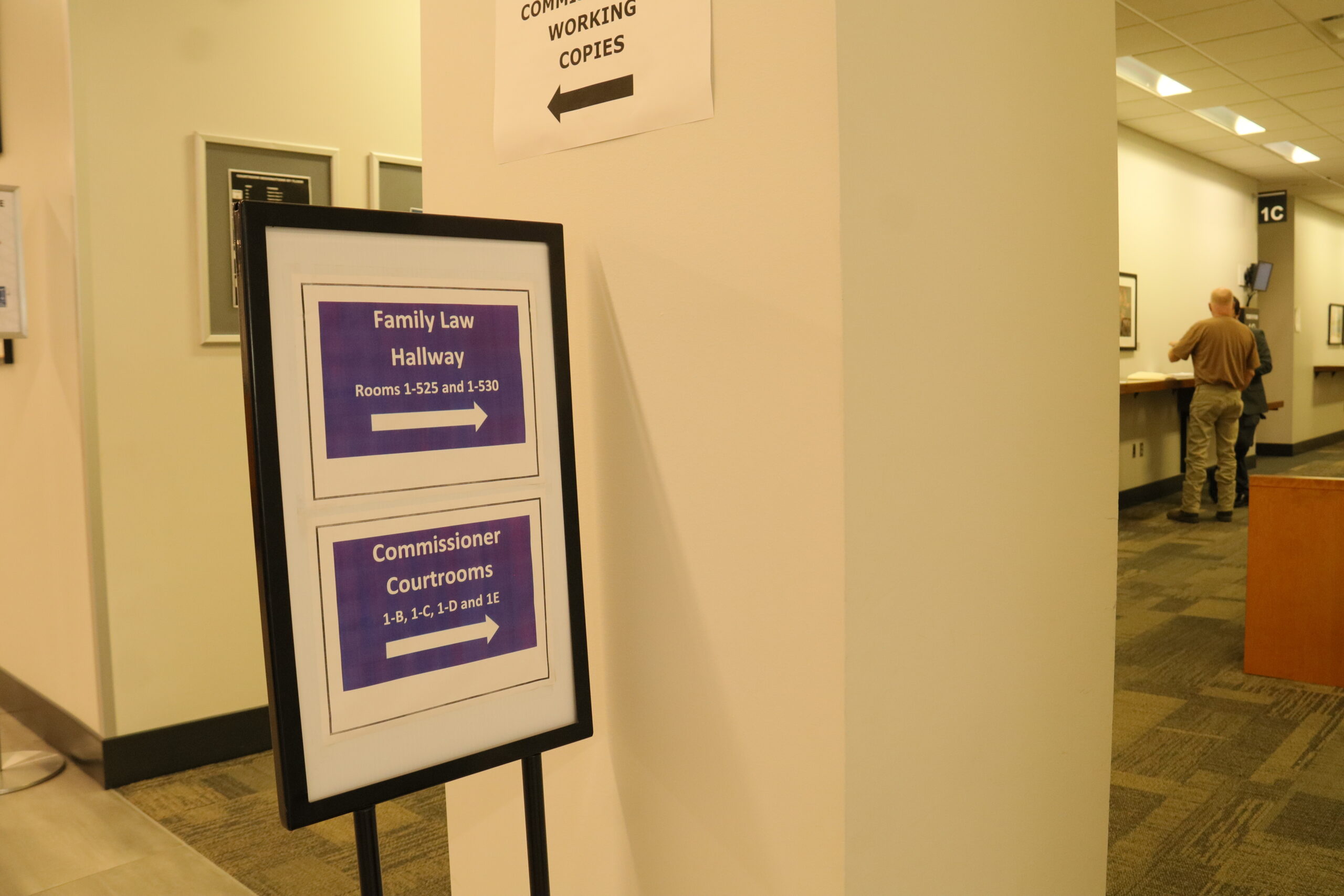
Regarding daily operations, Alexander said the daily courthouse is scheduled around key criminal and family law calendars. Using a hospital analogy, she explained that the first-floor court commissioner courtrooms function like an ER where cases are “triaged” before reaching a judge.

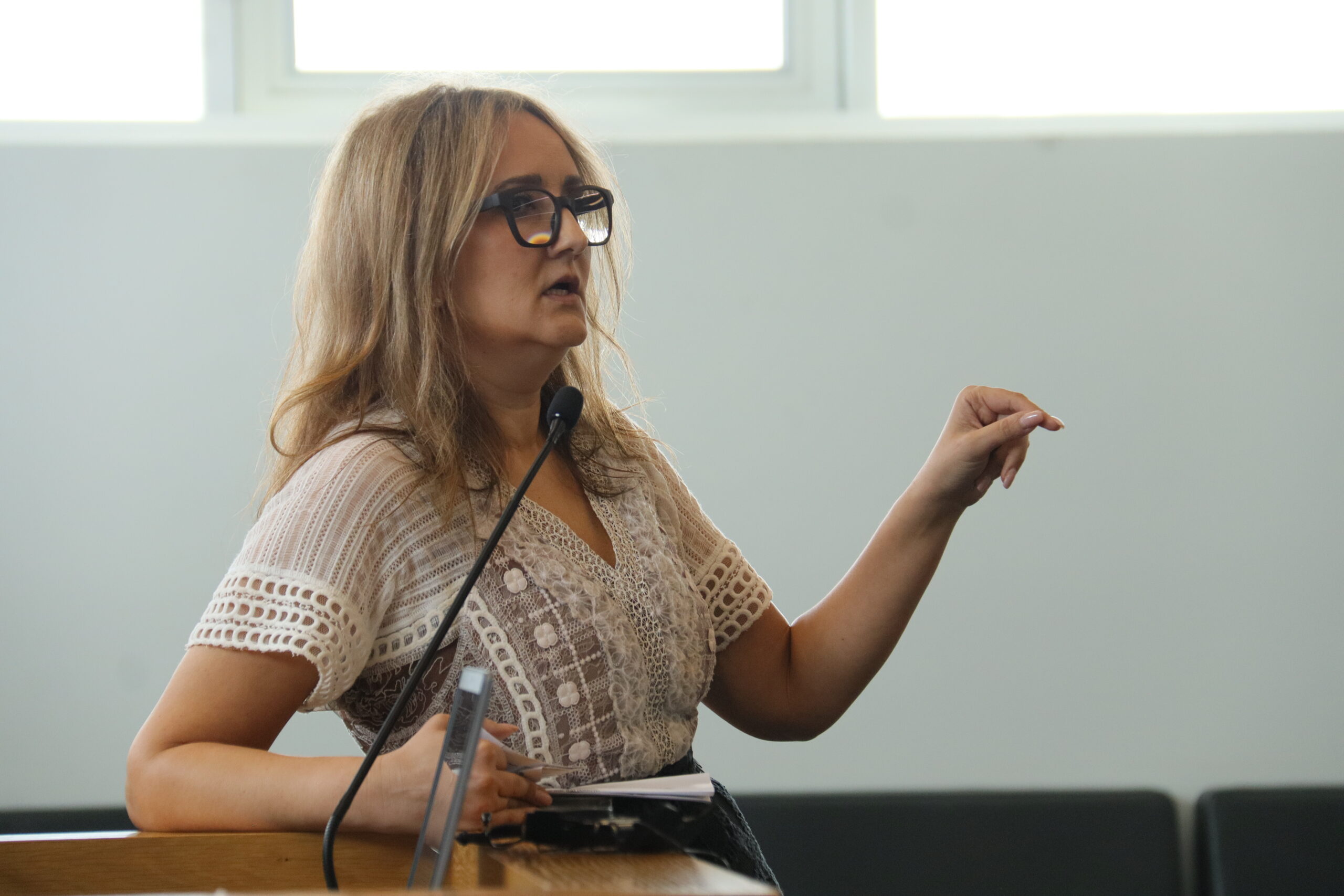

Alexander said Courtroom 1A serves as the main criminal hearings courtroom, where trials are assigned weekly. Meanwhile, arraignments, motions, pleas and sentencings take place throughout the courthouse each weekday. Every afternoon, the court also conducts a dedicated calendar to review people being held in custody before a trial, set or adjust bail and conditions, schedule trial dates and hearings, and address suspects arrested on outstanding warrants.

Alexander said many competency reviews take place during the court’s afternoon calendar, involving defendants whose attorneys believe they may be suffering from a mental illness that prevents them from understanding the charges against them. In those cases, courts rely on evaluations from Western State Hospital to determine whether a person is competent to stand trial.
“We can’t do anything with those people until we figure out if they’re competent,” Alexander said. “There are some people with developmental disabilities who may not be competent to stand trial, but who are nevertheless charged with crime. There’s a different process for that situation.”



Alexander said if a defendant is found incompetent but potentially restorable, the court can order treatment at Western State Hospital to restore competency, often through medication. She added that Western State Hospital, located in Lakewood near Tacoma, is a state-run psychiatric hospital responsible for competency evaluations, restoration treatment and housing individuals found criminally insane until they are no longer considered dangerous.
Regarding repeating offenders and “catch-and-release” policies, Judge Patrick Moriarty said under the U.S. Constitution and court rules, people accused of crimes are presumed innocent and “presumed to be released pending trial until the state can prove that they’re guilty beyond a reasonable doubt.”
“I know that a lot of people get upset by the fact that if a person [is] accused of committing a crime… the court doesn’t simply put them in custody and hold them until their trial,” Moriarty said.

When setting bail, he said the court looks at whether a person is likely to fail to appear, commit a violent offense or interfere with the administration of justice. Any bail set must be “reasonable,” taking into account their ties to the community, financial resources, employment or homelessness, he added.
“Our sentencing guidelines provide how people get sentenced…a scoring system [that depends] on the number of prior offenses they have and the seriousness of the current offense,” Moriarty said. “For instance, if a person commits an assault in the second degree, under our [state] sentencing guidelines, that person might look at three [to] nine months for committing a certain type of offense, and we’re bound to sentence them within that range unless there’s certain aggravating or mitigating factors.”
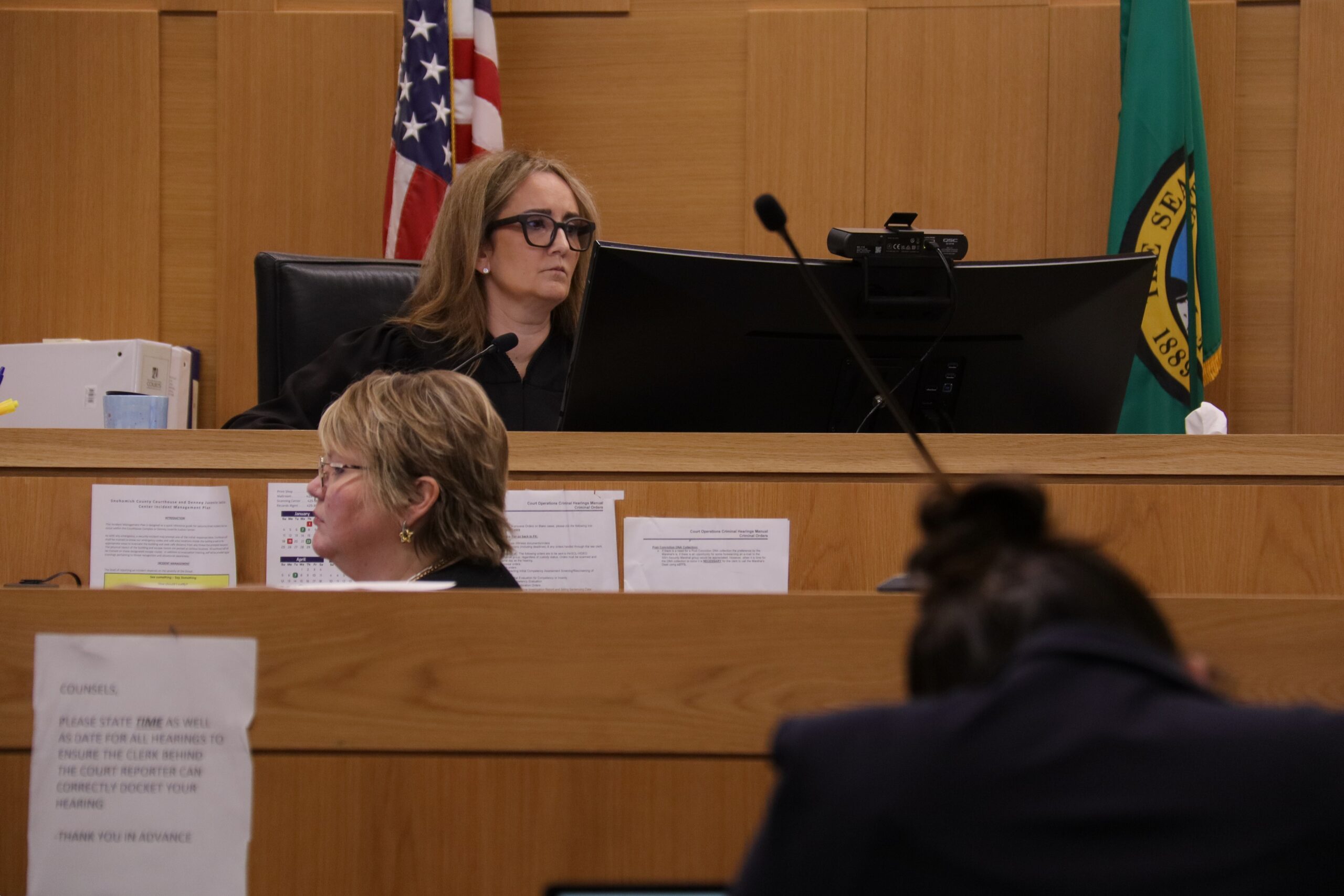
Moriarty said the sentencing also factors in suggestions from the prosecutor and defense attorney. “We always let them [the defendant] know that once you’ve entered a plea of guilty, your prosecutor may make a recommendation, and your attorney may agree with that or disagree, but it’s the court’s decision as to what the sentence will ultimately be up to the maximum.”
Moriarty said he would like to see the courts have more resources for staffing, community-based drug and alcohol treatment, and supervision options both pretrial and post‑conviction. He said the court is “always pretty much to the wall” with its caseload.
“Money is an issue for every branch of government, but ultimately, we’re trying to serve the public,” he said. “We’re trying to make sure that our community thrives and is safe.”



Real first and last names — as well as city of residence — are required for all commenters.
This is so we can verify your identity before approving your comment.
By commenting here you agree to abide by our Code of Conduct. Please read our code at the bottom of this page before commenting.