
Will you chip in to support our nonprofit newsroom with a donation today?
Yes, I want to support My MLTnews!
The Mountlake Terrace City Council on Thursday heard a presentation from Habitat for Humanity of Snohomish County Executive Director Steven Li about the Willow Path Cottage project, which addresses the shortage of middle-income housing in the county.
Li said the median home price in Snohomish County is about $750,000, and the monthly mortgage is more than $5,000. This means a household needs to earn more than $200,000 a year for that home to be affordable, he said.
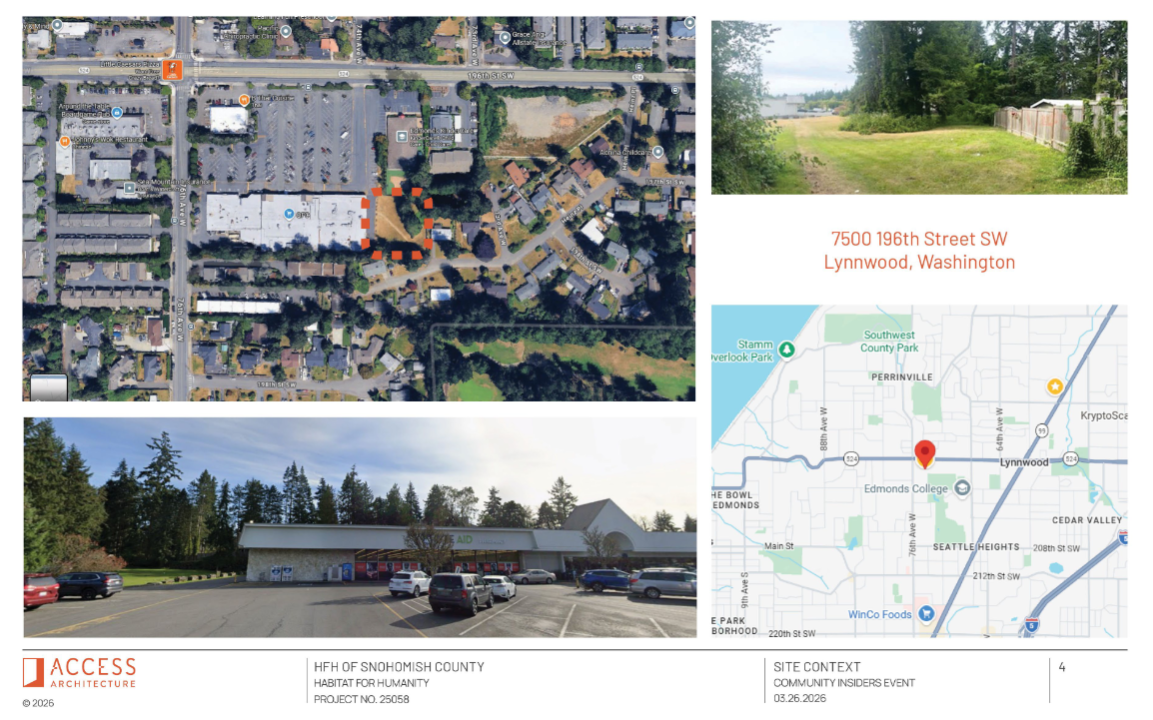
Willow Path is an eight-unit cottage housing community that will be built in Lynnwood at 196th Street Southwest and 76th Avenue West on a half-acre parcel east of the QFC shopping center. The groundbreaking will be in late 2026 or early 2027.
The cottage home project has two floor plans:
- A two-bedroom, one-bath unit of about 600 square feet
- A three-bedroom, two-bath unit with more than 600 square feet
The home surrounds a small courtyard that serves as a gathering space.
“Our hope is to take these lessons learned through this project, and then be able to apply it to future projects and create a scalable model that we can replicate throughout similar places and lots throughout the County,” Li said.
He added that the Willow Path project provides “permanently affordable housing,” meaning these homes stay affordable not just for the first buyer but for future homeowners, too.
Meanwhile, Habitat is still working on construction financing as well as identifying funding sources to fill a sizable gap to ensure that these homes can be sold to households at 80% and below of the area median income, Li said.
Councilmember Sam Doyle asked about whether the Willow Path land donation was typical for Habitat for Humanity, and how the “permanently affordable” model would work when an owner sells.
Li said the land is placed in a land trust, ground lease or covenant that requires any resale stay at an affordable price and go to a low- to moderate‑income buyer – with that requirement recorded on a title. He explained that buyers would build equity at a slower, steadier rate akin to owning a condo with a fixed appreciation. Homeowners would only be paying for the structure, not the land.
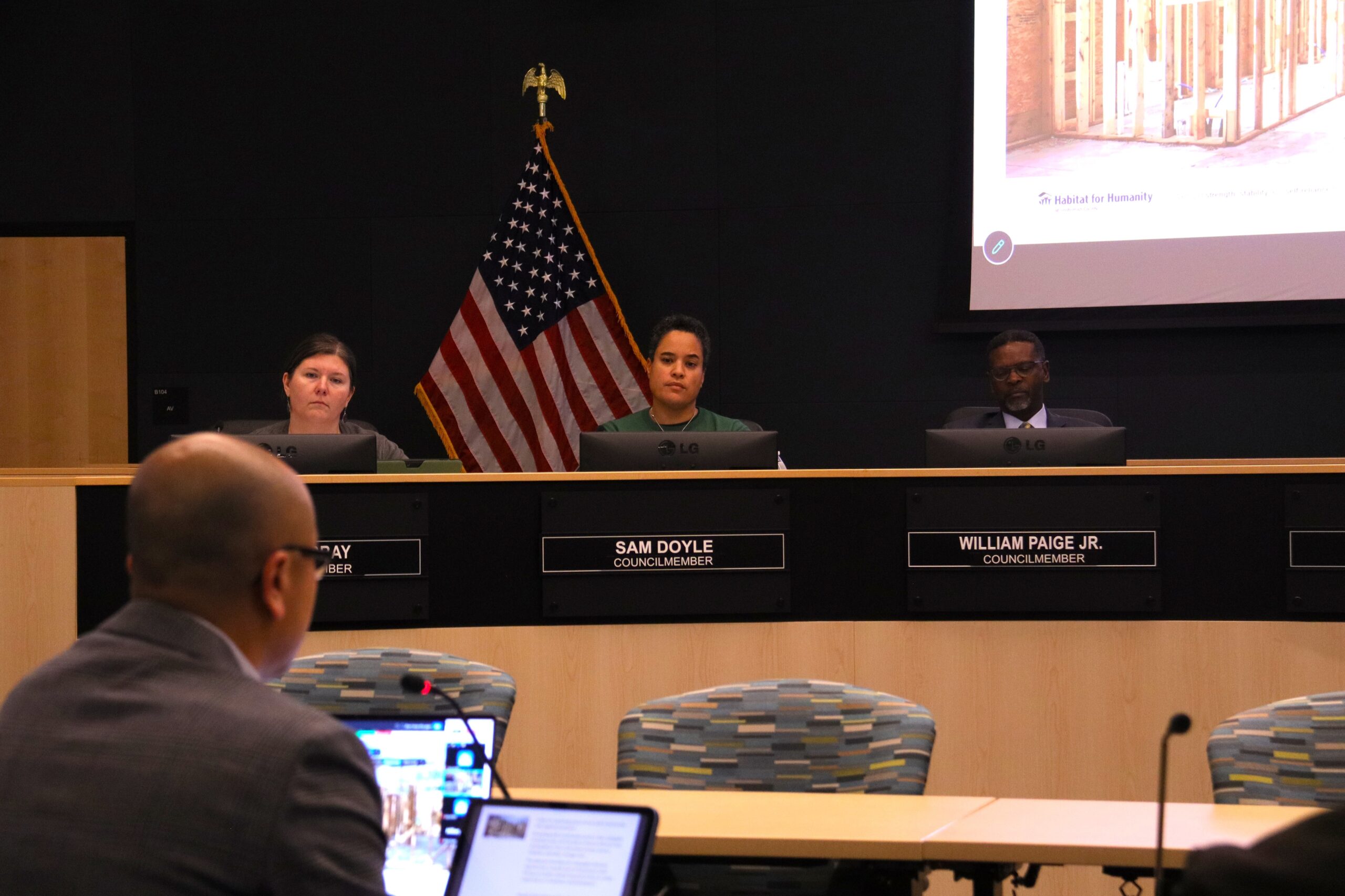
Regarding land acquisition, Li said Habitat received some properties from private donors and from banks with foreclosures after the 2008 recession. More recently, Habitat has bought land, but he called it “increasingly much more challenging, if not impossible, to purchase land, build and then sell affordably.” As a result, Habitat is now prioritizing land partnerships with cities and landlords who can “carve out” a piece of their land to build such homes.
Li said that cottage homes and similar housing projects are rare because they are expensive to build, and builders are pushed to “maximizing square footage to be able to sell these homes as expensive as possible.”
Councilmember Kyoko Matsumoto Wright asked if Habitat intends to use the land trust model for Willow Path Cottages. She described how, in a land trust, buyers are essentially “just selling the improvements” when they move, while the land remains in trust so each resale goes to another income-qualified household.
“That’s probably one of the only ways to keep things really affordable,” Matsumoto Wright said, adding that people with no heirs could benefit from such a land trust.
Li agreed that land trusts can maintain affordable housing prices within a community, which helps stabilize this housing crisis.
The full presentation can be seen on the City’s website.
Property levy restoration
The Council also voted unanimously Thursday (Councilmembers Laura Sonmore and Bryan Wahl absent) to approve a resolution supporting a property tax levy proposed by Sno-Isle Libraries that will appear on the Aug. 4 primary election ballot. The measure would restore the library system’s regular property tax levy to 47 cents per $1,000 of assessed value, replacing the expiring levy first approved in 2018.
The measure would reset the levy rate from its current rate of 30.4 cents per $1,000 of assessed value.
If approved, levy proponents say the measure would help Sno-Isle Libraries maintain current staffing levels and library hours, purchase new books and materials, continue providing public access to computers and Internet services, and keep pace with technology upgrades and building maintenance needs.
Terrace Station 5
Councilmembers voted unanimously on both the zoning map amendment and the development agreement for the construction of Terrace Station 5 at the southeast corner of 236th Street Southwest and Van Ry Boulevard.
Terrace Station 5 is a 65‑unit multifamily project, and the agreement would rezone portions of the site to align with the City’s 2044 Comprehensive Plan and lot boundary adjustments.
Details can be found in our report of last week’s meeting.
Lodging Tax Advisory Committee
The Council voted unanimously to approve the appointment of Aireal King to the City’s Lodging Tax Advisory Committee, following a recommendation by a subcommittee that interviewed her. King is the executive director of the MLT Chamber of Commerce.
The council didn’t vote on the scheduled agenda item to appoint a candidate to a vacancy on the City’s Diversity, Equity and Inclusion Commission because the applicant withdrew.
Public comments
Mountlake Terrace resident Dennis Soltis thanked the Council for removing an RV that was parked on the street in front of his home for more than a week. He also suggested the Council consider a City ordinance to prohibit RV parking on residential streets. Soltis said during last week’s meeting that the RV prevented him from safely exiting his property.
“I do appreciate that somebody on this Council, or maybe the whole Council. got that RV removed, and it makes life a whole lot easier for me now,” Soltis said.
The entire meeting can be viewed on the City’s YouTube channel.


Real first and last names — as well as city of residence — are required for all commenters.
This is so we can verify your identity before approving your comment.
By commenting here you agree to abide by our Code of Conduct. Please read our code at the bottom of this page before commenting.