
Will you chip in to support our nonprofit newsroom with a donation today?
Yes, I want to support My MLTnews!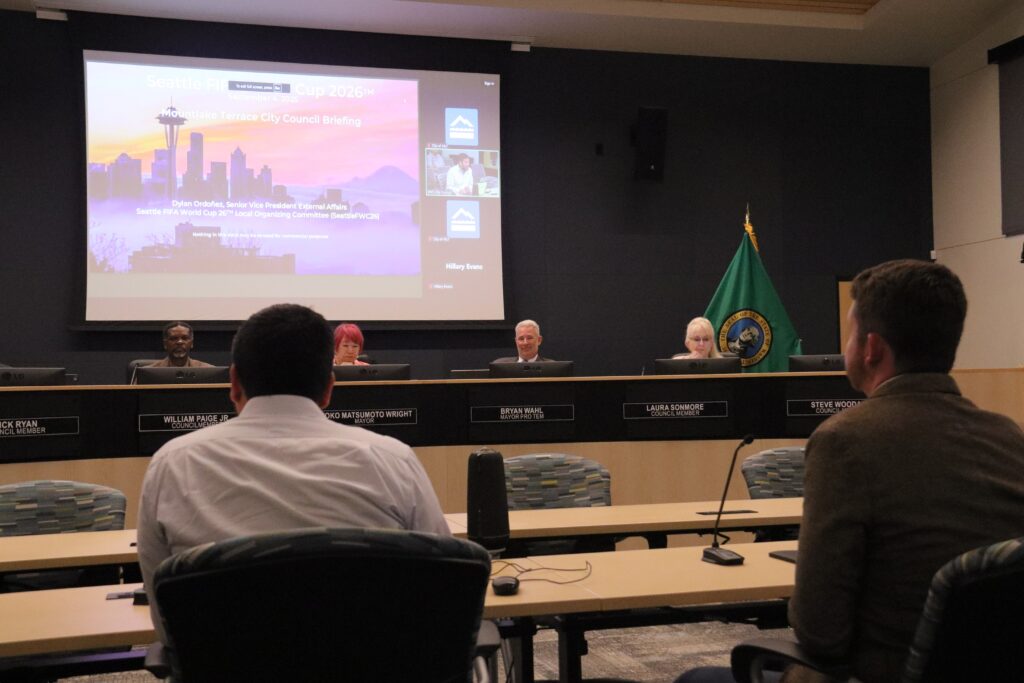
Key takeaways
- The City Council discussed the 2026 FIFA World Cup’s possible regional impact, opportunities and community involvement – including statewide fan zones, watch parties and transit improvements.
- SeattleFCW26 is developing playbooks for community branding and small business preparation. Volunteer opportunities will include wayfinding at airports, cities and stadium operations.
- Council unanimously voted to annex the property at 24229 48th Ave. W.
- Councilmembers also unanimously approved an ordinance aligning business license thresholds with state law, including a $4,000 minimum threshold by 2026 and inflation adjustments.
- Council unanimously approved the use of $2 million in federal funds for Veterans Memorial Park improvements and a new pedestrian plaza.
Imagine 750,000 people visit the Seattle Center and neighboring cities for one week, including Mountlake Terrace. That’s the estimated number of visitors — with about half of them from other countries — who will be attending the 2026 FIFA World Cup, according to SeattleFCW26, a local organizing committee that spoke a Thursday’s Mountlake Terrace City Council meeting.
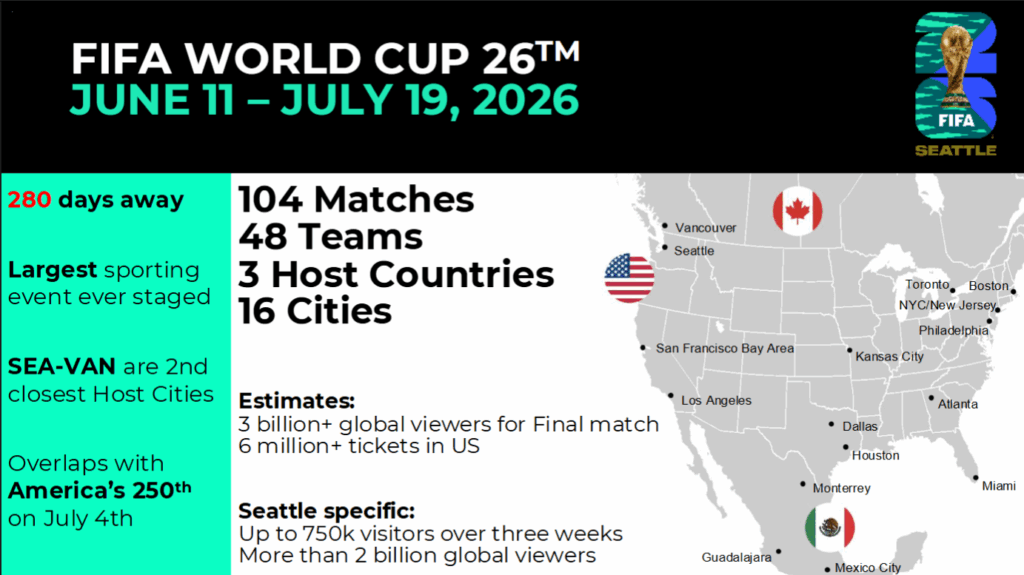
The Council discussed preparations for the World Cup with Mountlake Terrace Economic Development Manager Ryan Doss and SeattleFCW26 Senior Vice President of External Affairs Dylan Ordoñez. Seattle is one of 16 North American cities to host the 2026 FIFA World Cup, which runs from June 11 to July 19, 2026. Ordoñez said that the event is expected to attract 2 million global viewers.
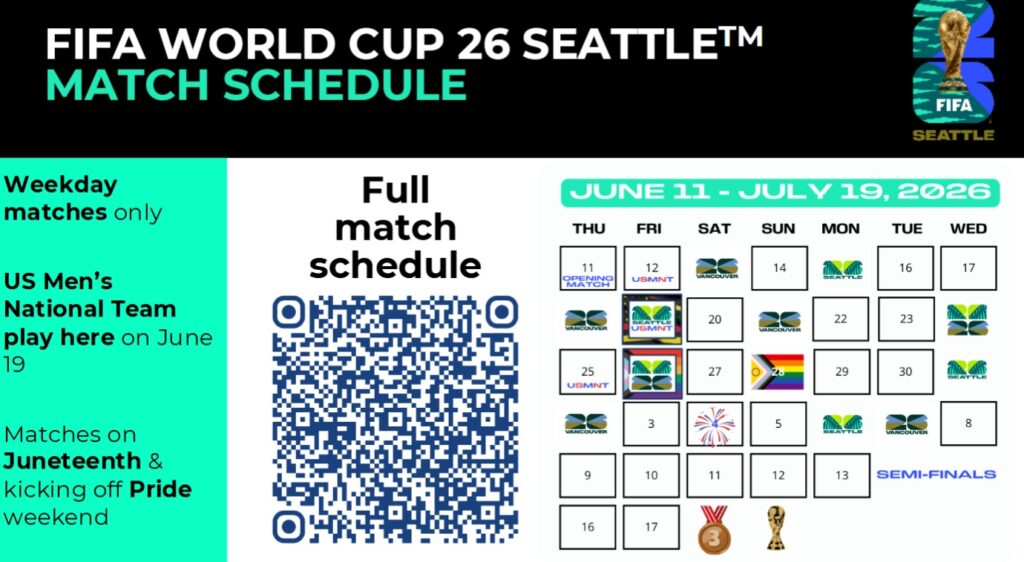
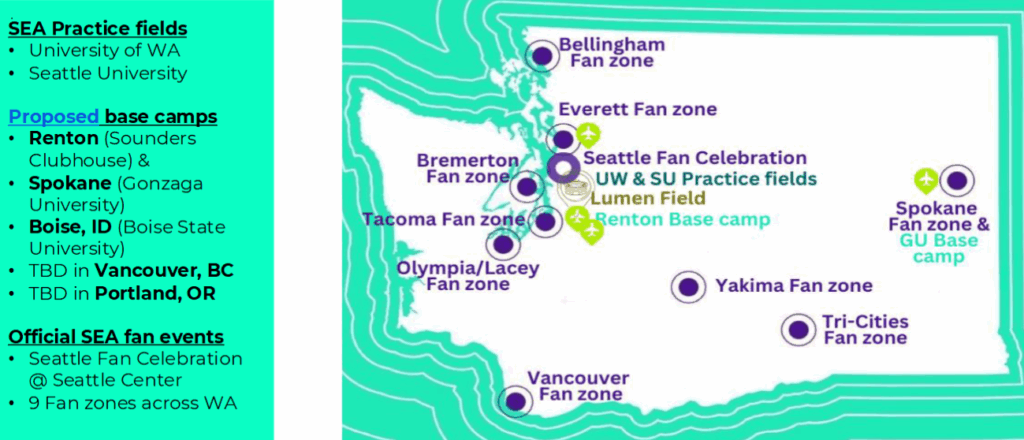
Seattle will host matches at Lumen Field, with the U.S. men’s national team to play there on June 19, 2026. Ordoñez said that the committee is also planning statewide fan zones, community watch parties and transit improvements to accommodate the influx of visitors.
“[Fans] want to feel the excitement. They want to go to dance celebrations,” Ordoñez said. “And the international folks, they want to stay and they want to travel. Average stays for international travelers are about seven to nine days to be a part of the environment and to travel around and see what our area has to offer. So we’re really excited about that.”
Ordoñez said that the committee is working to create three playbooks:
- A watch party playbook that provides FIFA rules and best practices for hosting or participating in an unofficial watch party.
- A community branding playbook that provides customizable digital marketing assets, logos, regulations, bags, etc.
- A small business playbook that guides business owners’ preparations for the World Cup and sustain operations for “future mega-events.”
Ordoñez added that there will be volunteer opportunities to help visitors with wayfinding at airport terminals and cities and to support activities and operations at the stadium.
“We all get excited about baseball and football and basketball here, but if anybody travels internationally, you know how huge soccer – football – in the rest of the world is, and what a tremendous opportunity this is for us and our community,” Mayor Pro Tem Bryan Wahl said. “The huge number of people are going to be coming to this area, and the opportunities that we have to participate and make this real for our residents, our neighbors.”
“I’ve never worked on anything like this in my career, and everybody’s excited,” Ordoñez said.
Councilmember Laura Sonmore asked Doss about the World Cup’s impact on the city’s economy and residents. Doss said that the city is working closely with the MLT Chamber of Commerce to support and market local businesses, including a newsletter.
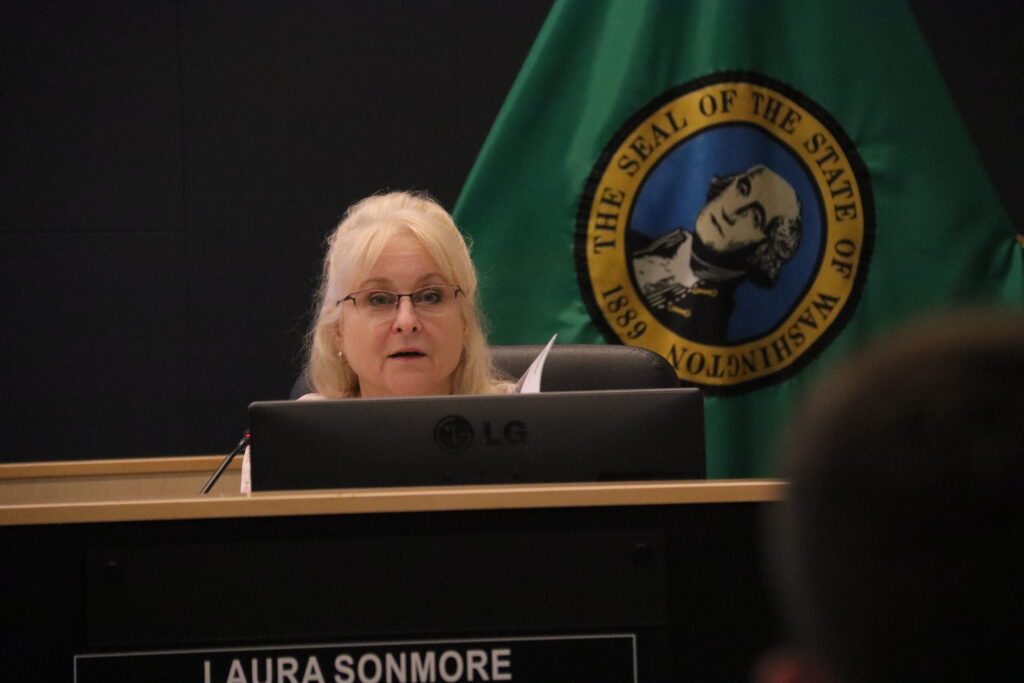
“We want to encourage [residents] to watch the games and matches at our local restaurants and bars,” Doss said. “If they’re wanting to host their own parties in their homes, [they can] shop at our grocery stores, get some provisions from Double DD Meats and have a cookout.”
Doss also said that homeowners may choose to offer short-term rentals during the World Cup.
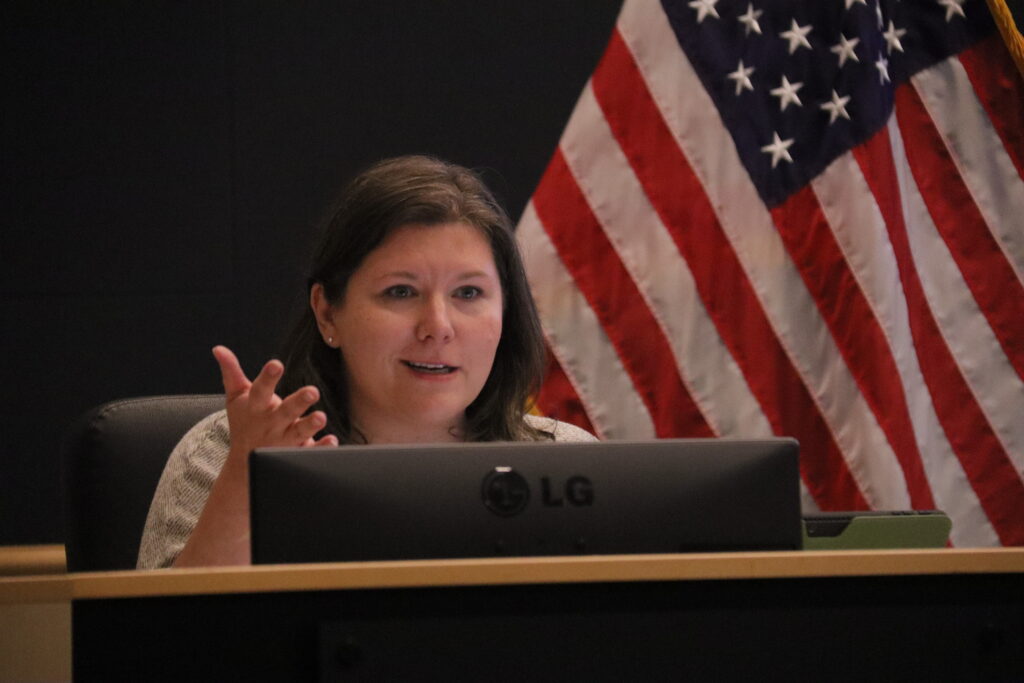
Councilmember Erin Murray asked about the long-term impacts of the World Cup on Mountlake Terrace.
Ordoñez said that the SeattleFWC26 has partnered with RAVE Foundations to work on the 26 soccer mini-pitches initiative in historically marginalized communities across Washington state. He said that they have already achieved that milestone earlier this year, and now they are aiming to double that amount before the World Cup begins.
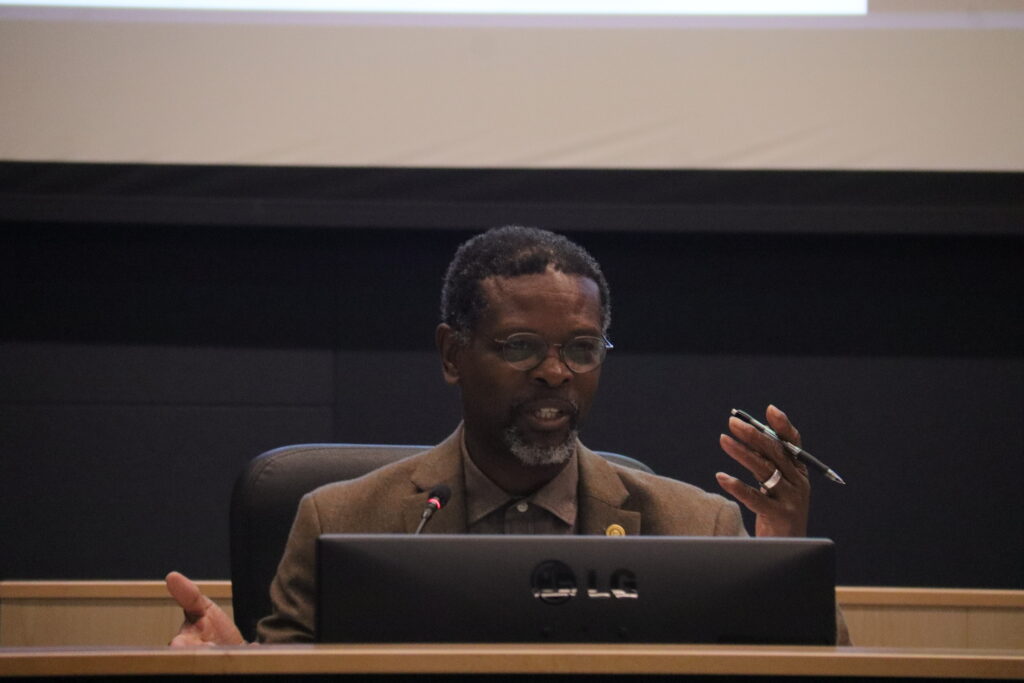
Councilmember William Paige Jr. asked Doss about the World Cup draw, and how it compares to the excitement of the NBA or NFL drafts.
Ordoñez said that, based on previous years, the draw typically takes about an hour, but with the tournament expanding from 32 to 48 teams, it will likely be at least two hours. He noted the event will be held at the Kennedy Center in Washington, D.C. While Ordoñez wasn’t sure about the exact format, he expects the program to include both the draw and additional segments, with the draw elements spread throughout the event.
Details about the FIFA presentation are on the city’s website.
In other business:
- The City Council voted 7-0 to annex the residential property 24229 48th Ave. W.
- Councilmembers also voted 7-0 to approve an ordinance amending the City’s business license code to align with Washington State law on business license thresholds. Currently, non-resident businesses earning $12,000 or less annually in the city must register for a license but pay no fee. Starting Jan. 1, 2030, and every four years after, this $12,000 threshold will be automatically adjusted for inflation.
Washington State also requires all cities to adopt a $4,000 minimum gross income threshold for non-resident businesses by Jan. 1, 2026, with automatic inflation adjustments every four years after that. - The Council voted unanimously to approve the amended resolution authorizing the use of the $2 million Federal Highway Administration earmark funds for improvements at Veterans Memorial Park and the construction of the pedestrian plaza next to the Mountlake Terrace light rail station.
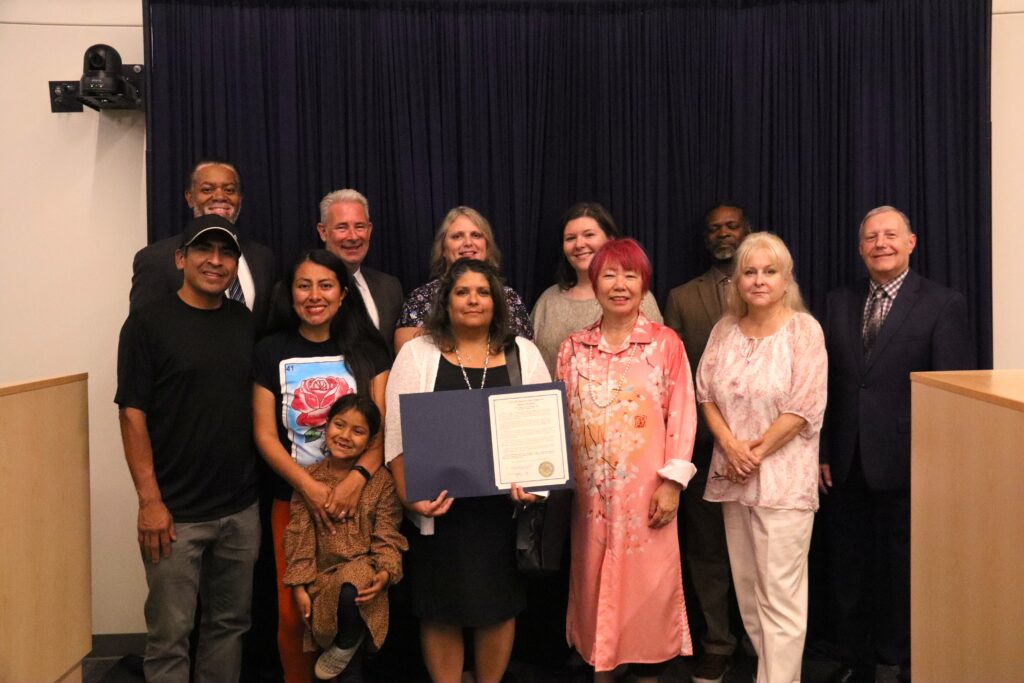
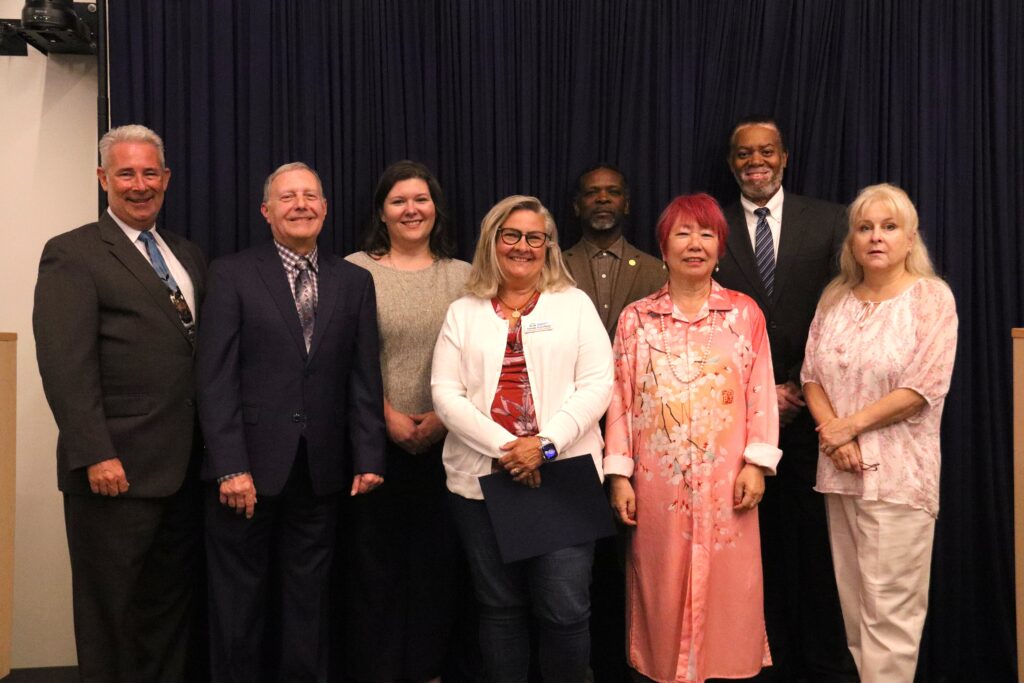
- The City proclaimed Sept. 15 to Oct. 15 as National Hispanic and Latino Heritage Month. Mountlake Terrace Elementary Principal Keira Anderson and teachers Anabel Hovig and Ana Alcázar accepted the proclamation.
- Sept. 12-21 was proclaimed as Welcoming Week, a nationwide movement that fosters connection and belonging among immigrants, refugees, and long-standing residents.
The full meeting video is on the City’s YouTube channel.


Real first and last names — as well as city of residence — are required for all commenters.
This is so we can verify your identity before approving your comment.
By commenting here you agree to abide by our Code of Conduct. Please read our code at the bottom of this page before commenting.