
Every animal has a unique structure — the way their bones are angled, how their joints are positioned, how their weight is distributed across their frame. When there are subtle variations, the body needs to work a little bit differently with every movement, every single day.
My name is Kristin Schwartz, and I’m a licensed animal massage therapist with Standing Strong Animal Massage, serving South Snohomish and North King counties. This month I want to talk about something I notice in almost every dog I work with — the structural variations they were born with, and what those mean for the body over time.
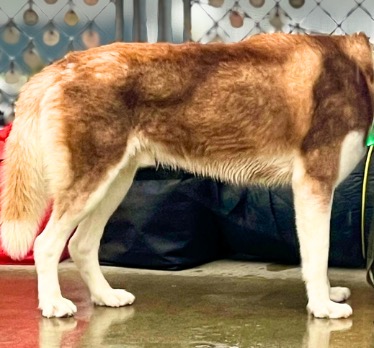
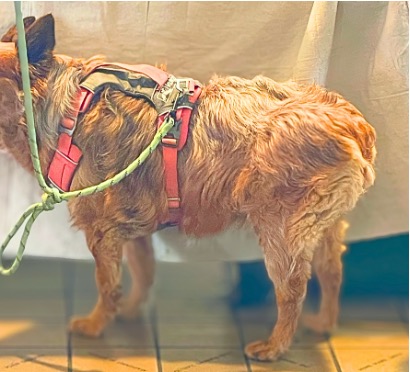
Take a good look at your dog’s feet sometime. Are they both pointing straight forward, or angling out to the sides? Maybe one is directed a little differently than the other. Now look at their wrists from the side — is there a gentle angle between the wrist and foot, or do the legs drop almost straight down to the ground? The way a dog’s body is built from the ground up has a lot to do with how they feel from the inside.
No Two Dogs Are Built the Same
Feet that point outward to the sides rather than forward are sometimes called east-west feet (east-west carpus). When the feet aren’t pointing in the direction of travel, the joints above them compensate with every step. That small rotation travels up through the wrist, the elbow, the shoulder. The muscles and fascia along that whole chain are working a little more than they would if everything were aligned.
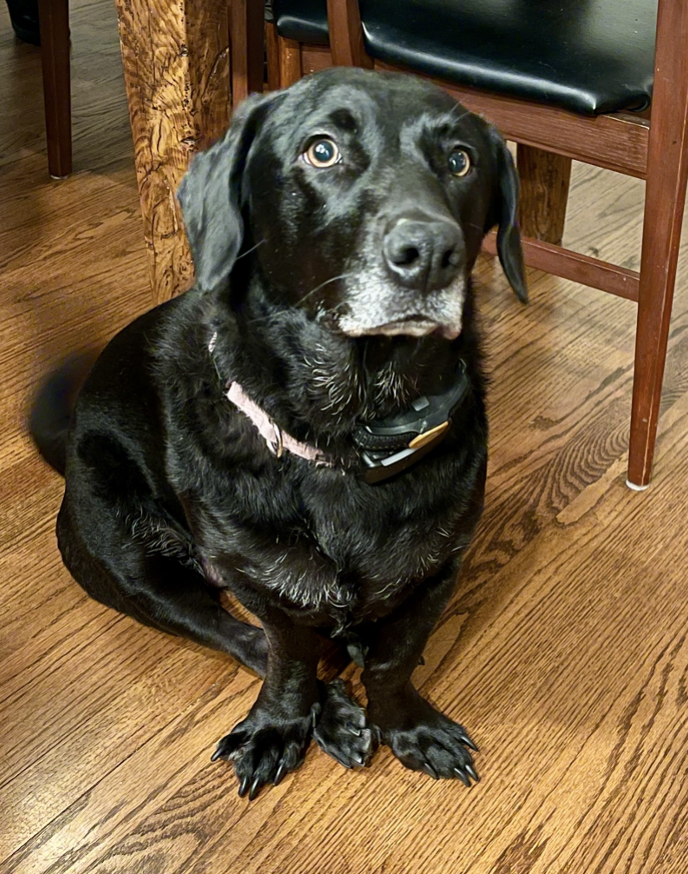
Now look at the area between the wrist (carpus) and the foot or between the ankle (tarsus) and the foot. This is the pastern and it should be gently angled to act like a shock absorber — it softens impact and distributes force through the leg. Pasterns that are very upright and vertical, have a reduced capacity to absorb impact and the joints, muscles and connective tissue above take on more of that load.
The Body Always Finds a Way
Here’s the thing about animals: They don’t stop moving because something is a little off. They adapt. The body is remarkably good at redistributing load, recruiting different muscles and finding workarounds. However, muscles that are constantly compensating develop chronic tension. Fascia (the connective tissue that surrounds and connects everything) tightens and becomes restricted in the areas that are working hardest.
Over time, what starts as a minor structural variation becomes a whole-body pattern. Tight shoulders. A braced neck. Restricted tissue through the back. The original source may be in the feet or wrists, but the effects travel.
Then Aging Joins the Conversation
As I talked about last month, fascia loses hydration and elasticity over time. For a dog who has been compensating since puppyhood, that body has less reserve to draw on so movement might require more effort a little earlier in life.
There’s another piece worth mentioning. Joints that spend years absorbing uneven load, simply because the structure around them was never quite aligned, are more vulnerable to wear over time. That gradual breakdown of joint tissue is how osteoarthritis can develop. It isn’t inevitable and it isn’t a given. Understanding what a dog is working with structurally does gives us a clearer picture of what to watch for, and why supporting the body early matters.
This is why I find structural awareness so valuable — not to label or worry, but to understand. When we know what a dog is working with, we can support them more thoughtfully.
What Bodywork Can Offer
Massage and myofascial work can’t change the way a dog was built. What it can do is release the chronic tension in overworked muscles, soften restricted fascia, and help the body find a little more ease within the structure it has.
If you’ve looked at your dog’s feet or posture and something is clicking for the first time — or if you just have questions — I’d love to hear from you. Feel free to call, text or email to find out whether a session might be a good fit for your dog.
Learn more at StandingStrongMassage.com, call/text 425-561-9156 or email [email protected]


Real first and last names — as well as city of residence — are required for all commenters.
This is so we can verify your identity before approving your comment.
By commenting here you agree to abide by our Code of Conduct. Please read our code at the bottom of this page before commenting.