
Will you chip in to support our nonprofit newsroom with a donation today?
Yes, I want to support My MLTnews!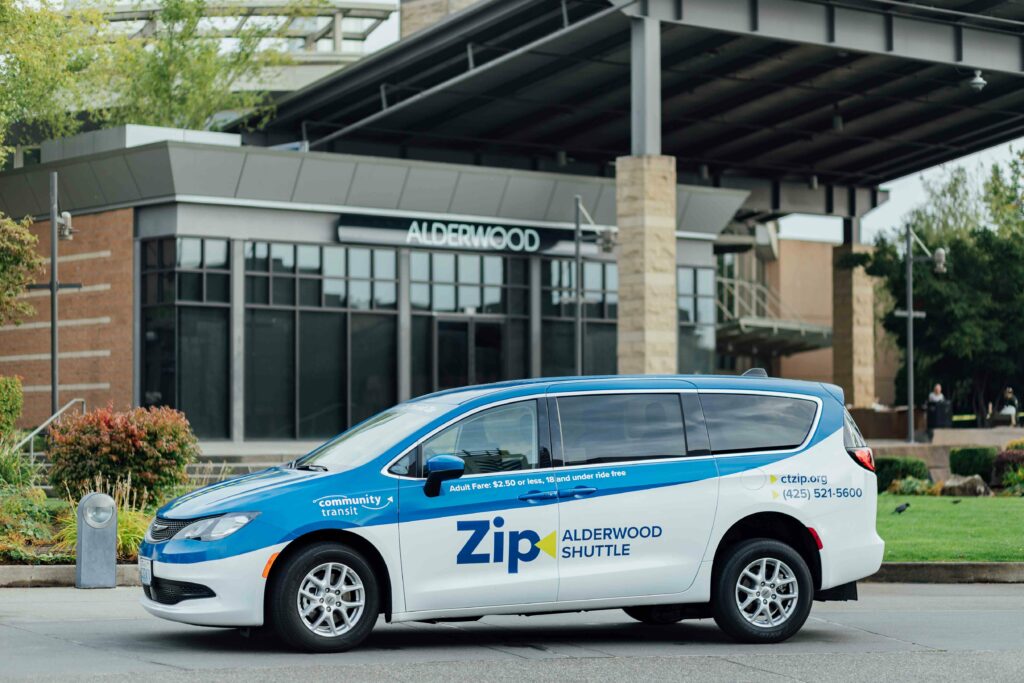
Community Transit’s Zip shuttle service has been serving the Alderwood area in Lynnwood since October 2022. It is a microtransit service that functions like Uber and Lyft, taking people to appointments, shopping or the light rail station. By the end of the one-year pilot program, Zip had served more than 1,400 customers in more than 32,500 boardings, averaging 20 trips per customer, according to Community Transit.
Based on community feedback, with 94% of the respondents stating they would like this service continued, the Community Transit Board of Directors voted to make Zip Shuttle a permanent service in Alderwood in September 2023. Since then, Zip Shuttle has expanded to Arlington, Darrington and Lake Stevens.
Lynnwood Councilmember David Parshall, who is a member of the Community Transit Board, told My Neighborhood News Group that the Zip shuttle “is going really well.”
Parshall said Zip Shuttle provides the crucial “last mile” link from the Lynnwood light rail station to homes, the mall and other destinations, noting that he personally uses it instead of driving or waiting at a bus stop.
“I got to see a lot of people using it for the Seahawks parade because it was crazy down there at the Lynnwood transit station,” he said. “I took a walk down there just to check out what the craziness was like and see how full the parking lots were. I saw a lot of people walking a few 100 yards away from the transit center, [sometimes] cross the street, get on their phones, order up a Zip Shuttle, and get out of there really effectively without having to worry about parking.”
Community Transit spokesperson Monica Spain said most adults in Alderwood ride Zip for commuting to work or local appointments. However, she pointed out that in Arlington, Darrington and Lake Stevens, the majority of riders are youths.
“In all four Zip zones, people with disabilities and seniors take Zip for their local travel needs,” she said.
Community Transit Director of Product and Service Innovation Jennifer Mehn said Community Transit is not currently doing new microtransit studies in places like Mountlake Terrace or Edmonds but is focused on the existing four areas before expanding elsewhere. She said that Zip uses the same fare structure as buses and is fully integrated with ORCA.
“It’s one [fare] with your ORCA card as long as it’s still within the two-hour transfer window,” Mehn said.
Drawing on a rider survey in March, she said youths make up a large share of riders in Darrington, Arlington and Lake Stevens – ranging from 45% to 70% – largely because those age 18 and younger ride free in Washington state. Meanwhile, Alderwood’s youth share is lower due to the lack of a major high school in the service area.
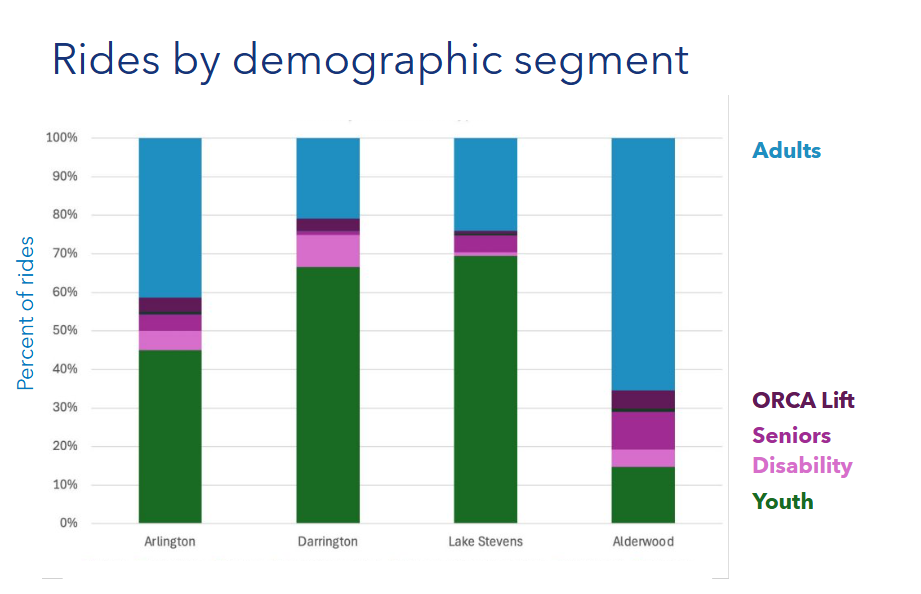
Seniors, disabled riders and people with mobility needs account for about 5% to 15% of Alderwood Zip trips, which costs those riders $1. The regular adult fare is $2.50.
Mehn said one in every five customers had never taken public transportation before using Zip, and they are now bus riders, according to Community Transit’s survey. “They started with Zip, they became comfortable with public transportation, and then they started taking the bus,” she said.
Parshall pointed out that a lot of nurses and elder-care facility managers really love that they can get patients to doctor’s appointments.
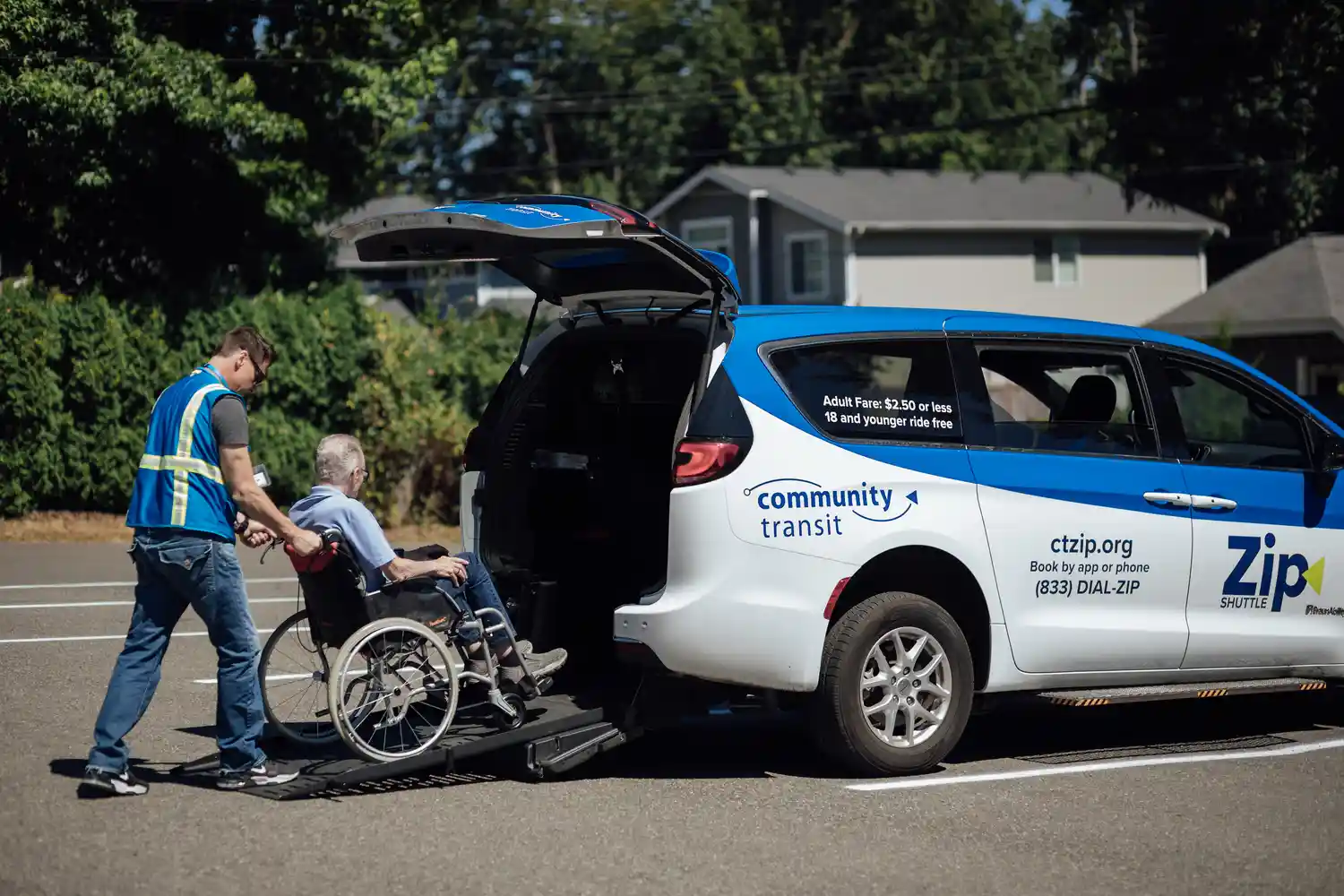
“[Zip] could get people in wheelchairs to self-care services, like grooming, haircuts, pedicures, at such a low price because in the past, they would have had to use a service that would be really expensive and difficult to schedule,” Parshall said.
Children and teenagers can take the Zip to sports practices or after-school activities without relying on their parents to transport them all the time, Parshall said.
“If you have a practice that ends at 4:30 and parents are working until 5 o’clock, how’s that kid getting home safely everyday?” he said.
However, Parshall has heard some complaints from residents who live just outside of the service boundary, such as “Can’t you expand the borders a little bit?” He said Community Transit is studying the borders and using pilots to see how expanding borders affects service. “You want to start from that place of demand,” he said. “[People] get frustrated with transit systems when they feel like that system is not getting as much use as it should be. We do not have that problem with Zip. Zip is extremely popular.”
We want one, too!
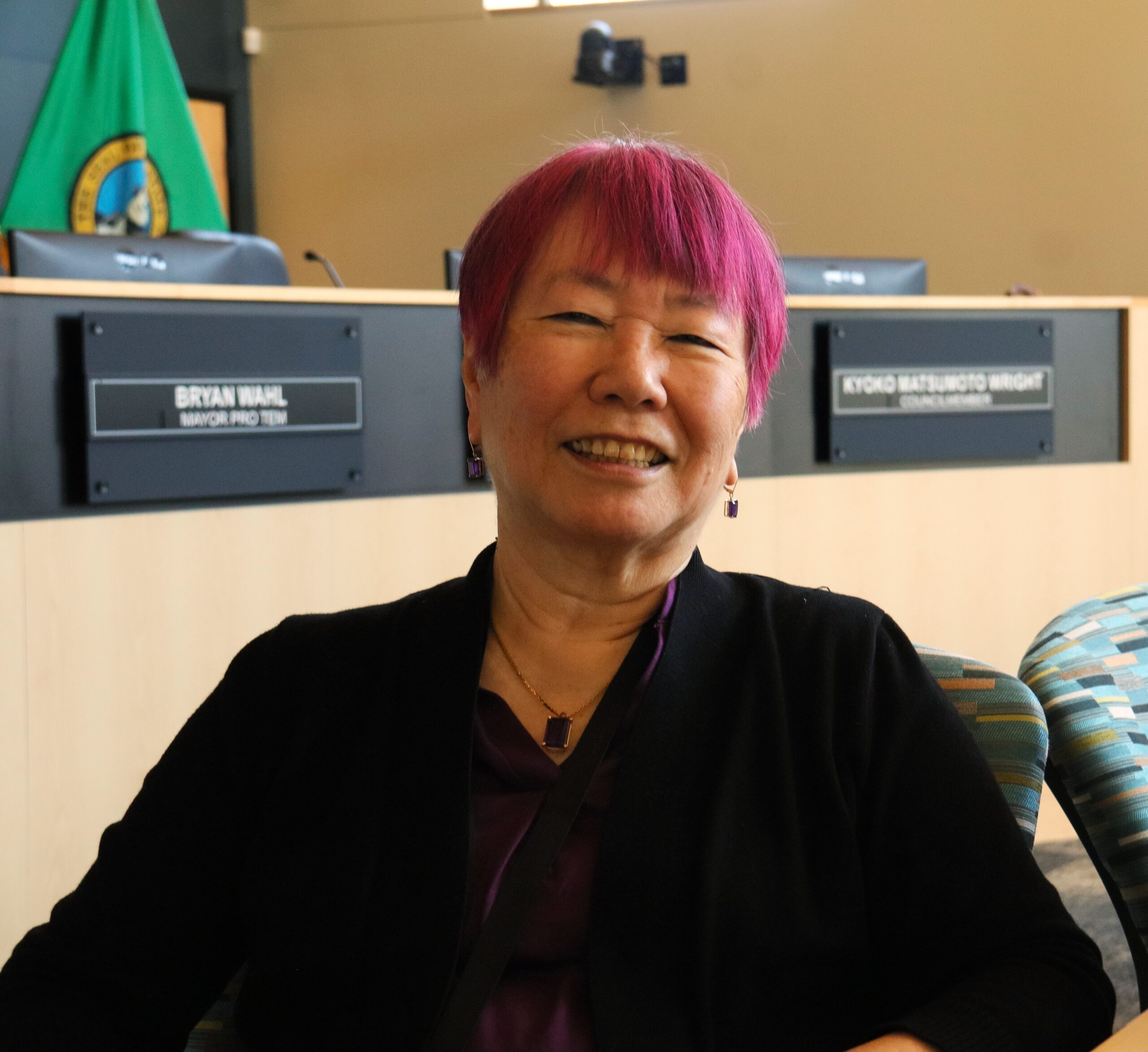
“Oh, I’m going to ask for it, and I’m going to do more than ask,” she said, adding she had discussed bringing the service to Mountlake Terrace “many, many times already” during one-on-one meetings with Community Transit CEO Ric Ilgenfritz and Board Chair and Edmonds Councilmember Susan Paine.
Matsumoto Wright said discussions within Community Transit suggest the agency is evaluating multiple cities rather than choosing between Mountlake Terrace and Edmonds. “It’s not either/or,” she said, adding that implementation will ultimately depend on funding.
She noted that Community Transit has reviewed the costs of Zip Shuttle compared with traditional bus and paratransit services. While buses remain appropriate for higher-capacity routes, she said Zip Shuttle appears to be more cost-effective for riders using wheelchairs because smaller vehicles can provide faster trips than traditional DART vans.
“I know that my friends in wheelchairs, they’re just sitting there forever, waiting for that DART car,” she said. “With a Zip service, you have that app. It’s like an Uber.”
She said the service would benefit seniors, people with disabilities and everyday riders making short trips to transit hubs.
“For me, all I need to do is get one mile or three miles from my house to the Mountlake Terrace station, or one mile to the Lynnwood station,” she said. “Just get me to the station, and I’ll take light rail to wherever I need to go.”
Matsumoto Wright said that communities with light rail stations would likely generate the strongest ridership. She said limited parking at the Mountlake Terrace and Lynnwood stations discourages potential riders from using light rail.
“People are always saying, ‘I drive to Lynnwood, can’t find parking. I drive to Mountlake Terrace, can’t find parking,’” she said. Some commuters, she added, continue driving station to station in search of available parking before giving up or driving all the way to their destination.
Her comments come as Sound Transit faces significant financial challenges. The agency has projected a $34.5 billion funding gap through 2046, driven by inflation, higher construction and property acquisition costs, labor shortages and supply chain pressures.
In response, the Sound Transit Board approved an updated Sound Transit 3 plan in May that prioritizes completing the regional light rail “spine” from Everett to Tacoma while delaying or phasing other voter-approved projects until additional funding becomes available. These projects, called “arms,” are routes that connect from the spine to cities, like Ballard and Issaquah.
The funding shortfall has fueled debate over how to prioritize future expansions, particularly between extending the light rail north to Everett and building the Ballard Link Extension in Seattle.
Snohomish County leaders have argued the Everett extension should move forward because it is closer to being fully funded within the county’s taxing district and fulfills the long-promised regional spine.
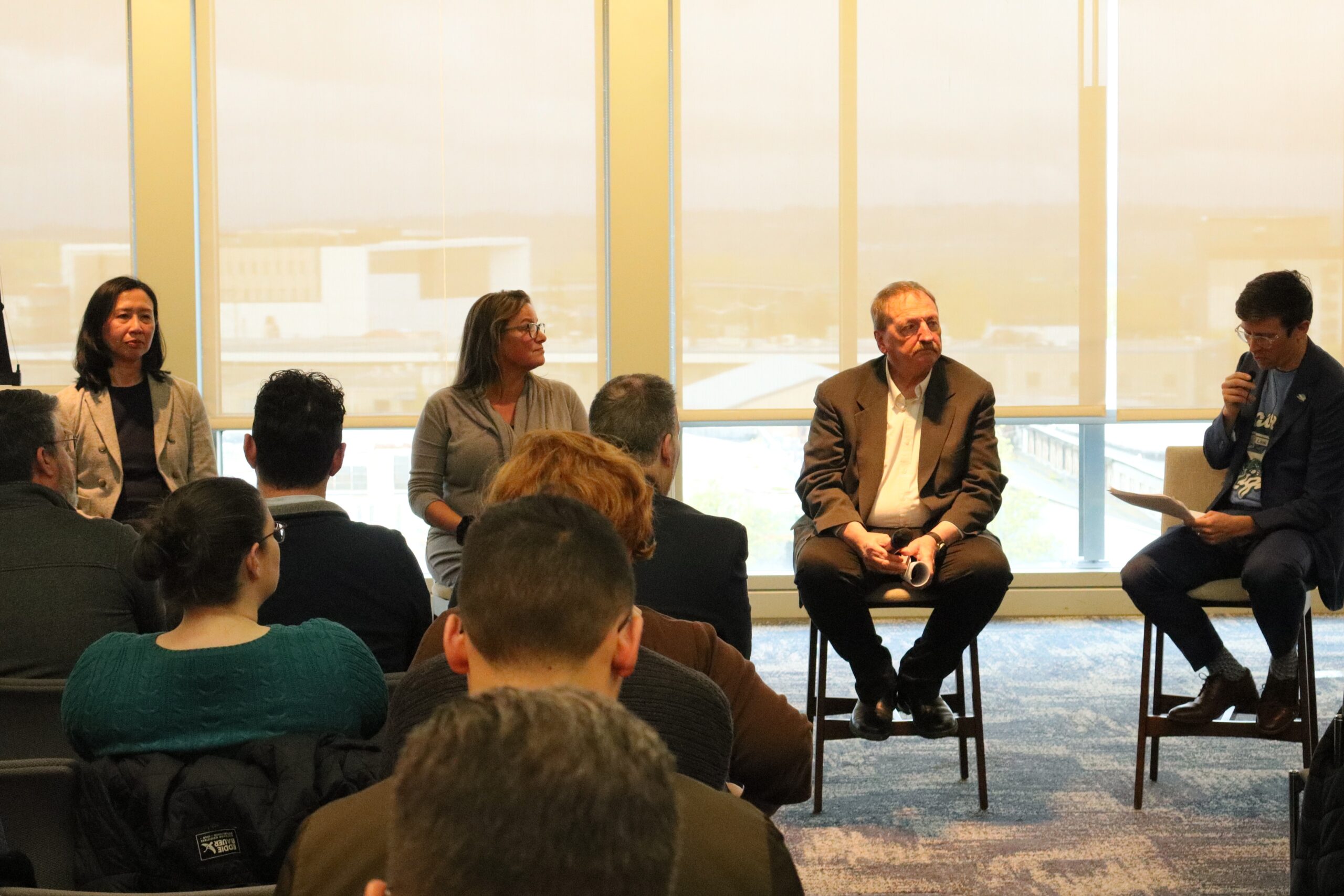
Meanwhile, Ballard supporters have pushed to keep that project on schedule despite its rapidly rising costs. Under the updated plan, Sound Transit will continue work on the Ballard project through environmental review and design, but full construction beyond Seattle Center will require additional funding, according to Sound Transit.
Matsumoto Wright agreed that Sound Transit’s priority should remain completing the spine, connecting Everett and Tacoma before expanding the arms.
She also noted that Snohomish County has only three representatives on the Sound Transit Board while King County holds a majority of the Board’s votes. Because of that imbalance, she said, projects in King County – such as extensions to Ballard, West Seattle, Issaquah and Bellevue – would have an advantage when funding decisions are made.
“Zip service will help with the last mile,” Matsumoto Wright said. “Hopefully, that will get people from not driving if they’re walking distance to the light rail station.”
Echoing Matsumoto Wright, Edmonds Councilmember Susan Paine also wants to see the Zip Shuttle expanded into Edmonds. If this is done, Zip would provide better connectivity “up and down the hill” from the downtown Edmonds Bowl to the Swedish Hospital District and Edmonds College, which is also a connection to the Swift Bus Rapid Transit. She outlined several possible Zip-style routes that could serve Firdale, Lake Ballinger, Esperance and north Edmonds.
Paine said one of the first steps is determining how many people would use Zip, though she believes demand would be strong based on its popularity in Lynnwood. “I don’t think it’d be a hard sell to get people using this service,” she said.
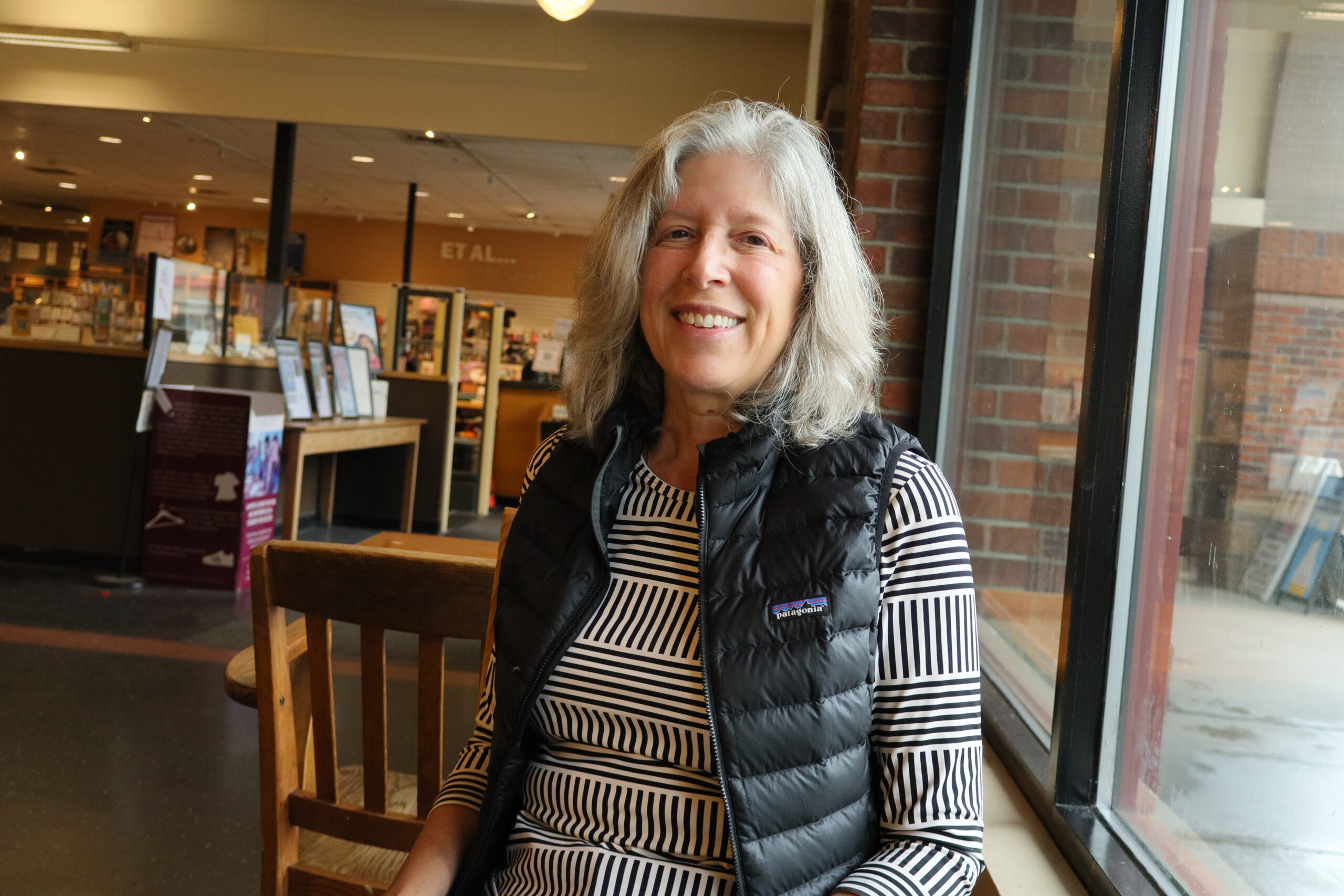
Paine said the Community Transit Board is expected to discuss where to expand the Zip Shuttle this year and expressed hope that Edmonds will be selected. She also wants Edmonds to work with Mountlake Terrace, Brier and Community Transit to create a coordinated, multi-city microtransit network.
“I want to work with Kyoko and our Brier representative to make sure that we can have a South County representation to bring in microtransit,” she said.
Paine noted that other cities have found alternative ways to fund similar services. Bellevue and Redmond, for example, partner with the microtransit company Circuit, with funding coming from private partners or local lodging tax revenue. Edmonds’ lodging tax revenues are largely committed, she said, but grants or other funding sources may help support future service.
Like Matsumoto Wright, Paine said improving “last mile” connections to transit stations is critical to reducing reliance on cars.
Looking beyond the Zip Shuttle, Paine said regional transportation planning is increasingly focused on long-term investments. Through the Puget Sound Regional Council (PSRC), which includes Kitsap, Snohomish, King and Pierce counties, planners are studying projects expected to shape the next several decades.
“One of the big changes in probably the next 30 years is the rail along I-5 and have it be a high-speed rail corridor from Vancouver, B.C., down to Portland,” she said, adding that the PSRC has already begun presenting long-term plans for the project.
While Edmonds and Mountlake Terrace are in a limbo on microtransit, Community Transit’s Jennifer Mehn said the agency is still in a learning and prioritization phase as they are close to wrapping up with the four pilot areas.
Mehn said that having those four areas is “more aggressive” than other areas at this pace.
“This service is so convenient and easy, it takes away a lot of barriers people have and or conceptions people have about public transportation, and lets them experience it in a way that creates a positive environment for them and hopefully encourages them to take maybe a bus or light rail,” she said.


Real first and last names — as well as city of residence — are required for all commenters.
This is so we can verify your identity before approving your comment.
By commenting here you agree to abide by our Code of Conduct. Please read our code at the bottom of this page before commenting.