
Will you chip in to support our nonprofit newsroom with a donation today?
Yes, I want to support My MLTnews!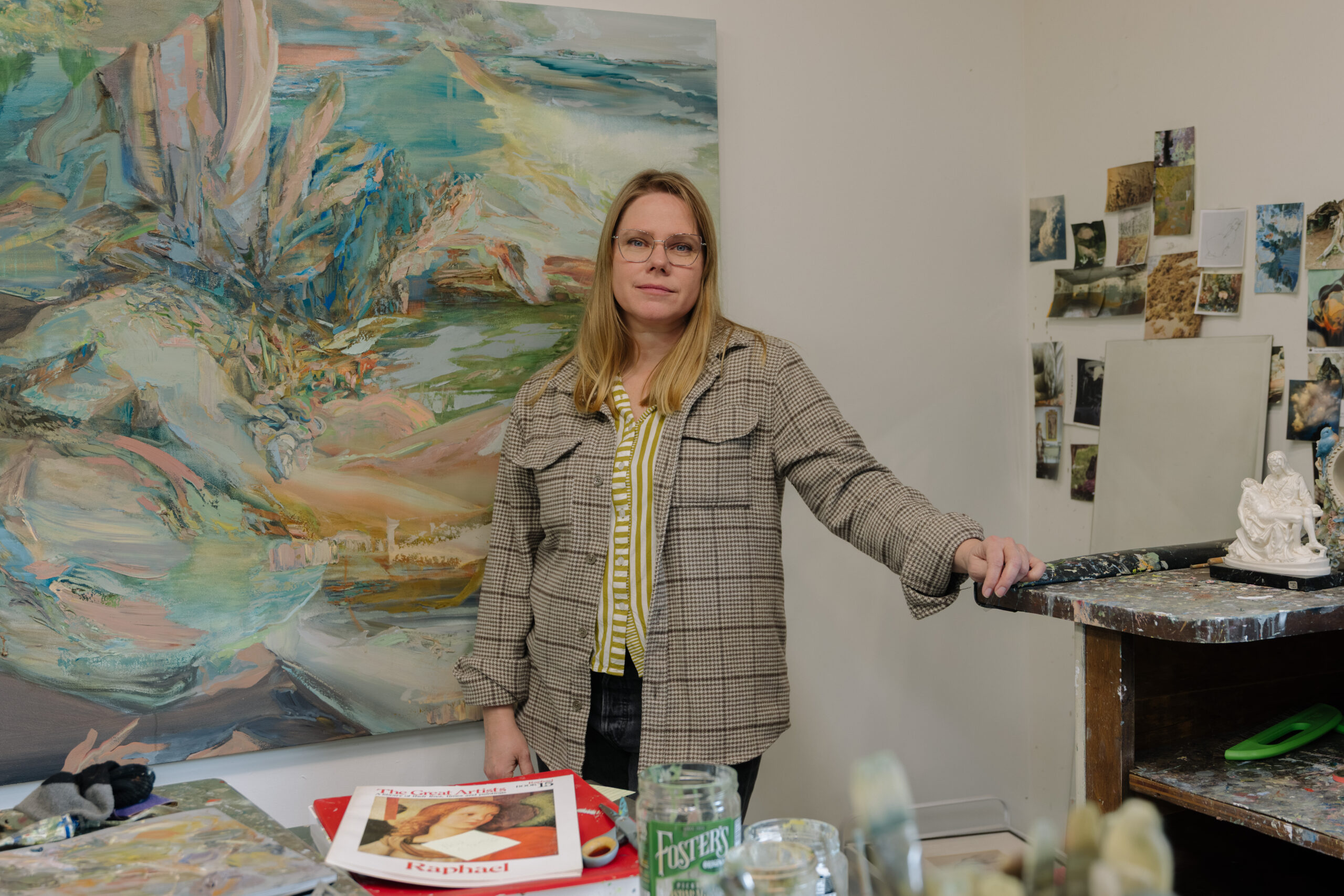
Greg Kucera Gallery, 212 3rd Ave. S., Seattle
Exhibition: May 21 to June 27
First Thursday opening reception: 6-8 p.m. June 4 (in Pioneer Square)
Artist talk (“Saturday After” walk-through): noon June 6
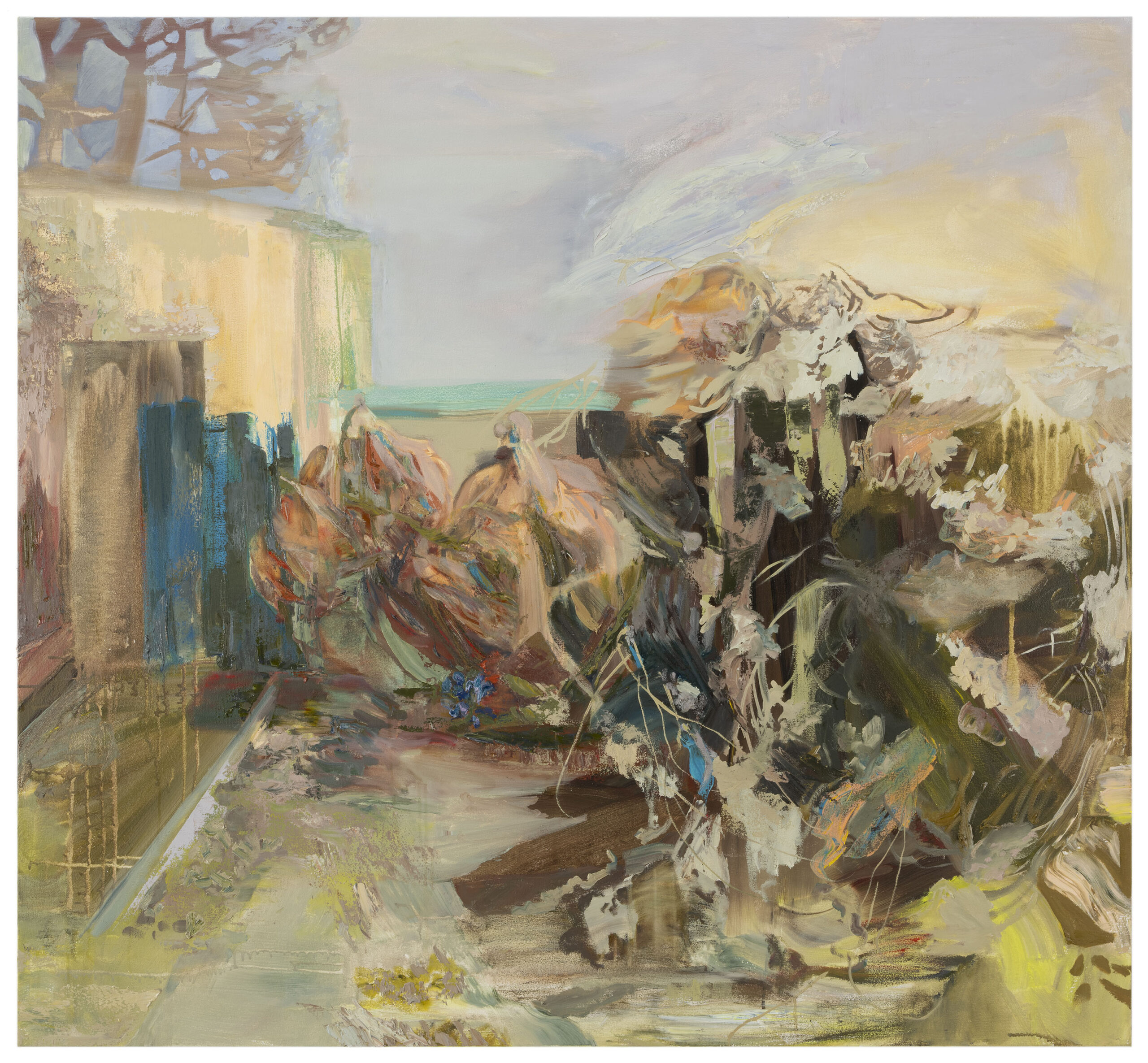
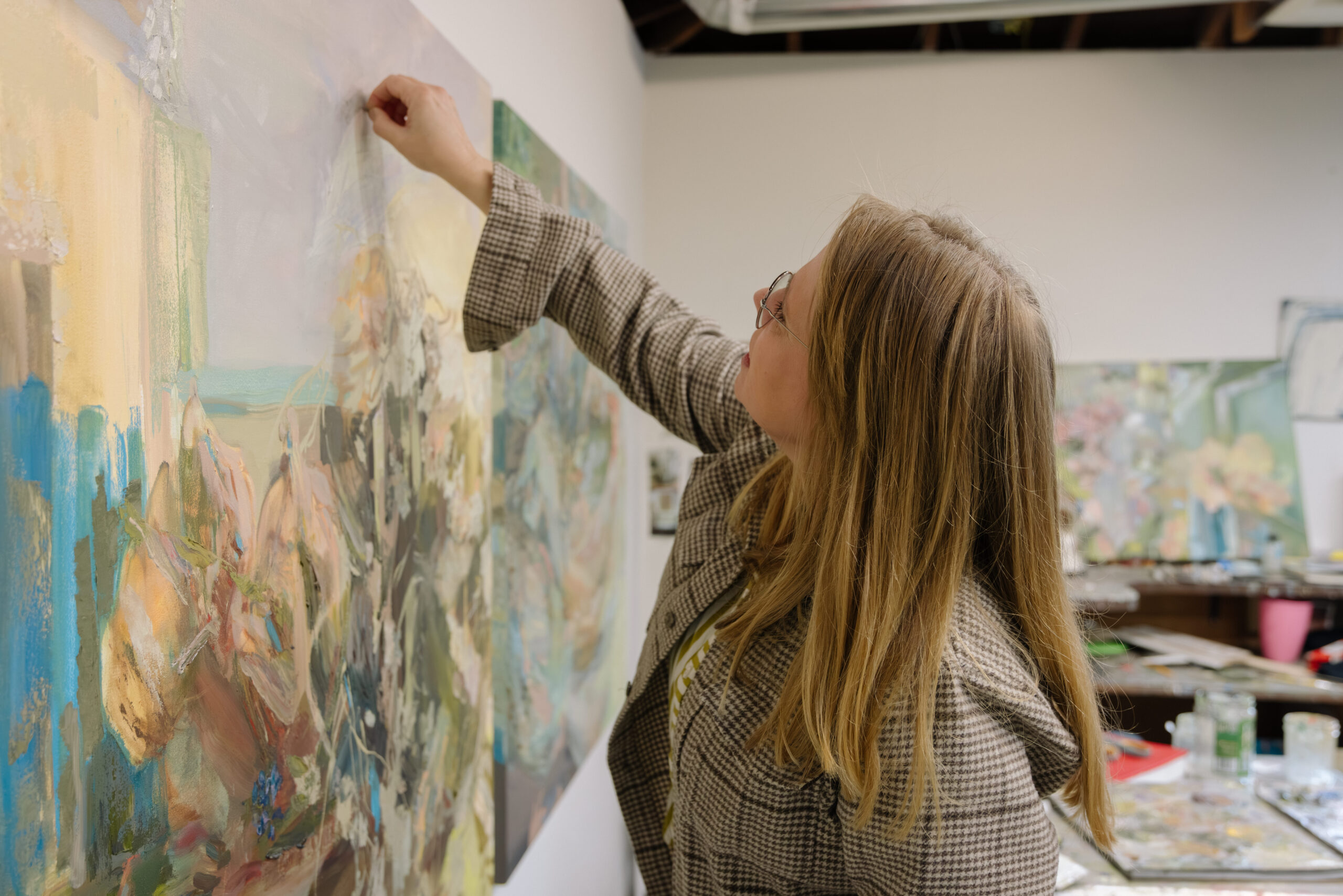
The exhibition Then Is Now at the Greg Kucera Gallery in Seattle is where Edmonds-based artist Drie Chapek continues her deep, personal approach to painting. Rather than illustrating a fixed narrative, her paintings evoke sensation and “wildness.” Chapek says she is less concerned with depicting a scene than evoking a state of awareness.
The My Neighborhood News Group met with Chapek at her studio and spoke with her about her painting process and the themes informing her upcoming exhibition.
As I walked into Chapek’s light-filled studio, I noticed small arrangements everywhere: collections of paintbrushes, photographic images, stacks of magazines, squeezed paint tubes organized by color, and a wooden stool stippled with colored brushstrokes.
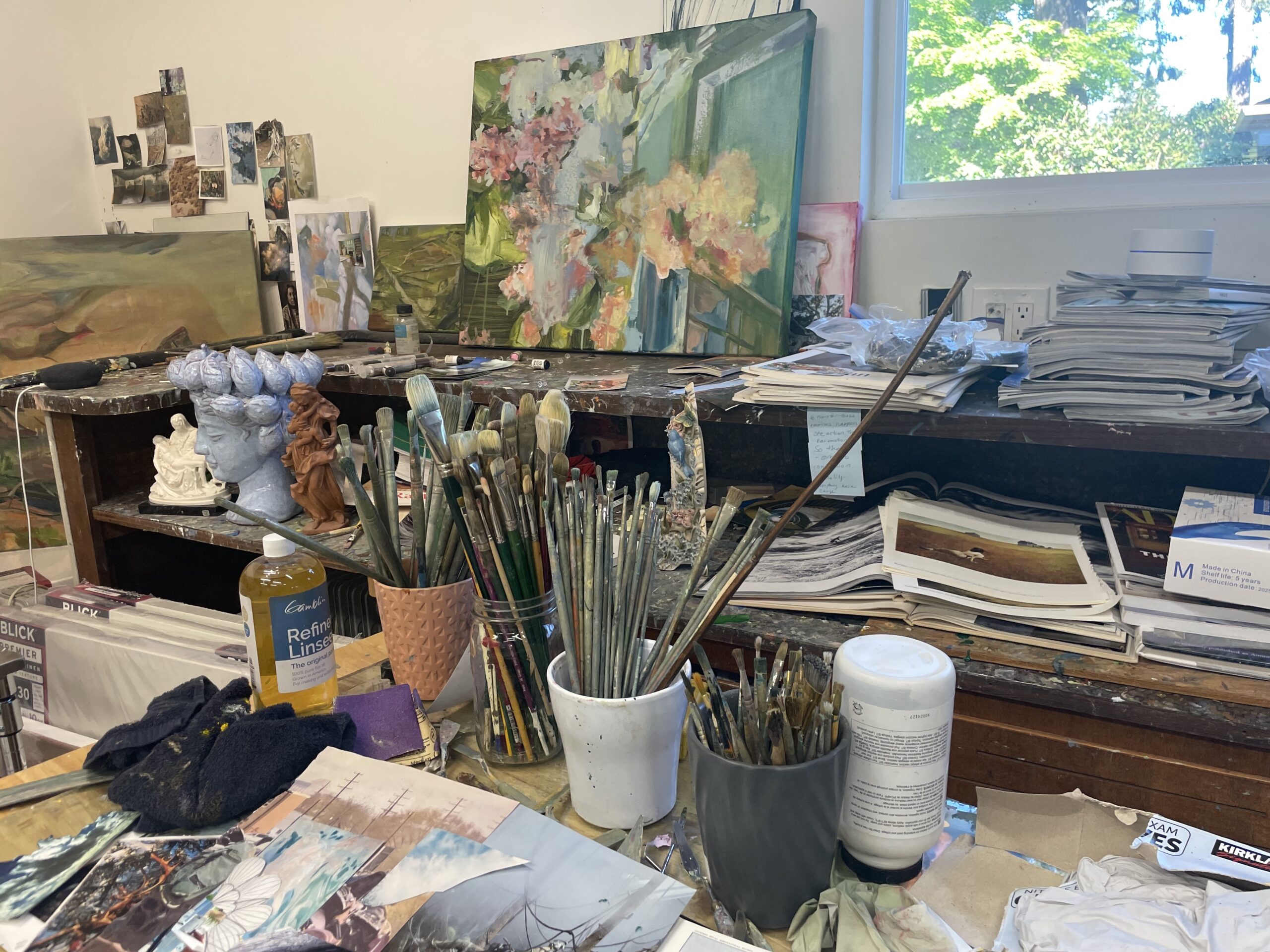
The windows that allow in the light, also, draw in the green from the outdoors. Even her paintings seem to pull the outdoors in. Large canvases line the walls, and the studio carries a feeling of stepping into the workspace of a painter who’s been developing her visual language over a long period of time.
Chapek says her work began with an emotional connection to the land, shaped by summers visiting her grandmother near the Indiana marshlands. She was drawn to the decomposition and messiness of those marshes, recalling the red-winged blackbirds with their bright red patches. Although she moved frequently throughout the Midwest, nature remained a constant presence.
In recent years, her work has explored the idea of bringing the wild into interior spaces. Around 2019, she began transferring collages directly into her paintings. Through that process, architectural forms and structures began emerging, alongside questions about how people relate to built environments.
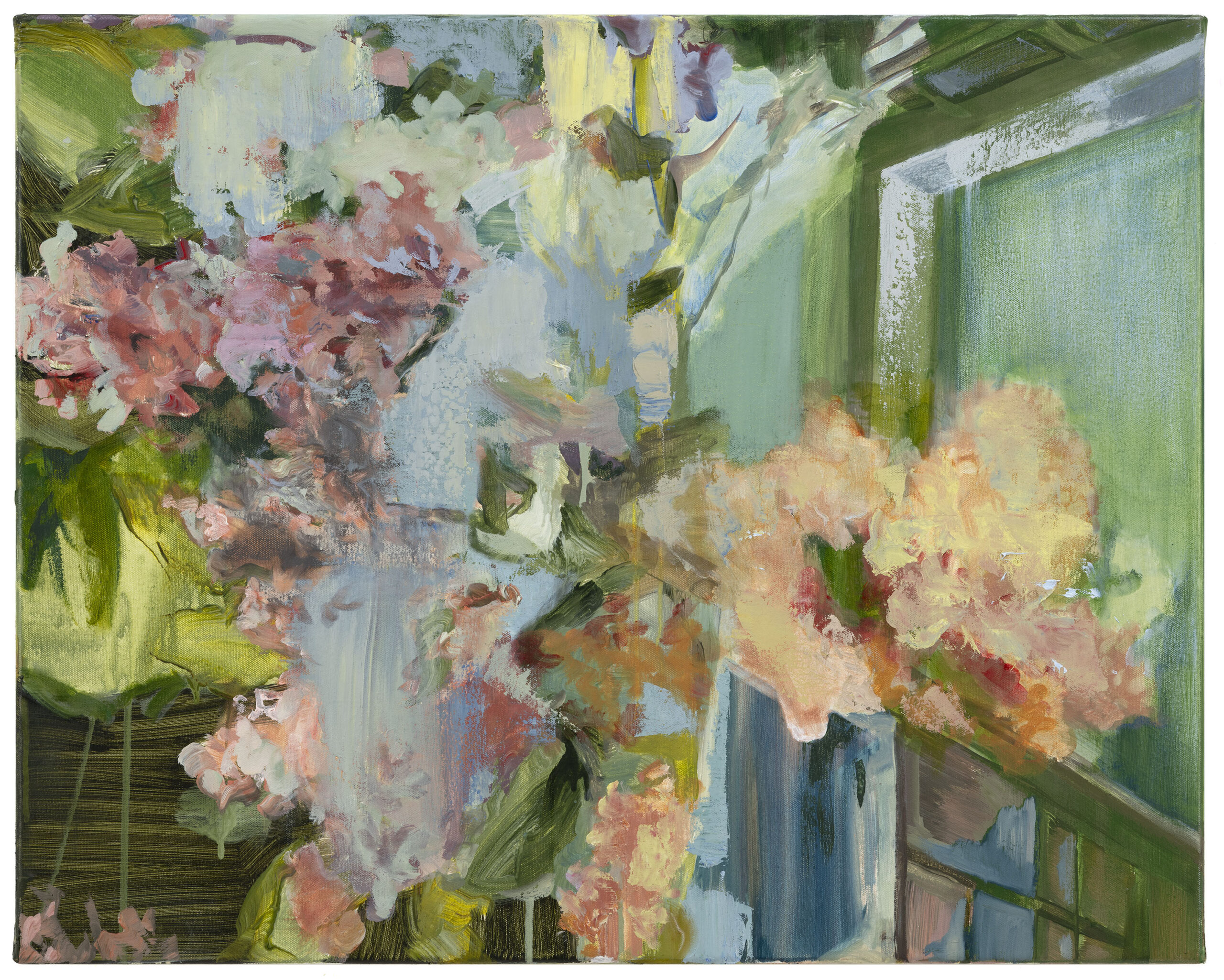
Included in the exhibition is Chapek’s painting Washed Out, depicting flower imagery gathered against a window, dissolving the line between indoors and outdoors.
Gouin: How do you approach a painting? How do you start?
Chapek: I usually start with more of a feeling that I’m working with. Then I bring collage work into the space, pulling textures and forms together.
When I begin painting, I’m considering how it relates to the size of the canvas. Within that, I’m often thinking about color fields because I’m a lover of color.
I’ve gotten to a place where I leave the field more open so there’s room for contemplation. I think of painting as an attempt to allow space for conscious embodiment, just being aware of being alive and present with my own thoughts and choices.
I’m looking to bring aspects of the natural world and representations of human structures into spaces that allow for consciousness and contemplation, while also calling attention to the physicality of paint itself. I think paint does that really well in a painterly format, where you can leave the brush marks visible and see the paint sitting on the canvas.
Especially in the age of AI, there’s a move toward creating an image digitally and then transferring it to paint. I don’t do that. My work is conscious and chosen in front of the canvas, responding directly to what’s happening in the painting. I’ll often pull from my own life, too. Sometimes I’ll get stuck and not know how to resolve a piece, and then I’ll notice how water moves or how a shoreline creates distant perspective, and I’ll bring that in.
So the paintings often become a kind of journal as well.
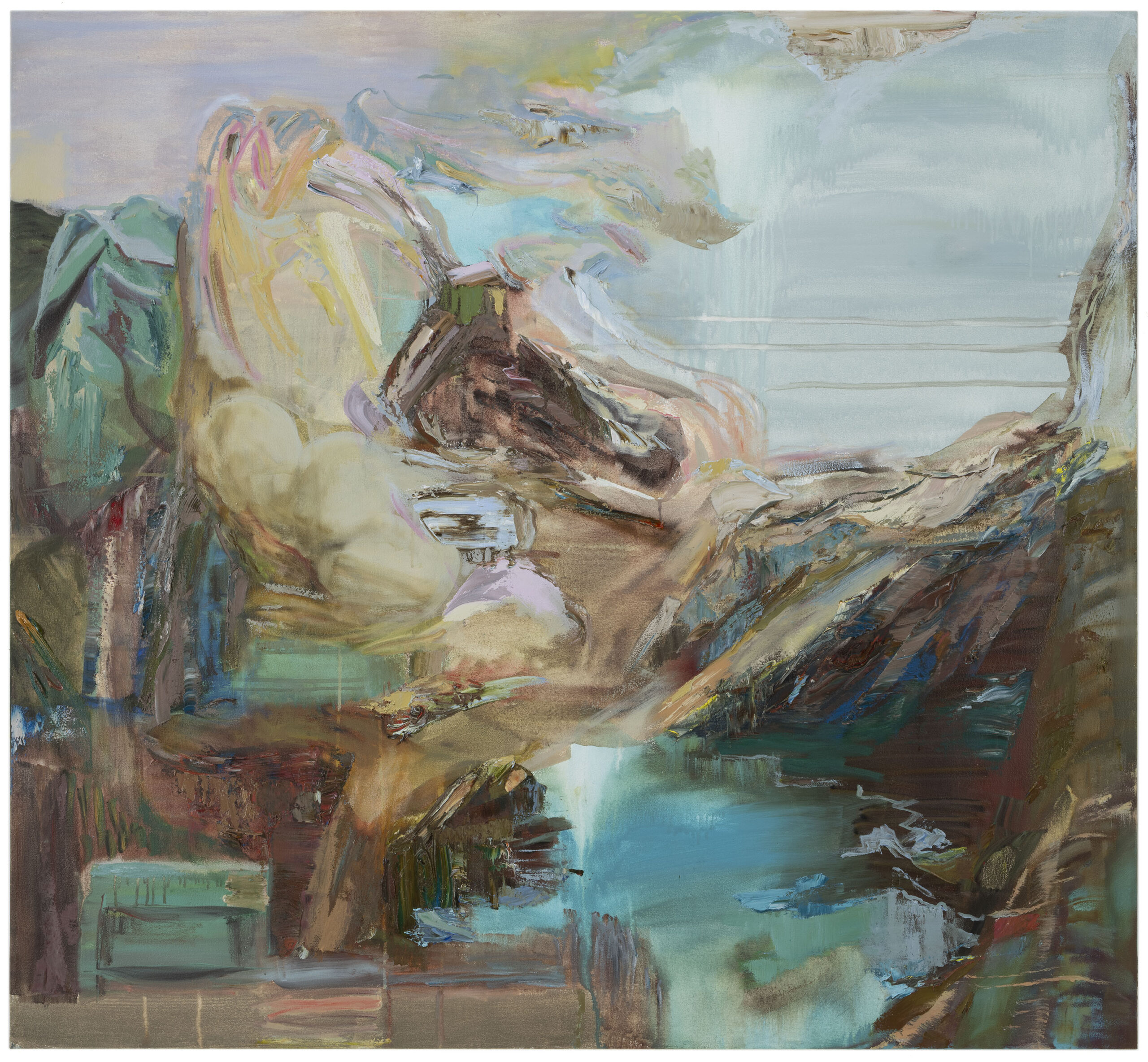
In the Vail came from my “Billowing” series, which began when I found peace in watching steam rise or clouds billow. I became interested in the particles that gather and dissipate, and the transformation within that movement. In this painting, I wanted to see if I could create a similar transformation within the marsh itself, using plant life as an extension of the billowing forms.
Gouin: Do you work with brushes or other tools?
Chapek: Everything: rags, palette knives and some brushwork … I think the combination of poured paint, rags and marks creates this sense of transformation, motion and possibility for change.
I pour paint first, and some parts of the painting become almost locked in during that initial wash. After that, I make a lot of detailed choices. I’m always surprised by how long I look, watch and wait because I want the paint to have some voice. It becomes a conversation back and forth.
Gouin: Do you think about composition while you’re laying down the colors?
Chapek: Definitely. The first marks usually come from a very intuitive place. I’ll start moving paint and think, “I want it to move like this.” After that, I slow way down and make very precise decisions.
For example, with In the Vail, I was responding to this almost feminine looking shape here, with like a hip and a sensuality. So I just extended it with the shoulder drawn there again, holding on to these spacious sweeps of color to allow that emotion.
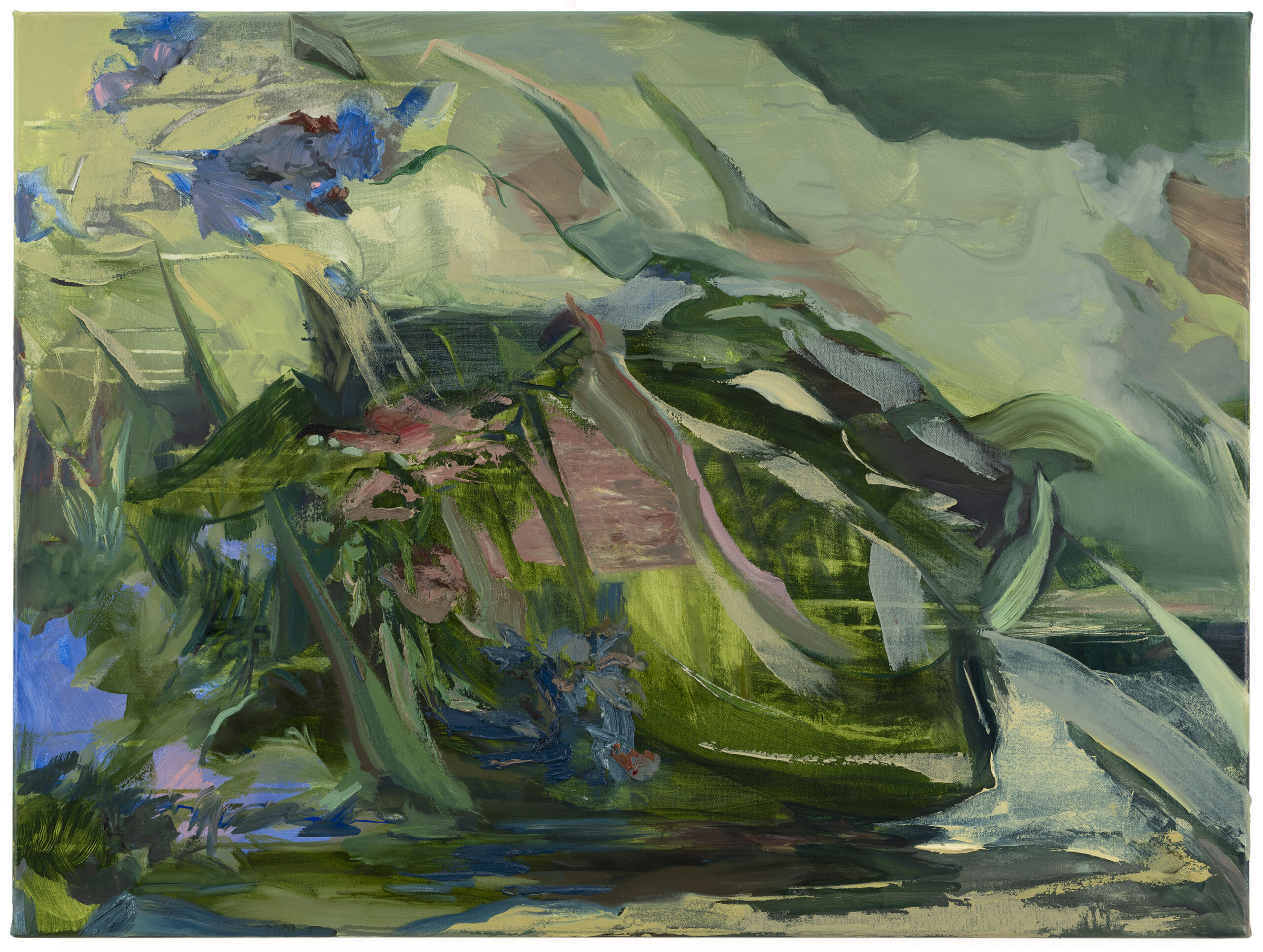
In Desert Framework I made a free gestural mark that ended up looking like a sunset. That wasn’t intentional at first. Similarly, another turquoise shape began as what I thought would become a fence, but as I worked through the composition, I realized I wanted the balance to feel asymmetrical. I moved slowly, stepping back to decide whether I wanted to cover certain areas or leave them visible. Sometimes keeping those unexpected elements creates something more interesting.
Gouin: You studied with Roger Shimomura at the University of Kansas. What was that experience like, and what do you carry from his teaching into your work?
Chapek: I stayed connected with him for decades after moving out here. He became a mentor, especially in teaching me how to maintain a satisfying studio practice without placing too much pressure on outcomes. He encouraged me to enjoy making work for myself.
As a teacher, he was very direct, which I appreciated. He pushed me to make work that felt important and precise. He would ask questions that forced me further into the work or suggest eliminating elements so the painting could focus more clearly in one direction.
Because of him, I developed a strong internal critic. He was critical of his own work, too, and that taught me not to take everything so personally – to approach making art with a more professional mindset.
Gouin: How has living in the Pacific Northwest shaped your palette?
Chapek: Immensely. We’re backpackers. I cold-water swim in Puget Sound, and my husband and daughter climb and surf. We spend a lot of time exploring the islands and traveling throughout Washington rather than leaving the state.
The variety here gives me permission to go wild with variety in my work because it doesn’t feel invented. There are islands next to mountains, forests beside rainforests and marshlands – everything exists together here. I’m naturally drawn to that.
I think part of it also comes from moving so much as a child. Every few months we were in another state. Constant change became its own kind of foundation for me.
Gouin: What excites you most about presenting in this exhibition?
Chapek: I really love this body of work. It feels like I made it from exactly the place I wanted to make it from, and I’m proud of the choices I made.
I’m looking forward to providing a space for people to enjoy the slowness of the paintings. A space for them to pay attention to what it feels like to be human and reflect on their own experiences. It’s so important to remember what makes us human in this time of heavy technology.
Based in Edmonds, Nahline Gouin is a freelance writer, ceramicist and arts advocate with experience in art museums and performing arts centers. She continues to create with clay, homeschool her son and write as a creative practice.


Real first and last names — as well as city of residence — are required for all commenters.
This is so we can verify your identity before approving your comment.
By commenting here you agree to abide by our Code of Conduct. Please read our code at the bottom of this page before commenting.