
Will you chip in to support our nonprofit newsroom with a donation today?
Yes, I want to support My MLTnews!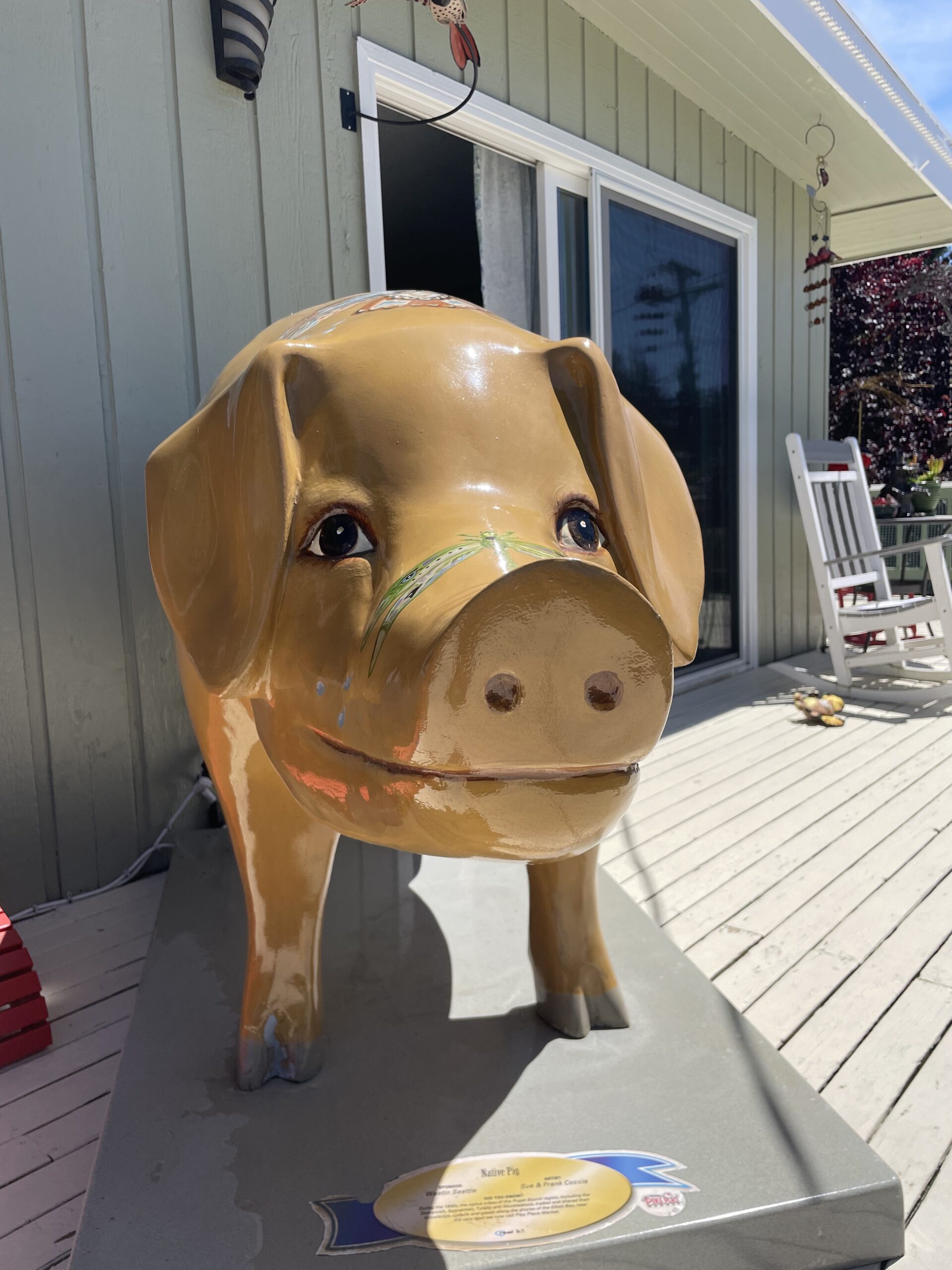
Standing on the deck outside the living room window of Edmonds artist Sue Coccia and her husband Frank, Native Pig smiles.
The Coccias welcomed My Neighborhood News Group into their art-filled home, serving a platter of Italian-inspired appetizers, where Sue Coccia and Joy Rogers shared their story about art, friendship…and a famous pig.
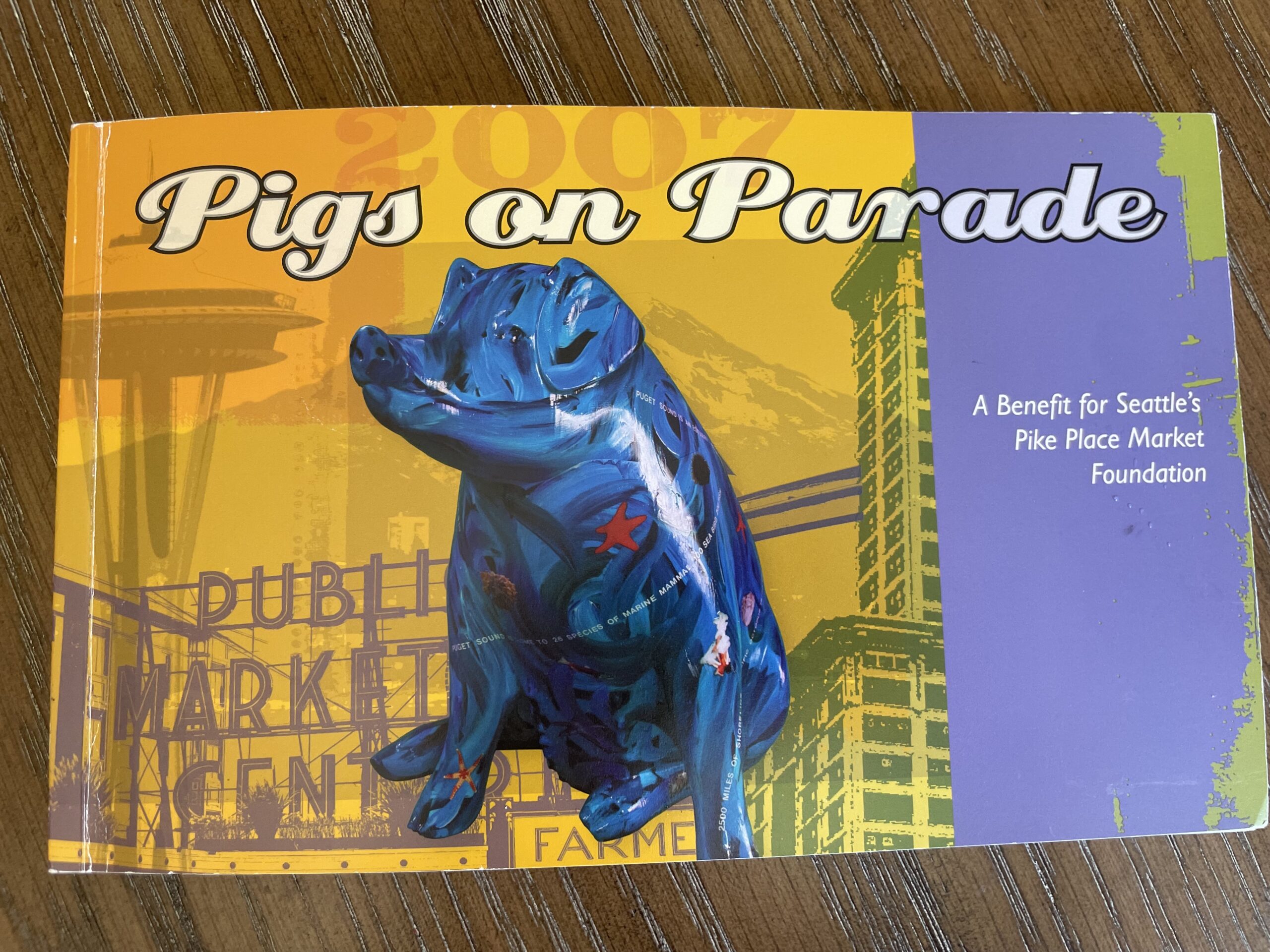
Native Pig, the vividly-painted fiberglass pig sculpture, was created in 2007 for Seattle’s Pigs on Parade, a public art project that celebrated the centennial of Pike Place Market.
Coccia initially learned about the Pigs on Parade project after receiving an email calling for artists to apply. “Yes, I do, please,” she had responded.
The pigs were inspired by Rachel and her cousin Billie, two large bronze piggy banks created by artist Georgia Gerber that sit at Pike Place Market and collect donations for the Market Foundation’s social services.
~ ~ ~ ~
Backstory
Native Pig’s story begins with another famous pig.
In 1971, Seattle voters approved the “Keep the Market” initiative, preserving Pike Place Market and supporting services for low-income residents. In 1986, the Pike Place Market Foundation unveiled Rachel, the bronze piggy bank sculpted by artist Gerber and modeled after a real-life, 750-lb. prize-winning pig from the Whidbey Island County Fair.
The idea had come from Sur La Table founder Shirley Collins, also a founding Market Foundation board member.
~ ~ ~ ~
Coccia, one of more than 100 selected artists, began transforming the blank fiberglass pig. It arrived at her then-home in Seattle’s Wedgwood neighborhood, where it became the centerpiece of the family’s living room while she spent nearly two months “painting” the pig to life.
“I dropped everything I was doing just so I could specifically work on that,” Coccia said. “I was very inspired to work on a piece that large. It was pure joy to work on it.”
Coccia called her sculpture Native Pig because “she’s got the orca, the octopus, she’s got Pacific Northwest crabs painted on her….”
She also puts a ladybug in the artwork. “Everything gets a ladybug, which represents happiness, good luck and fortune,” she said.
Native Pig features seven different designs: frog, salmon, crab, hawk, dragonfly, orca and octopus. Raindrops also connect the images, which Coccia described as representing the life cycle. Within each animal outline and design exist multiple stories and additional motifs, drawn inside as though she were assembling a puzzle. She describes her process as “intuitive intention.”
At the time, Native Pig was one of the largest three-dimensional works Coccia had painted on. Furniture was moved so the sculpture could be painted near a window for the best light.
When she had completed Native Pig, it was displayed at Seattle’s Westin Hotel alongside dozens of other artist-designed pigs. “It was thrilling to see her mixed in with all the other amazing arty pigs,” she said.
“One of the biggest thrills was seeing her when she was placed at the Westin Hotel…like, there she is, she’s at the Westin Hotel, which was very fancy.”
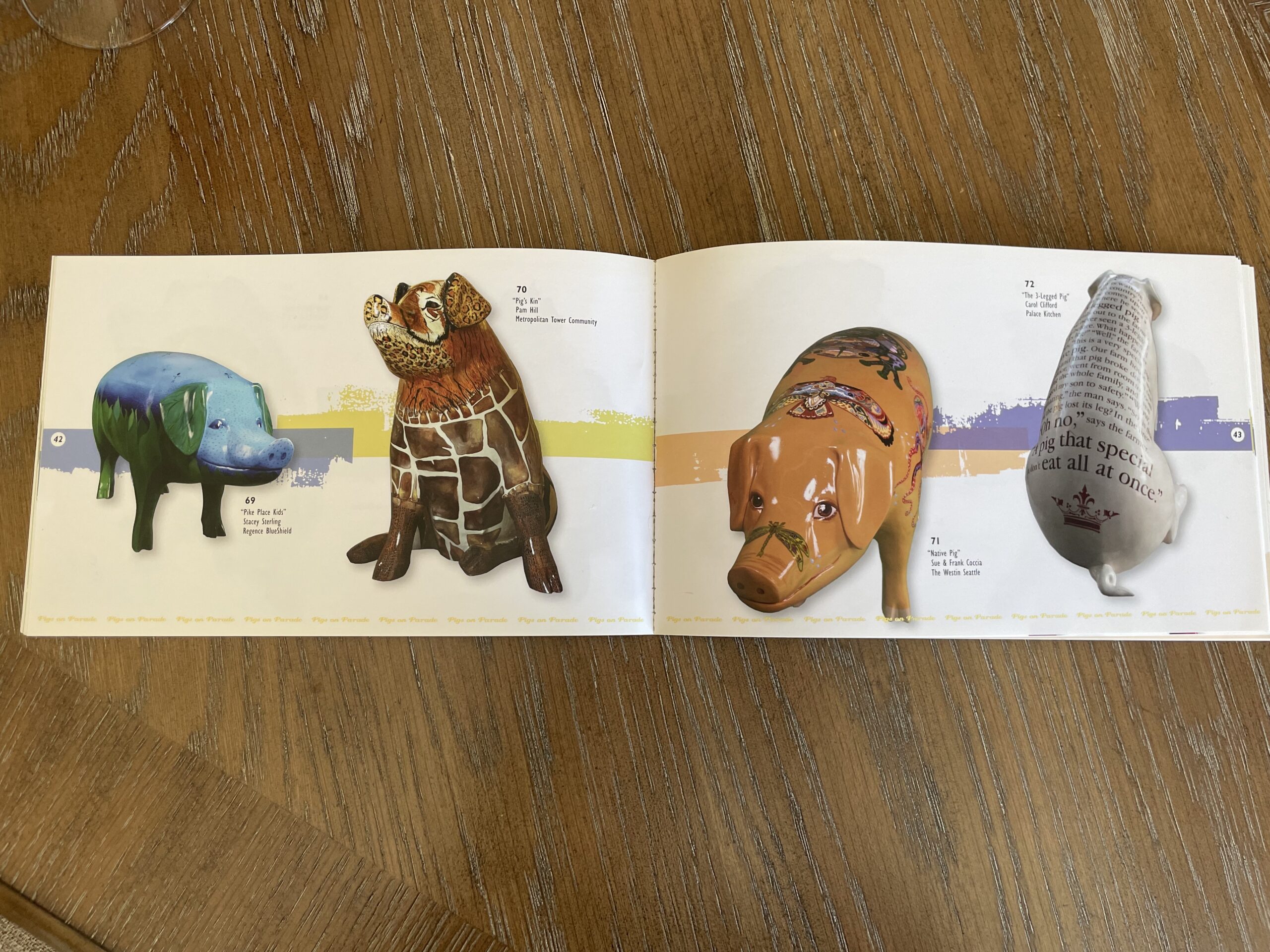
After months of public display, Native Pig headed to auction as No. 71.
“Going once, going twice…Sold!”
That’s where Joy Rogers and her husband, Bob Parker entered the story.
Rogers had already set her sights on owning one of the Pigs on Parade sculptures. She had carefully reviewed the auction catalog, selected her favorites and left bidding instructions with a friend attending the fundraiser while she was away on travel. The pigs were going fast.
When she returned, she received unexpected news: “Well, I got your pig,” her friend told her. “It was like a miracle,” Rogers said.
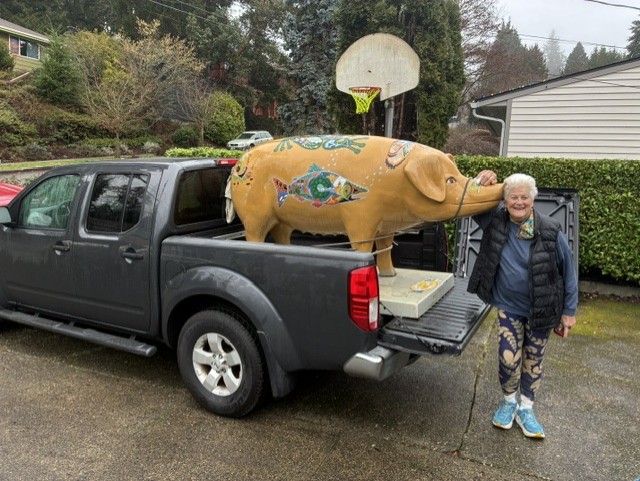
The sculpture was then loaded into a pickup truck and brought to Rogers and Parker’s home, also in Wedgwood, where it would spend the next 19 years.
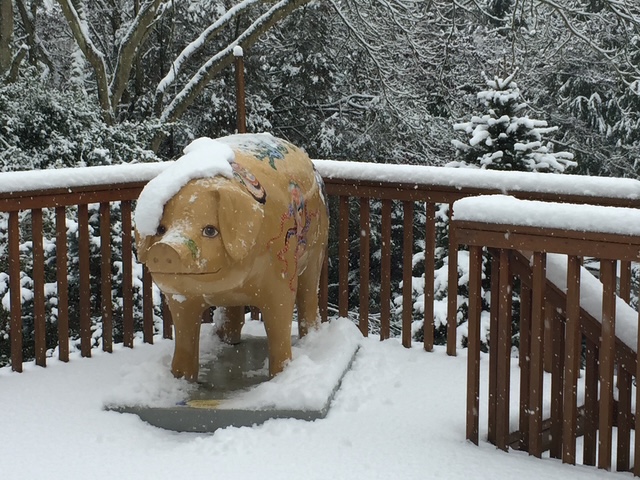
Native Pig’s new home was a deck overlooking the Picardo Farm P-Patch. Through rain, wind, sunshine and snow, Native Pig became part of the couple’s daily life.
“I remember seeing her in the snow. She experienced all the seasons,” Rogers said.
“Children and grandchildren grew up around the pig, although there was one strict household rule: Don’t touch the pig. You don’t touch the pig,” Rogers added.
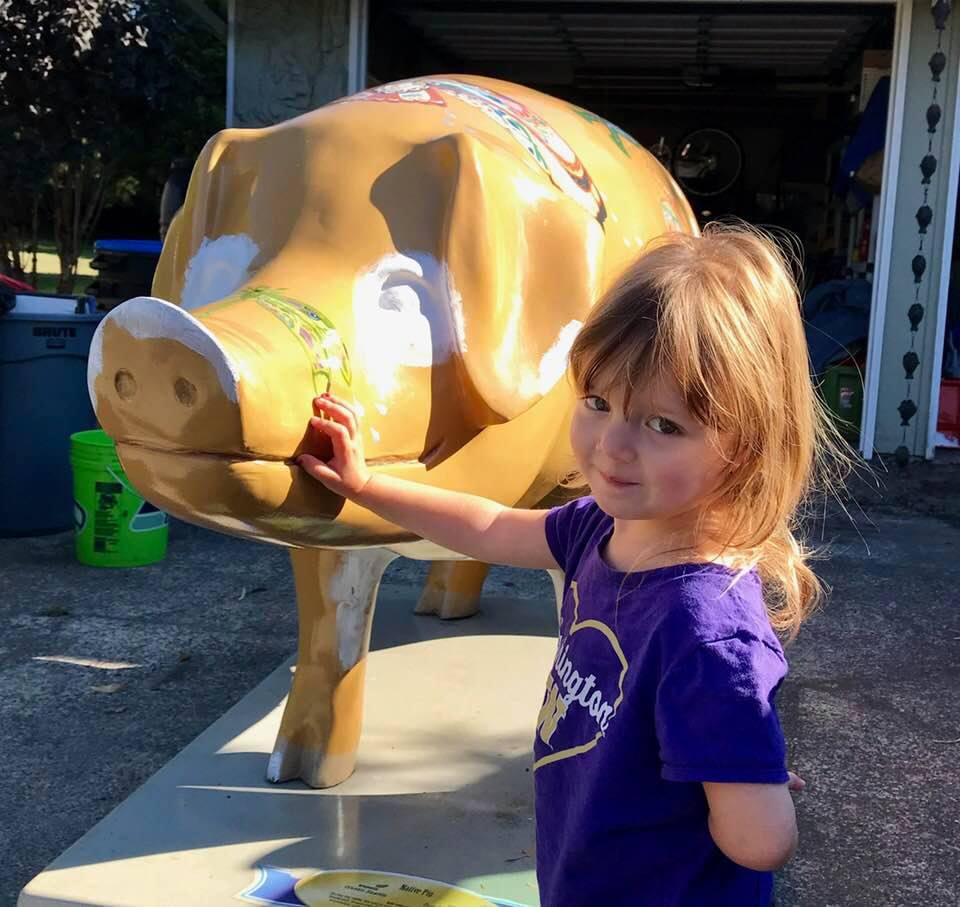
Visitors became part of the ritual, too. Friends, family members, repair workers and out-of-town guests were all invited to admire Native Pig and search for Coccia’s signature hidden ladybug.
“Anytime friends came over, I would take them out and show them the pig and say, ‘Just look at all these pieces of artwork and see if you can find the ladybug,’” Rogers said.
For nearly two decades, Native Pig quietly witnessed Rogers’ lives unfolding around her.
Family reunions came and went. Grandchildren grew up. Over the two decades, maybe thousands of visitors stopped to admire the pig. And through the years, the connection between artist and owner blossomed.
Coccia maintained what she jokingly described as “visitation rights” to the pig, returning periodically to repaint touch-ups.
When asked how unusual it is for an artist to develop a relationship with the owner of one of their works, Coccia described the connection as “very, very special.”
“I don’t have another relationship like this,” she said.
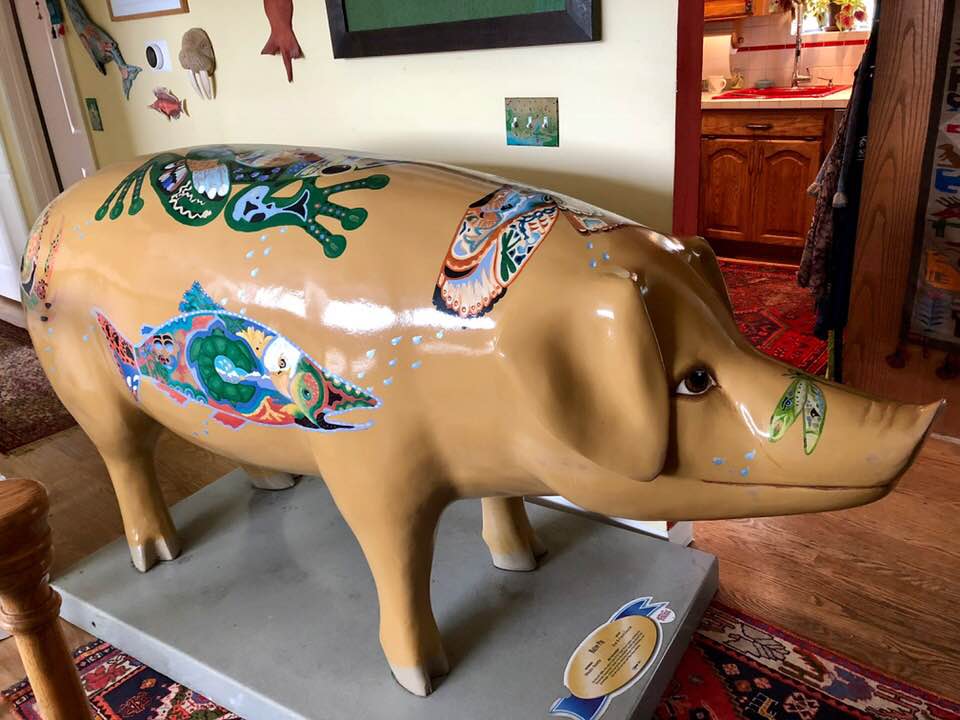
Coccia recalled being invited into Rogers’ home to “touch the pig up” and finding a sense of familiarity. “It just felt so comfortable,” she said. “It’s like I love this woman already.”
The friendship continued to grow, with Rogers often asking, “Where are you going to be next? I’ll come visit you,” and bringing “a bottle of champagne” around the time of their anniversaries.
Earlier this year, Native Pig’s story took a serendipitous twist.
Rogers and Parker recently moved into a senior living high-rise in Seattle. There was no longer room for a large sculpture.
For Rogers, however, the decision was never in doubt. “There was never any question in my mind that the pig would go back to Sue,” she said.
Rogers dismissed the idea of ever selling it. “I would never have done that. I would never sell it,” she said. “That pig was part of my heart. The pig isn’t money; the pig is soul.”
That same sentiment, along with the friendship that developed, ultimately led Rogers to return Native Pig to its artist.
When Coccia learned the pig was coming back to her, she was deeply moved. “I couldn’t believe it,” she said. “I’ll never take that for granted. It’s really, really special.”
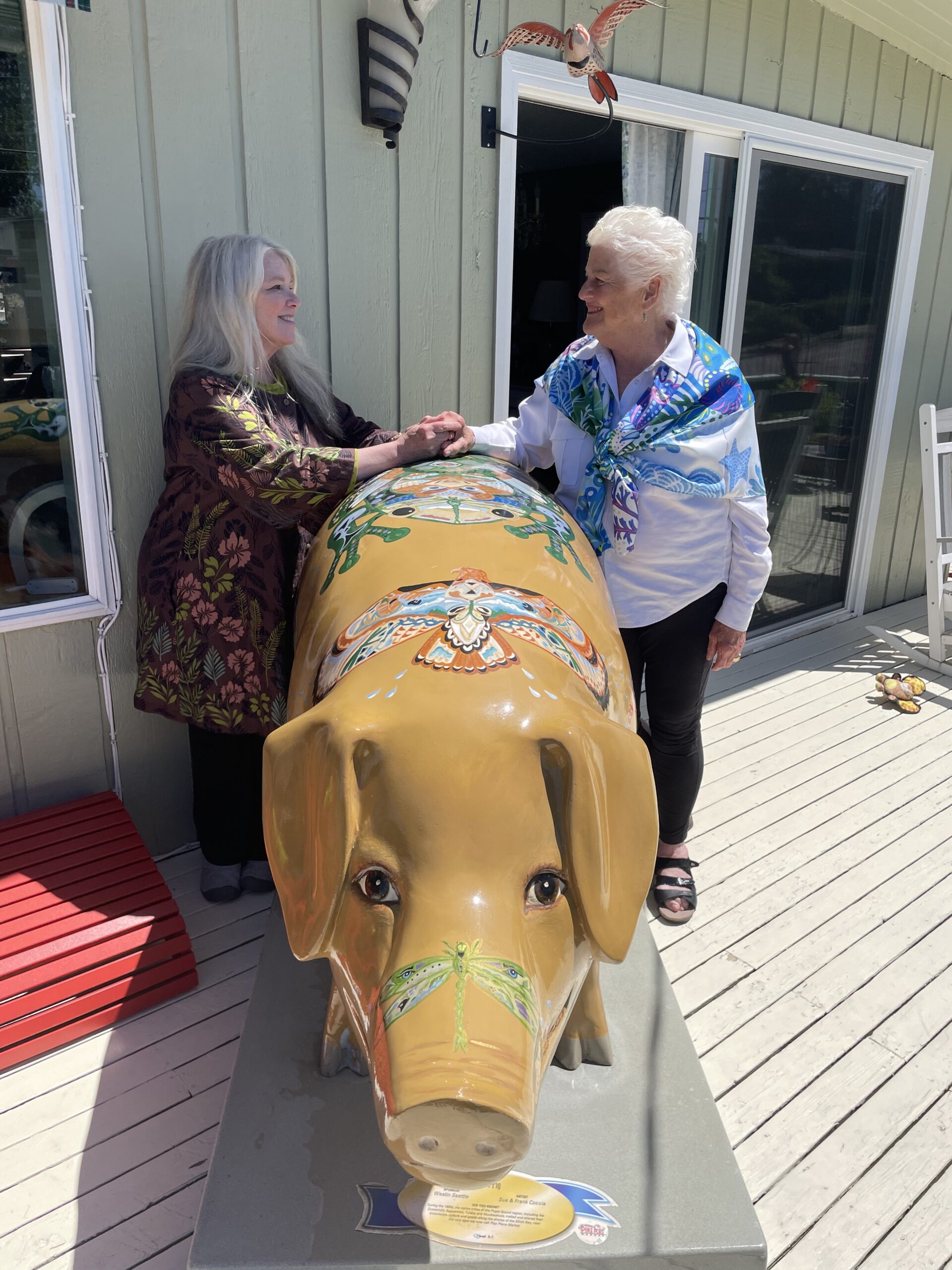
When My Neighborhood News Group posed the question of what Native Pig might say if she could talk, Rogers answered without hesitation:
“Pig would say how lucky she was to have Sue for a creator, how she lived a life surrounded by a wonderful family with lots of fun, and finally how she is so happy to be ‘home’ again,” Rogers said. “Pig is also very happy to be the source of a fine friendship between two families.”
Today, Native Pig is content to gaze out of her new home in Edmonds where she continues to get a lot of attention. Coccia said she often hears “giggles and chuckles” coming from below their deck.
The pig has come full circle, carrying with it not only Coccia’s intricate stories painted on its surface but also a story of friendship.
I’m reminded of E.B. White’s last line in Charlotte’s Web: “It is not often that someone comes along who is a true friend and a good writer. Charlotte was both.”
 Based in Edmonds, Nahline is a freelance writer, ceramicist and arts advocate with experience in art museums and performing arts centers. She continues to create with clay, homeschool her son and write as a creative practice. Contact her at [email protected].


Real first and last names — as well as city of residence — are required for all commenters.
This is so we can verify your identity before approving your comment.
By commenting here you agree to abide by our Code of Conduct. Please read our code at the bottom of this page before commenting.