
Will you chip in to support our nonprofit newsroom with a donation today?
Yes, I want to support My MLTnews!This essay originally appeared in Snohomish County District 4 Councilmember Jared Mead’s newsletter to constituents. It is being republished here with permission.
Last week, the County Council considered a package of policies related to homelessness, behavioral health and Housing First. The public testimony was passionate, emotional and often deeply personal. Earlier this month, I also attended the opening of the new Lynnwood Crisis Center, a facility designed to help people experiencing acute mental health and substance use crises before those crises become tragedies.
Between those discussions and the many conversations I have had with residents over the years, I have found myself thinking about addiction, mental health, homelessness and the difficult balance between compassion, accountability and recovery.
Housing First, the approach that generally prioritizes getting people housed before requiring participation in treatment or sobriety programs, has become one of the most debated topics in public policy. Like many conversations involving addiction and homelessness, it often generates more heat than light.
There is a version of this conversation that stays abstract. Statistics, budgets, program names, acronyms.
And then there is the version that shows up at your front door. Multiple times.
Over the years, both my brother and my mom have been into detox and rehab due to their struggles with addiction.
Thankfully, my mom is sober now and loves spending time with her grandkids.
My brother is still getting there. Today, he is on Suboxone and genuinely hopeful about his future.
Like so many families, we’ve lived through the cost of relapse, lost time and the slow rebuilding that never fully restores what was broken.
These experiences changed how I understand addiction. Not as a moral failure. Not as a single bad decision. But as a long, destabilizing condition that reshapes entire families around it.
Then there is my dad — a story I only recently became comfortable sharing publicly.
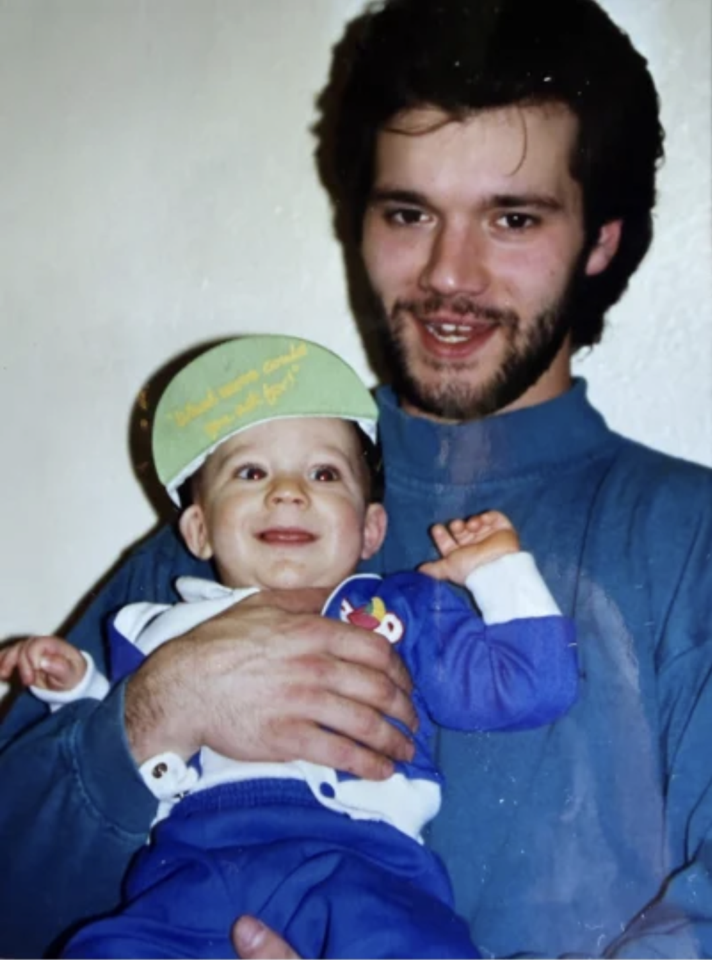
My dad struggled with addiction his entire life. It robbed him of relationships, opportunities and eventually his ability to be the father he wanted to be. It also caused immense pain for the people around him, especially my mother and our family.
My mom finally left him when I was 6 years old. After a few years of the cliché missed weekend visits and broken promises, he disappeared completely. More than 20 years would pass before I saw him again.
By that time, I was married with kids of my own.
A few years ago, I found him living in a homeless encampment near Green River. We spent hours together. I showed him pictures of his grandchildren, he told me about his life and I told him about mine. We cried and made plans to reconnect again later that year.
I came home that night hopeful in a way I hadn’t felt in a long time.
A few months later, I got a call from the King County Coroner’s Office. They asked if I wanted to claim his body.
He had died of a fentanyl overdose. Alone. In a tent in the woods.
I was his next of kin and they told me cremation would cost $500. Partly out of anger, partly out of grief, I said no. I still carry shame about that moment. I don’t know what happens when no one claims a body, and I still haven’t quite worked up the courage to find out.
My children will never meet their grandfather. And I will never get back the time we lost.
In the richest country in the world, it is a moral failing that so many people are overdosing and dying in our streets, parks and homeless encampments. We can and must do better than this.
And if we’re honest, we have to acknowledge that despite our good intentions and significant public investment, the results are not where they need to be.
The System is Full, But Not Always Working
These stories are not unique. Every family navigating addiction or severe mental illness knows some version of them.
In places like Washington, we have invested enormous public resources into behavioral health services, housing programs, outreach teams, treatment initiatives and countless efforts designed to meet people where they are.
Some of that work is meaningful and saves lives.
But it is also fair, and increasingly necessary, to ask a harder question:
Are we consistently moving people toward recovery and stability, or are we too often measuring inputs instead of outcomes?
In too many cases, we have built a system that is highly compassionate at the point of contact, but not always effective at creating pathways to stability, treatment and long-term recovery.
Compassion without structure can become stagnation.
And structure without compassion becomes cruelty.
We are still trying to find the balance between the two.
What Actually Helps In A Crisis
I referenced earlier that our region just opened a new Lynnwood Crisis Center, part of a broader effort to create immediate, no-barrier access to behavioral health support.
The idea is simple: When someone is in acute crisis, whether it’s mental health, substance use, or both, they should not have to navigate insurance hurdles, emergency room overload or law enforcement involvement just to get stabilization.
Facilities like this are not a silver bullet. There is no silver bullet.
But there is growing evidence that immediate-access crisis stabilization can interrupt cycles that otherwise lead to incarceration, overdose, or death.
This is exactly the type of investment local government should be making. Crisis stabilization is often less expensive than repeated emergency room visits, repeated law enforcement interactions and the long-term consequences of untreated addiction and mental illness.
The measure of success is practical, not ideological. Fewer emergency calls, fewer overdoses, fewer law enforcement interventions and more people entering treatment mean better outcomes for families and more effective use of taxpayer dollars.
Most importantly, it means fewer families receiving the same phone calls mine has received.
A More Honest Conversation
We should be honest about something else too: Many of the people struggling the most are not being failed by a lack of empathy. They are being failed by a lack of sustained recovery pathways that actually hold.
That includes treatment capacity.
It includes housing stability.
It includes mental health care.
It includes building community around people.
It includes expectations that are clear, consistent and paired with real support.
Too often, policymakers have this debate on an ideological plane. Housing First versus sober housing. Harm reduction versus accountability. Compassion versus enforcement.
But the people at the center of this debate are not data points.
They are human beings.
My mom’s story was different from my brother’s story. My brother’s story was different from my dad’s story. The more families I talk to, the more convinced I am that addiction does not follow a single script and neither does recovery.
For some people, stable housing may be the foundation that makes recovery possible. I was reminded of that recently at a ribbon cutting for a new Pallet Shelter community in Everett serving women with young children. It struck me as a practical example of a housing intervention that can make sense. The shelters are relatively inexpensive, can be deployed quickly, and provide a safe place to live while connecting residents to supportive services.
For others, especially those battling severe addiction to fentanyl and other highly addictive drugs, housing alone is not enough. In those cases, high-barrier treatment programs, sober housing and stronger accountability may be essential to achieving lasting recovery.
That is why I have become increasingly skeptical of one-size-fits-all solutions.
The goal should not be to prove an ideology right. The goal should be to help people get better.
As policymakers, we should be willing to measure success honestly. Are overdose deaths decreasing? Are fewer people cycling through emergency rooms and jails? Are more people entering treatment, maintaining housing, reconnecting with family, and finding employment?
If we only build systems that respond to crisis without building systems that require and support change over time, we should not be surprised when crisis becomes a permanent condition. And if we measure success by how many people we serve rather than how many people recover, we risk creating a system that grows more expensive every year while producing fewer meaningful results.
At the same time, if we lean only into enforcement or punishment without meaningful treatment infrastructure, we simply cycle people through jail cells and emergency rooms without addressing the underlying illness.
Neither extreme works on its own. What works is keeping our focus where it belongs: on outcomes, recovery and the dignity of every person who is still fighting their way back.
What I Carry Forward
I don’t share these stories because I think they are unique. I share them because they are not.
Most people who work in public service, healthcare, schools or emergency response already know this reality intimately. Most families impacted by addiction don’t need a lecture, they need systems that actually function when things fall apart.
I think often about what my life would look like if the right intervention had come earlier for my dad.
Unfortunately, we can’t rewrite the negative outcomes.
But we can build systems that make fewer of them inevitable.
And if we get it right, maybe fewer people will get the call from a coroner’s office.
Maybe more families will get the chance to sit across from someone they love and still have time left.
Government cannot save every life. No policy can erase every tragedy. But we have a responsibility to build systems that give people a real chance at recovery, stability and dignity.
That means being compassionate enough to help, honest enough to measure results and willing enough to change course when something is not working.
Because what is at stake is not a political argument.
It is time.
 Jared Mead has served on the Snohomish County Council for the past six years. He was born and raised here, and he and his wife Krystal — an Everett Public Schools teacher — are raising yjrot four children in South County.

Real first and last names — as well as city of residence — are required for all commenters.
This is so we can verify your identity before approving your comment.
By commenting here you agree to abide by our Code of Conduct. Please read our code at the bottom of this page before commenting.