
Will you chip in to support our nonprofit newsroom with a donation today?
Yes, I want to support My MLTnews!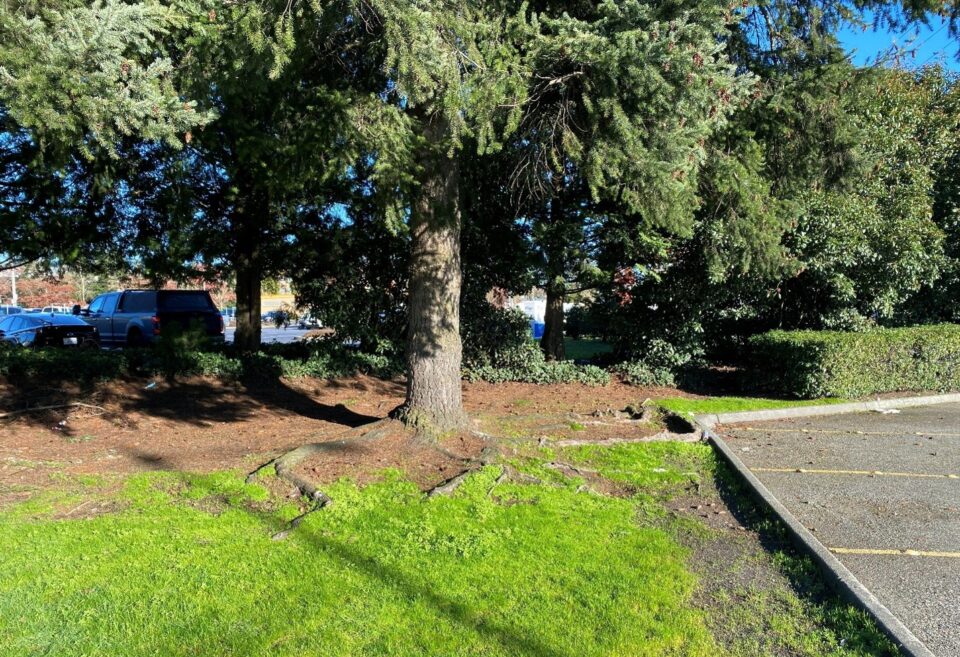
There are EV chargers hidden all around you. Gas stations are obvious with their big colorful signs. EV charging stations are not. You probably drive past charging stations all the time without seeing them.
This difference between gasoline stations and EV chargers has to do with history. Gasoline stations started in the early years of the 20th century when most businesses were found by walking by. EV charging is solidly in the online era. Tesla charging stations and other national networks started in the 2010’s. Facebook and iPhones have been around longer than Tesla. In the era of smartphones, people find businesses by searching for them on their phones. A restaurant down in Seattle, Onibaba, doesn’t even have a sign on the outside. They don’t need a sign. You find them online. Same goes for EV chargers.
A good online resource for finding EV chargers is PlugShare.com. If you go to their website, the first thing they do is ask you to register. You can ignore that. Click on the “X” in their registration request and it will go away. Search on “Edmonds”, “Lynnwood”, or “Mountlake Terrace” to find charging stations nearby.
Every EV driver should get familiar with PlugShare. A friend of mine who drives an older LEAF recently drove down to Olympia when her friend’s car broke down. She knew she would need to charge in Olympia before she came back. Not knowing about PlugShare, she drove around the Capitol looking out the window hoping for EV chargers.
When you look at the regular PlugShare map, you see green markers and light brown markers. The green markers are chargers that provide 6 to 12 kilowatts. That is about as much as you get from a dedicated 240V home EV charger. (240V is the voltage of an electric dryer or stove.)
A 6-kilowatt charger can add about 25 miles of range in an hour. A 12-kilowatt charger can add 50 miles each hour. Cars in Edmonds usually travel less than 40 miles on an average day. Parking at a 12-kilowatt charger while you have lunch could be all the charging you need.
Green-marker chargers have what are called “J1772” plugs. Almost all EVs and plug-in hybrids can charge at J1772. Teslas do not have J1772 ports. They come with J1772 adapters for their Tesla ports.
There are three green-marker chargers in the parking lot just north of the Edmonds Farmer’s Market intersection, in the Public Safety Complex. There is another at the Yost pool and others in Seaview Park, Sierra Park, the Mathay-Ballinger Park, and the public works buildings near Highway 99.
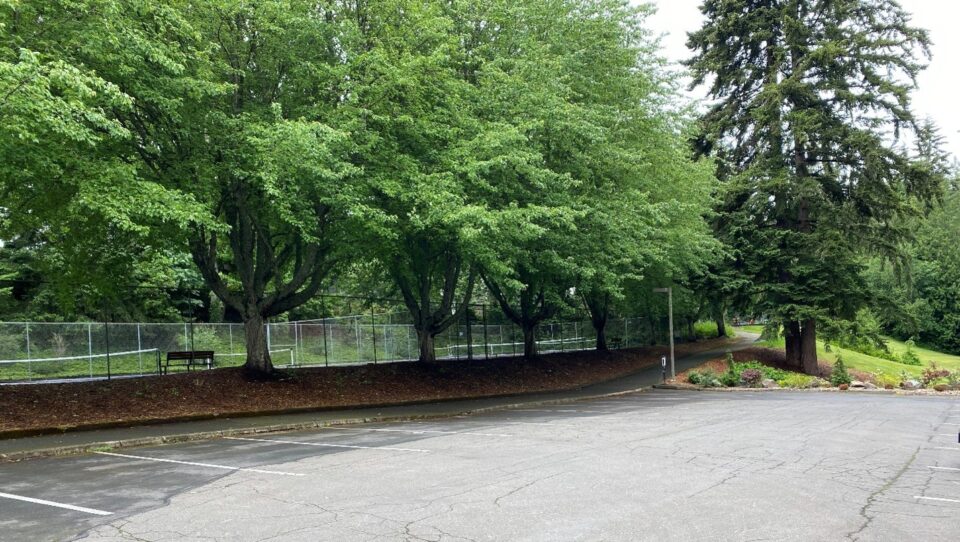
In Lynnwood, there are green-marker chargers at Macy’s and PF Changes in the Alderwood Mall, JC Penney and at Kohl’s near Target. In Mountlake Terrace, they are at Mountlake Terrace Elementary School, City Hall and the Transit Center.
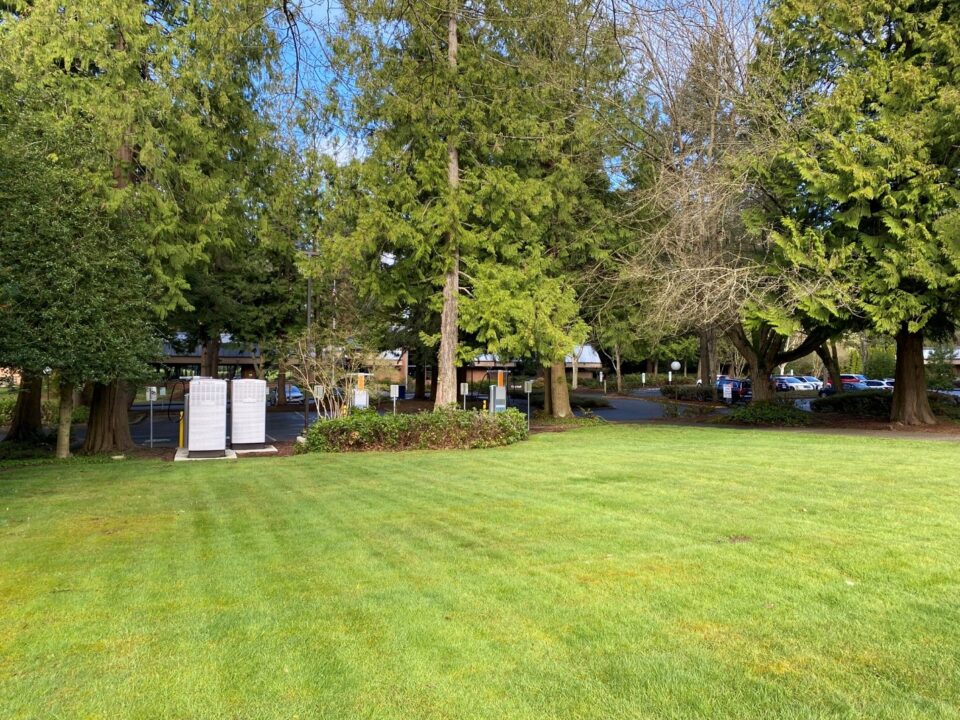
On PlugShare, the other type of marker is light brown. The light brown chargers are what are called “fast chargers. They provide between 50 and 350 kilowatts. A 50-kilowatt charger can add 200 miles of driving range in about an hour. A 350 kilowatt charger can add 200 miles in about 12 minutes or less.
Most fast chargers have CSS1 plugs. You can’t plug a CSS1 plug into a J1772 port. Most recent EVs have CSS1 ports. Teslas do not.
If you own a Tesla, you will have a lot more options for charging if you buy a CSS1 adapter. Tesla sells adapters for $200. It’s worth it. A friend of mine had given up on EV trips to camp on Mount Rainier because he couldn’t charge at CSS1 plugs.
Tesla charging stations have Tesla plugs (called “NACS” plugs). If you drive a Tesla, your EV has a Tesla port and can charge at Tesla stations. You probably already know that, because your Tesla has been telling you to do so ever since you bought it.
If you drive a recent Ford, GM, Dodge, Rivian or other EV that has a CSS1 port, you can get an adapter so you can charge at a Tesla station. A few Tesla stations have CSS1 plugs built in so you don’t need an adapter, and a few Tesla stations do not work with the Tesla-to-CSS1 adapter.
A few older EVs cannot use the Tesla adapter. Check online or with your dealer whether yours can.
2026 models of Toyotas and Subarus come with both CSS1 and Tesla ports. That might be how all EVs will be soon. Everyone should be able to charge at both CSS1 and Tesla plugs.
In Lynnwood, there are fast chargers at Harris Ford, the Porsche dealership, City Hall, on 33rd Avenue West near JC Penney, in the Target parking lot, at the Whole Foods on 196th, at Fred Meyer on the Alderwood Mall Parkway, at CVS near Highway 99 and Shelby Road, and at Lincoln Way and Highway 99.
In Edmonds, there are fast chargers at Campbell Nissan near Costco and at WinCo.
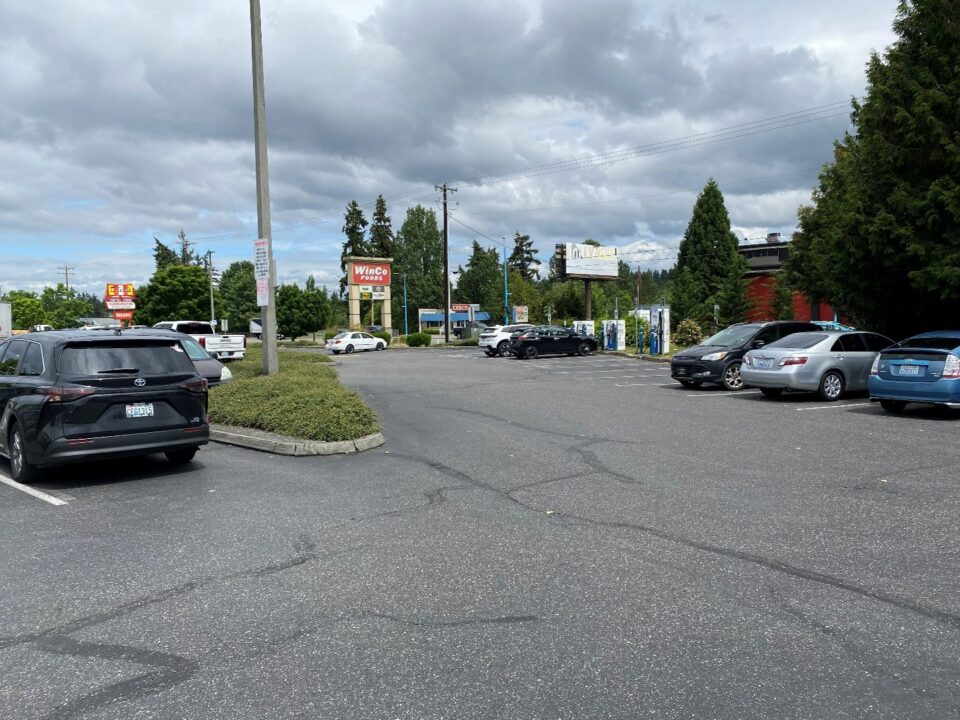
Mountlake Terrace doesn’t have any fast chargers, but chargers are being added and built all the time. Edmonds College (in Lynnwood) has 10 fast chargers that were installed recently and are coming online soon.
If you have already have your EV, get the adapters that are available for your car so you can charge at both CSS1 and Tesla stations. That will make longer trips easier. And get comfortable with PlugShare so you don’t end up driving around randomly hoping to see a charging station.
If you have not yet bought your EV, you might be wondering where you could charge up. Most EV owners charge at home, and more and more apartment houses are providing EV charging in their parking lots. To see what your options are away from home, see what PlugShare tells you.

Nick Maxwell is a certified climate action planner at Climate Protection NW, teaches about climate protection at the Creative Retirement Institute and serves on the Edmonds Planning Board.


Real first and last names — as well as city of residence — are required for all commenters.
This is so we can verify your identity before approving your comment.
By commenting here you agree to abide by our Code of Conduct. Please read our code at the bottom of this page before commenting.