
Will you chip in to support our nonprofit newsroom with a donation today?
Yes, I want to support My MLTnews!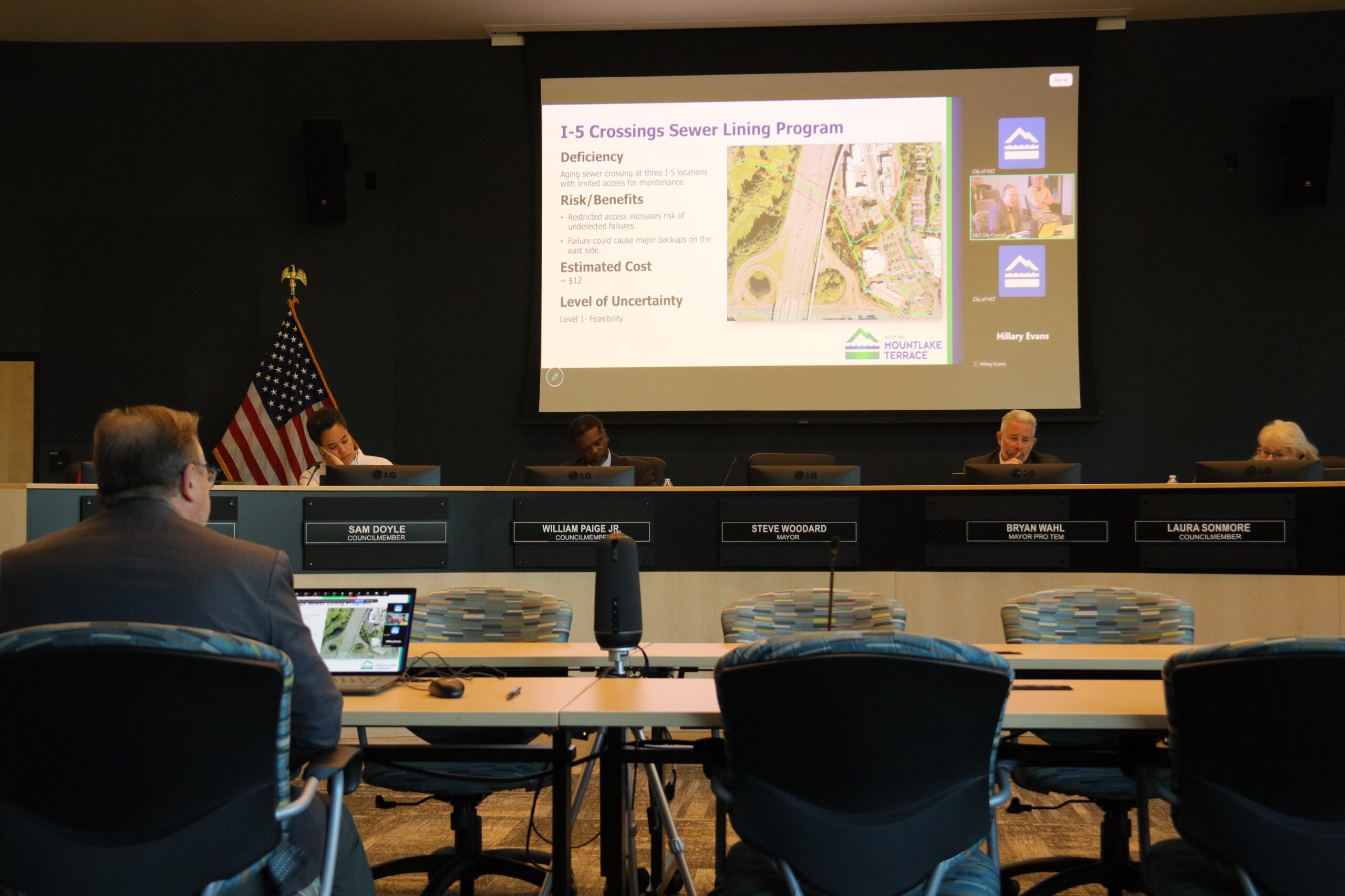
Key takeaways:
- Mountlake Terrace City Councilmembers heard an update of the City’s capital improvement plan and project costs.
- Councilmembers discussed updates to the board and commission interview and selection process.
- Two Eagle Scouts were recognized for their environmental conservation work.
Public Works Director Gary Schimek walked the Mountlake Terrace City Council through updates to the City’s 2027-32 capital improvement plan (CIP) during the June 18 meeting.
Schimek reminded the Council that city utilities are strictly cost-of-service, meaning that any savings are placed back into cash reserves or held onto for future capital projects. He also emphasized that service levels, risk and rates are linked: “The higher the service levels, the higher the rate’s going to be…you can have lower rates, but you’re gonna have higher risk for something bad happening,” he said.
These projects include:
Westside Water Main Replacement Phase 2: Schimek said this is one of the City’s top five water projects and it addresses aging, break‑prone cast‑iron mains. The cost is about $4.1 million.
Main Street Phase II, water main replacement: This $1.5 million project will “piggyback” on the Main Street development project, according to Schimek.
A seismic upgrade for the City’s 2.5 million gallon water reservoirs: Schimek said these reservoirs no longer meet modern safety standards since they were built in the 1970s. Conceptual design for the seismic upgrade and a booster pump station would cost about $6 million. A new tank for each reservoir would cost $14 million to $16 million.
220th Street Southwest and 70th Avenue West intersection water main replacement: This project also piggybacks on the main stormwater project at a cost of about $400,000 for the water main.
Water mains across I‑5: Schimek said this is the largest water risk for the City as the water mains are hung from a bridge, a practice that is prohibited under new regulations. Replacing them by putting pipes under Interstate 5 could cost around $15 million. He noted the City could incorporate this project into a 2032 WSDOT culvert replacement under I‑5.
Wilder River Lift Station: Rebuilding the lift station would cost an estimated $1 million to $2 million with $1.6 million used as the working figure, Schimek said. However, he said staff are considering abandoning the lift station and using a “gravity flow” to Alderwood Water District, which would direct the wastewater to King County’s Brightwater Treatment Plant instead of the current West Point Treatment Plant. This may avoid decades of pump replacement and electrical costs, Schimek said.
Utility pole over sewer line: Schimek said staff identified a utility pole that is causing damage to a water main and is making access difficult. Removing the pole and repairing the line would cost about $500,000.
Edmonds Wastewater Treatment Plant: Schimek said routine Edmonds treatment plant upgrades will require about $300,000 from Mountlake Terrace in 2027. However, he said a proposed Department of Ecology nitrogen nutrient rule could push Mountlake Terrace’s share to about $3 million out of the entire $12 million cost if the rule moves forward during the next permit cycle in 2028.
“I’m very much an environmental steward, but I very much disagree with this rulemaking,” Schimek said. “If we would need to do that, some of the [projects] that we just talked about before may have to be put on hold.”
The entire list of infrastructure costs and updates are on the City’s website.
Councilmember Erin Murray asked about the cost differences between flows sent to Brightwater and flows treated at Edmonds, and whether that is being fully factored into the rate analysis.
Schimek said the City will not make that decision without a full 50‑year life‑cycle business case. He said the first step is to receive King County’s modeling to confirm capacity. If that checks out, staff will compare the capital cost of abandoning the lift station and upsizing the connecting pipe against decades of higher Brightwater treatment charges and avoiding operations and maintenance costs at the lift station.
In response to who controls the regulatory process of the nitrogen nutrient rule, Schimek said the state Department of Ecology tried to push a general permit through the state Legislature, but it didn’t pass in February 2025.
According to the Department of Ecology, the Pollution Control Hearings Board “invalidated the Puget Sound Nutrient General Permit ‘insofar as it is mandatory’ and remanded the permit back to Ecology for further action.” Based on public feedback and legal rulings, the Department of Ecology decided to use individual facility permitting rather than a general permit.
“As a scientist,I just don’t believe this is the way to do it,” he said. “It’s not that nothing should be done. If we’re going to spend this type of money, we maybe get better return it somewhere else.”
Schimek told My MLT News that he doesn’t believe the costs to retrofit wastewater treatment plants to reduce nutrient loading are comparable to the benefits. He said he is also concerned that the primary source of nutrients into Puget Sound is from stormwater, not treated wastewater. Pollutants from vehicles on roads and household runoffs can get into stormwater and into the Sound without treatment. Such pollutants contain nitrogen and phosphorus that can reduce oxygen levels in the water, kill fish and many marine animals and increase algal blooms.
“What I would rather see is the same amount of money spent on reducing stormwater pollution while keeping the same wastewater requirements,” Schimek said. “I do agree wholeheartedly with [Department of ] Ecology that we need to reduce impacts on Puget Sound.”
Back at the meeting, Schimek told Murray that staff will be working with Snohomish, King and Pierce counties and regional treatment providers, and he will return to the City Council for an update with the city manager.
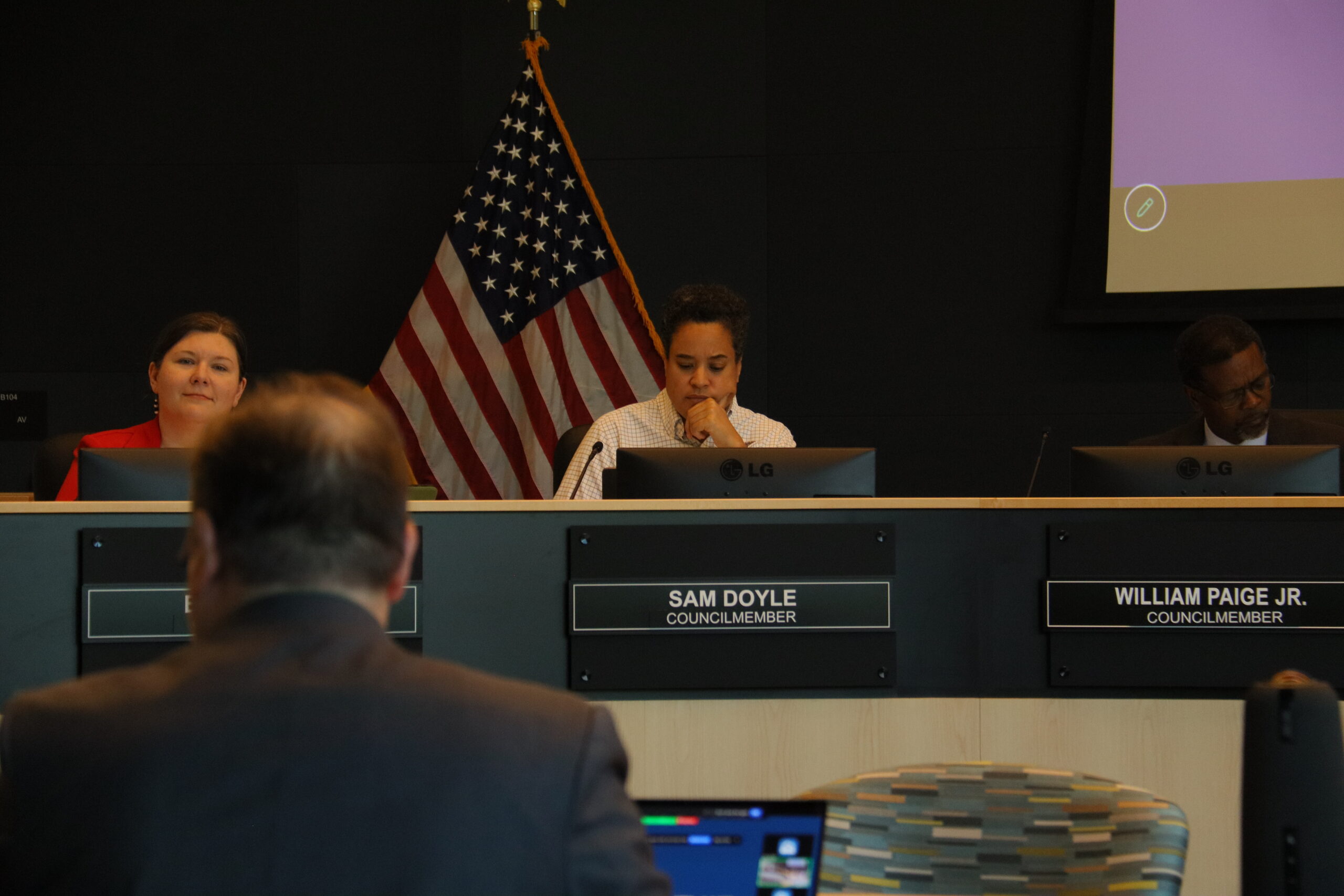
Councilmember Laura Sonmore noted that the capital improvement program would cost a total of $62 million over 15 projects, roughly $10 million a year. She said residents are already “getting hit with a ton of other taxes” and asked whether any projects can be delayed and how much revenue the utility system currently collects each year. She also warned that delaying rate studies or holding increases too low can backfire, leading to steeper hikes later.
Schimek said staff will use asset management data and up‑front investigation – such as condition assessments and seismic studies – to sort out which high‑ticket projects truly can’t be postponed. He described the infrastructure replacement as “just in time, not too late, but not too early either” to avoid wasting ratepayer dollars on work that isn’t yet necessary.
Sonmore also questioned whether existing City revenue is covering the cost of growth, noting the Council recently approved a light rail‑area project with $9 million in tax credits while the City faces major utility costs.
Schimek said developers already pay “hefty” connection charges that can reach about $10,000, but he acknowledged that who pays for upsizing pipes and facilities to handle growth is ultimately a policy choice. He said options such as additional fees or agreements with developers will be part of the upcoming rate and capital planning discussions.
Councilmember Sam Doyle suggested the City break down charges on bills so customers can see how much they pay for water consumption versus wastewater, stormwater and infrastructure. She said her own bi-monthly bill runs about $300 for a family of five, and many residents would struggle as rates rise. Schimek said he would discuss the ideas with the City’s finance staff and rate consultant.
Doyle also asked how long the new pipe would last and how the new infrastructure would support a growing population. Schimek said modern materials and construction standards should deliver lifespans of about 75 years. Staff use computer models, per-capita demand assumptions and sensitivity analysis to test different growth scenarios, including changing water use patterns and accessory dwelling units, he added.
Schimek said there will be a public meeting related to the City’s Comprehensive Sewer Plan on July 26, which will be adopted in early 2027.
New construction contract
Schimek also briefed the Council on a proposed construction management agreement for the West Side Water Main Phase 2 project. Staff is recommending KBA to provide both field construction management and administrative support, at a proposed cost of $413,111, including a 10% contingency.
Sonmore said it was “kind of sad” that only one firm responded, and she asked whether the $413,111 agreement plus 10% contingency was “a good billing number” without competitive bids. “It is a lot of money for a consultant,” she said.
Schimek said staff and outside consultants had compared the fee to similar projects and found it “very much in the ballpark.” With no further objections, Mayor Pro Tem Bryan Wahl said the item will return for a vote on the Council’s July 2 consent agenda.
Boards and commissions
Councilmembers described a competitive, interview-based process for filling city boards and commissions, emphasizing a team approach and clarifying that incumbents must reapply and are not guaranteed reappointment. Some tension surfaced as Councilmembers Kyoko Matsumoto Wright and Laura Sonmore asked why several long-serving volunteers were not renewed.
“It sounds like the new expectation is if anybody’s been on a board for a long time, they’re going to be taken off,” Sonmore said.
Councilmembers Erin Murray, William Paige, Jr. and Sam Doyle said that choices are based on “holistic” fit, vision and how applicants articulated the City’s goals.
Murray said if incumbents weren’t reappointed, “it was not a reflection of anything that they did or didn’t do.” Instead, new applicants had a “different and holistic lens” in how they approached the work.
After the discussion, the Council voted to approve the interview committee’s full slate of 2026 board and commission recommendations.
Eagle Scout recognitions
The Council honored Eagle Scouts Lisa Beam and Robert Jensen for their work in leading youth to make public improvements to City parks and trails.

Recreation and Parks Supervisor Celina Williams recognized Beam for an Eagle Scout project at Terrace Creek Park’s disc golf course. After initially discussing smaller ideas for removing vegetation and invasive plants, Beam told staff she needed a bigger project. Bean eventually led the design and construction, including:
- Installing a new elevated concrete tee pad to improve play and safety.
- Organizing donations of materials, overseeing volunteers and developing calculations for the project.
- Removing invasive plants, spreading “yards and yards of wood chips,” and installing an identification pole for the tee basket.
Williams said Beam completed everything in one weekend and that the tee pad is already heavily used, with at least 1,203 players having gone through the course since mid-April.
Environmental Programs Manager Patrick Hutchins recognized Robert Jensen for an Eagle project on the Interurban Trail that supported the City’s urban forestry goals in partnership with Snohomish County.
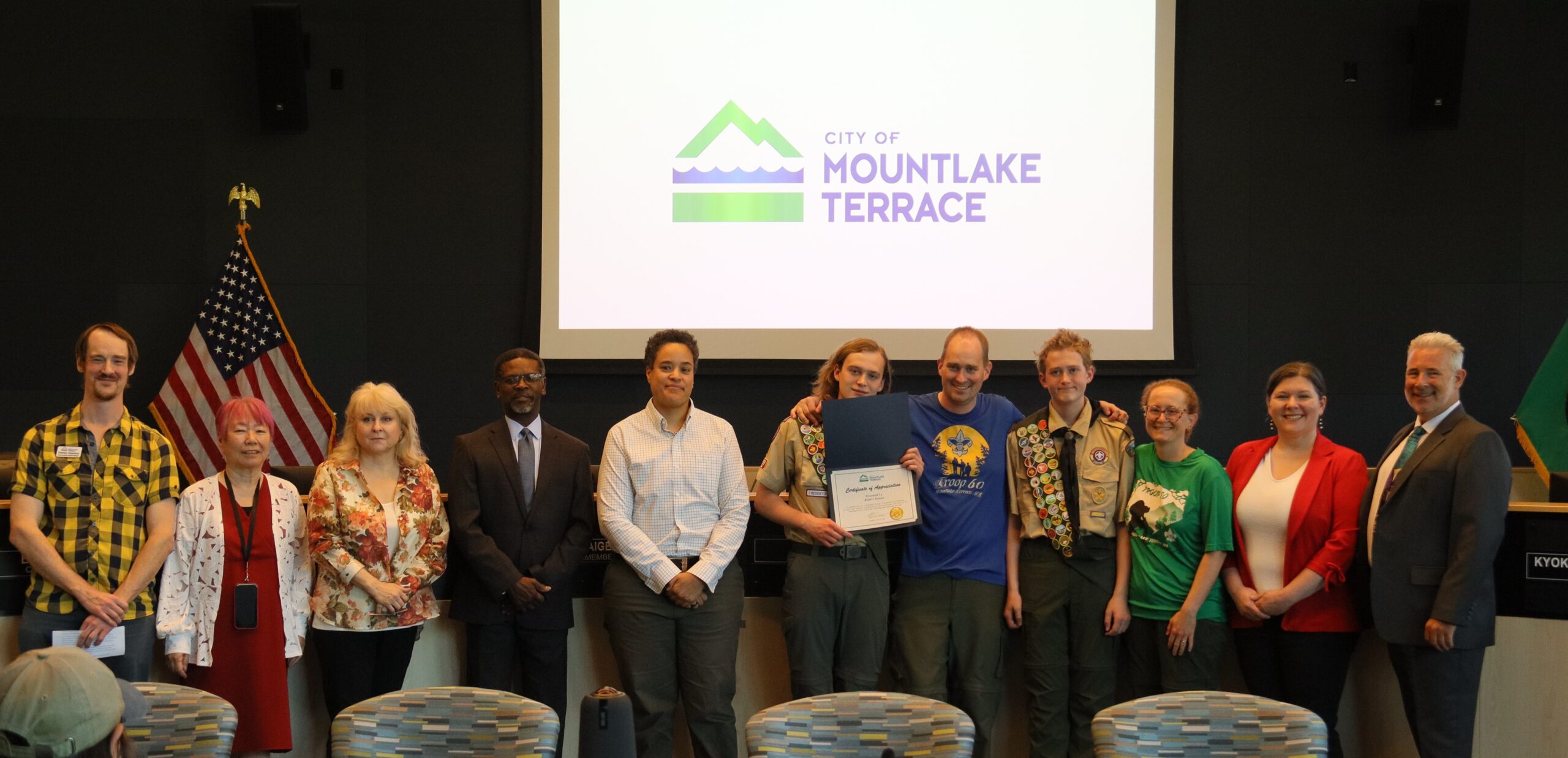
After the City developed a planting plan, Jensen took on what Hutchins called the “project manager” role, coordinating labor, supplies and safety planning. On a March day that started with snow and ended in sunshine, Jensen led 18 Scouts in a four-hour event where they:
- Planted 20 native Northwest trees at a rate of one tree every 12 minutes
- Mixed compost into the soil
- Mulched the trees
Hutchins highlighted Jensen’s leadership style, noting he built in rest and meal breaks, adjusted tasks when scouts lost focus, and was committed to skill building.
According to Hutchins, Jensen said that “I just generally enjoy leadership and helping others build skills… I noticed a couple of younger Scouts learn how to do things they didn’t know how to do previously over the course of the project, and I was pretty proud of that.”
The meeting can be viewed on the City’s YouTube channel.


Real first and last names — as well as city of residence — are required for all commenters.
This is so we can verify your identity before approving your comment.
By commenting here you agree to abide by our Code of Conduct. Please read our code at the bottom of this page before commenting.