
Will you chip in to support our nonprofit newsroom with a donation today?
Yes, I want to support My MLTnews!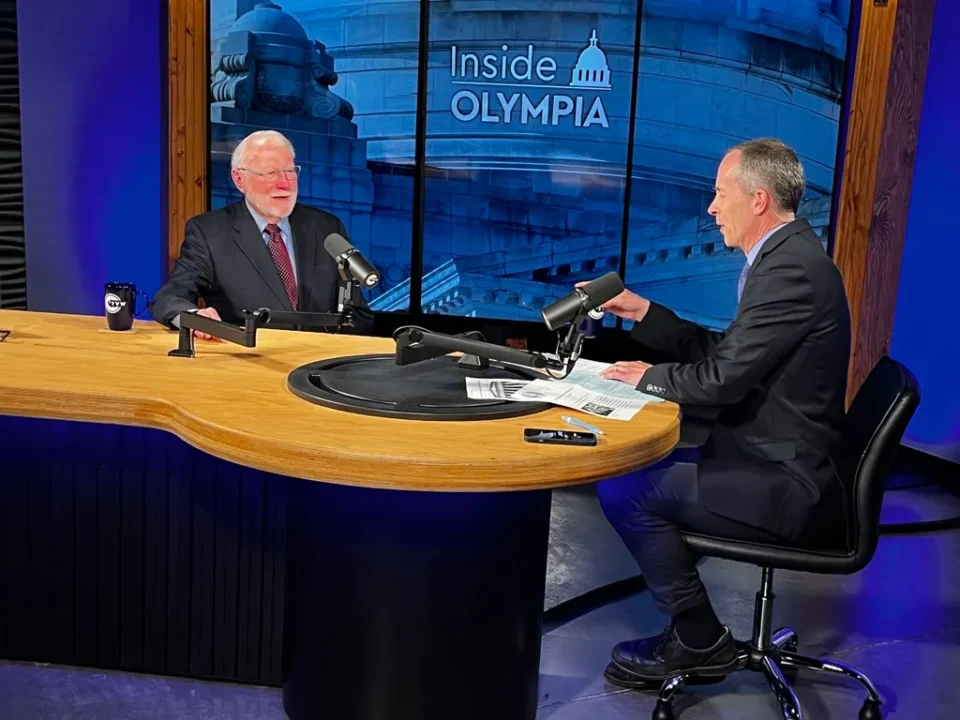
Washington’s open government advocates say the state’s once-strong transparency framework is steadily weakening as legislative privilege claims expand, exemptions multiply and reform efforts stall.
Mike Fancher, former Seattle Times executive editor and current president of the Washington Coalition for Open Government (WashCOG), said Washington is approaching a “moment of reckoning” over the public’s right to know.
“Death by a thousand cuts would be a good way to describe it,” Fancher told host Austin Jenkins on TVW’s Inside Olympia, arguing that decades of incremental exemptions and institutional resistance have eroded public access.
“When the Public Records Act was passed, there were 10 exemptions,” Fancher said of the 1972 citizen initiative. “Today, there are almost 700. And there are new proposals every legislative session.”
For Fancher, the issue extends beyond records law. Quoting the voter-approved initiative that established Washington’s modern transparency framework almost 55 years ago, he pointed to what he described as its core democratic premise: “The people of this state do not yield their sovereignty to the agencies that serve them.”
That principle, he argued, is increasingly under strain.
Fancher pointed to the Legislature’s assertion of legislative privilege as a major flashpoint. The claim allows lawmakers to withhold some internal communications and draft deliberations, something transparency advocates argue shields key decision-making from scrutiny before legislation reaches public debate.
“The public wants to know what went into this pudding, you know, what deals were cut,” Fancher said.
While WashCOG has argued strongly against legislative privilege, the Legislature has won key court battles over the practice, including a State Court of Appeals decision in March 2026.
Fancher also warned against efforts aimed at “closing off access” rather than improving the system. He argued that many exemptions begin with legitimate policy goals but produce broader consequences over time. He said lawmakers often introduce “some narrow exemption” with good intentions, only to create “unintended consequences” that gradually erode the public’s ability to access records.
He criticized House Bill 2661, a failed 2026 proposal to create a legislative task force on Public Records Act modernization, arguing the measure focused less on improving public access than on limiting what supporters described as frivolous or harassing requests.
The bill was among roughly 40 measures his group monitored during the legislative session.
The debate now extends to Attorney General Nick Brown’s proposed revisions to the state’s model Public Records Act rules, announced this week. The changes aim to speed responses by encouraging agencies to triage simple and complex requests, quickly produce clearly identifiable records, and improve public access to records.
Fancher welcomed the attorney general’s willingness to revisit the rules and hold public hearings, while cautioning that some revisions may retreat from reforms initially sought by news organizations and transparency advocates.
“We’re glad they’re putting it out there, we’re glad they’re going to have the hearings,” Fancher said. “Hopefully these will be improvements that we would applaud.”
Still, he said transparency advocates remain frustrated by being brought in late rather than helping shape reforms from the outset.
Fancher linked transparency directly to public trust at a time of declining confidence in institutions.
“The trust comes from the engagement,” he said.


Real first and last names — as well as city of residence — are required for all commenters.
This is so we can verify your identity before approving your comment.
By commenting here you agree to abide by our Code of Conduct. Please read our code at the bottom of this page before commenting.