
“Am I safe right now?” It sounds like a simple question and it’s the one your nervous system (and your dog’s) is asking every single moment of every day. Everything they do, every reaction they have, is an answer to that question, whether that’s snoring or barking. Understanding that can change the way you understand your dog.
My name is Kristin Schwartz, and I’m a licensed animal massage therapist with Standing Strong Animal Massage, serving South Snohomish and North King counties. This month I want to talk about the nervous system – what it does, what it looks like when it’s regulated versus when it isn’t, and why it is at the center of everything I do.
A Regulated Nervous System
A dog with a regulated nervous system feels safe and their body reflects it. Muscles are soft, movement is loose and easy. They can settle and they can make eye contact and look away without anxiety. They greet a new person or a new environment with curiosity rather than alarm. When something startles them, they recover — a moment of alertness, and then back to ease. The system does what it’s designed to do: respond, and then return to baseline.
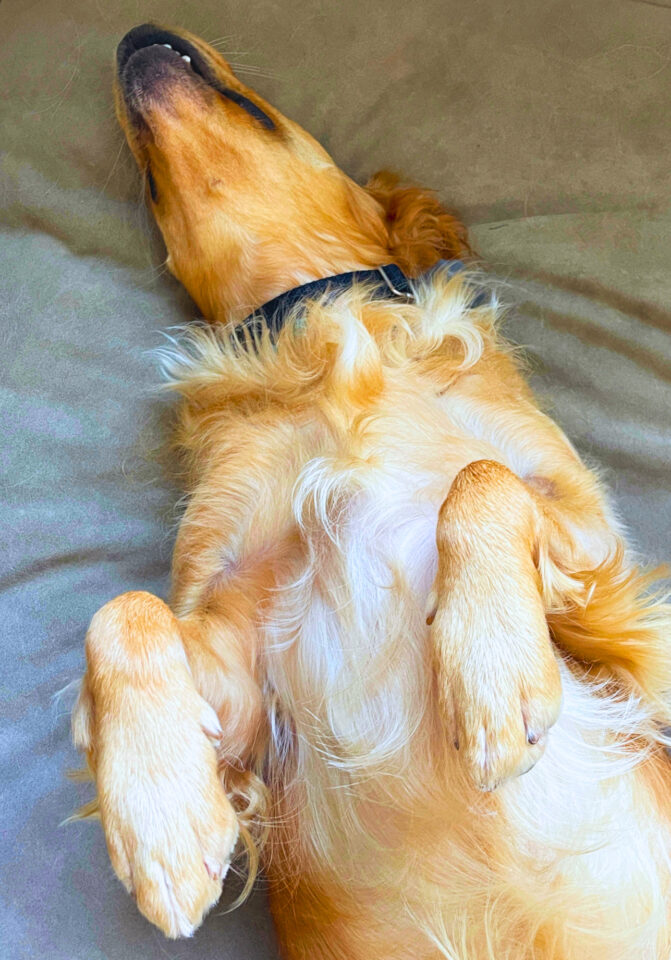
A body that is able to return to baseline fairly quickly is a body that can rest. A body that can truly rest is a body that can heal.
A Dysregulated Nervous System
Dysregulation shows up in many different ways. It can be subtle. A dog who is always a little too alert. One who can’t quite settle, even in a safe environment. A dog who startles easily and takes a long time to come back down. One who is reactive on a leash, or who pants and paces in situations that seem ordinary. Even chronic pain or physical discomfort can feed into this cycle. A body that doesn’t feel well has a harder time feeling safe. These are all nervous systems working overtime — stuck in a state of scanning, bracing, preparing.
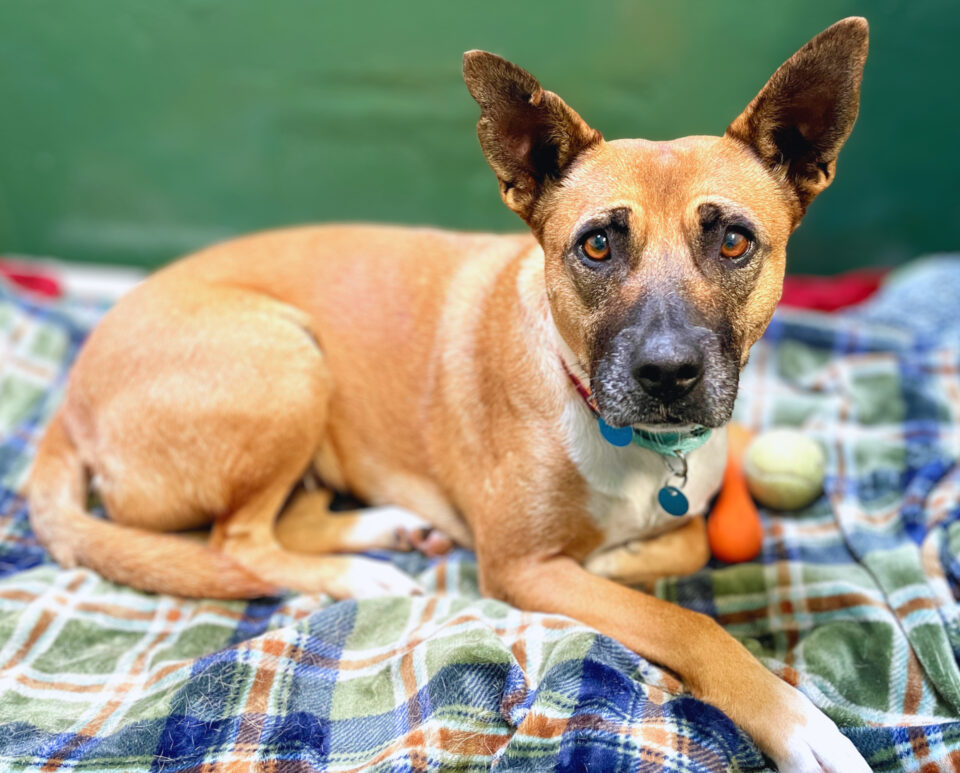
A dysregulated nervous system affects the entire body. The muscles stay braced. The fascia holds tension. The body never fully lets go because the system hasn’t gotten the signal that it’s safe to let go. Over time, that chronic state of readiness becomes its own source of physical discomfort — separate from any injury or structural issue, but just as real.
When a Dog Says No
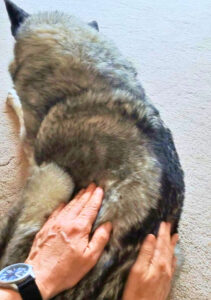
Because safety is everything to the nervous system, I ask for permission at every step of a session. It isn’t always out loud but I ask permission from the dog to enter their home, their domain. I ask permission to set my bag down. To place a blanket on the floor. To sit down. If they approach me with curiosity, I ask for permission to touch. Spoiler alert: My first touch will never be their face or the top of their head.
Consent is one of the most important things I do. If I ask to touch a paw and the dog moves that paw away — that is communication. Clear, honest, unmistakable communication. There is no pushing through it, no “they’ll get used to it.” A dog who feels unheard in any given moment is a dog whose nervous system just got the exact opposite of what it actually needed. Once they know I’m really listening, the trust comes and that trust is very important when I start working on a body part that doesn’t feel good.
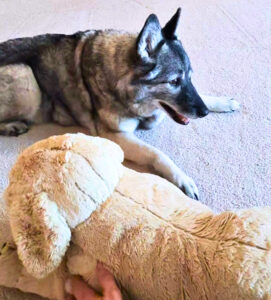
Sometimes I’ll bring in a surrogate — a stuffed animal dog — so a client dog that isn’t quite sure can watch from a distance, observe what a session looks like, and decide for themselves whether they want to participate. Sometimes a dog needs more than one visit before they’re ready to fully engage. I respect that. Building trust with a nervous system that has learned to be guarded takes time and patience. I had a dog that was unsure of every single thing from the moment I brought her home. I am very familiar and I am very patient.
Why This Work Found Me
I came to animal massage therapy through my own healing. I had a body that was literally shutting down in various ways and over the course of two years every test, X-ray, scan and assessment with every single specialist came back “normal.” Final answer: my own dysregulated nervous system. I unlearned patterns, learned change and how to reconnect my mind with my body. It all brought such a fantastic comprehension that stress and trauma can cause unimaginable things in our tissues.
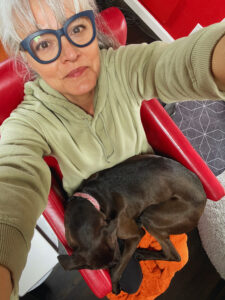
When I was in school for animal massage things came together very quickly. Animals experience the same thing — their bodies hold what their nervous systems have been through. This is especially true for rescued dogs. I’ll talk about a specific case study with a rescue dog next month. My work brings together everything that feels most true to me: the intelligence of the body, the language of safety, and the quiet but profound shift that happens when a living being finally knows that they can feel safe.
If your dog is reactive, anxious, slow to trust, or simply carrying something you can’t quite name — I’d love to talk. Feel free to call, text or email to find out whether a session might be a good fit for your animal.
Learn more at StandingStrongMassage.com, call/text 425-561-9156 or email [email protected].


Real first and last names — as well as city of residence — are required for all commenters.
This is so we can verify your identity before approving your comment.
By commenting here you agree to abide by our Code of Conduct. Please read our code at the bottom of this page before commenting.